
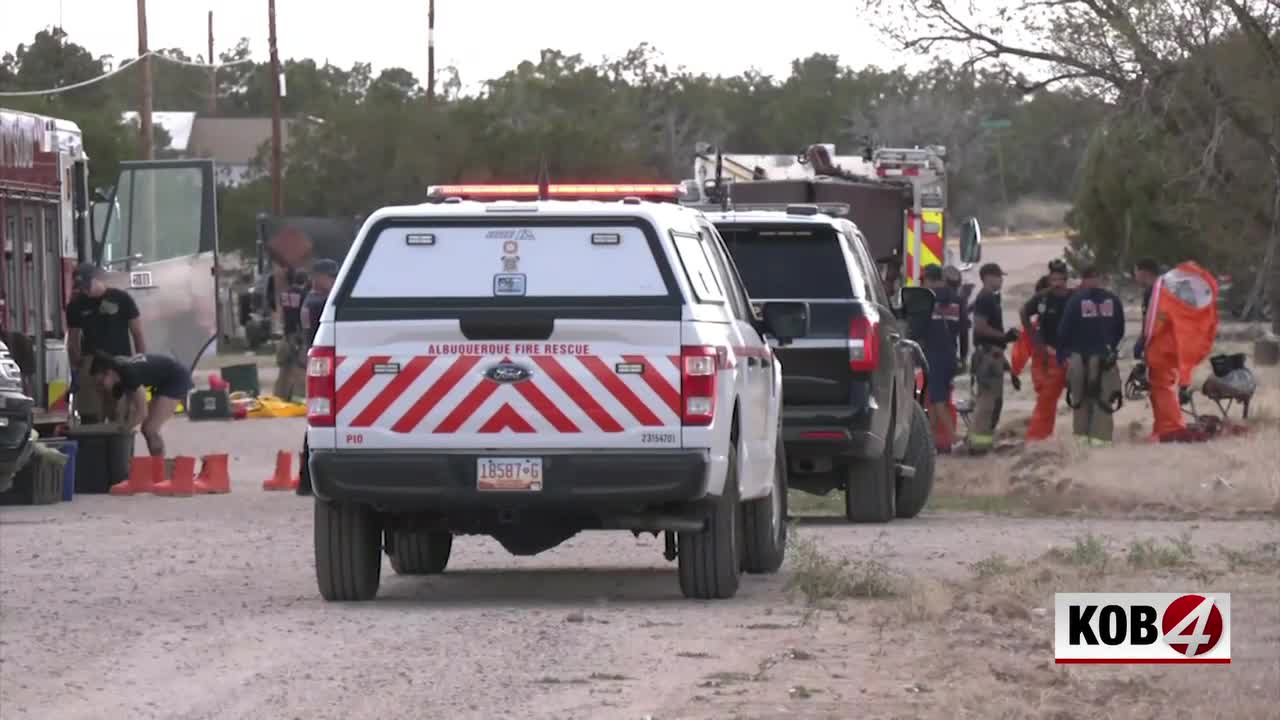
The mass casualty event in Mountainair, New Mexico—resulting in three fatalities and the incapacitation of 18 first responders—marks a critical inflection point in the operational risk profile of rural emergency services. The transition from a routine medical dispatch to a complex hazardous materials (hazmat) crisis exposed structural vulnerabilities in initial scene assessment and the limitations of standard personal protective equipment (PPE) against modern high-potency synthetic agents.
Tactical Constraints and Environmental Persistence
The incident originated at a residence near Hanlon Avenue as a reported overdose, a high-frequency call type that often triggers a rapid-intervention protocol. However, the discovery of multiple decedents and the immediate respiratory distress of arriving personnel suggests a highly volatile or aerosolized contaminant. The rapid escalation indicates that the substance possessed significant environmental persistence, likely transmitted via dermal contact or inhalation before site containment could be established.
The secondary exposure of 18 responders at a secondary location (the heliport) highlights a failure in the sterile corridor. Symptoms such as dizziness and nausea among personnel who had not entered the primary hot zone indicate that contaminants were transferred through the victims or equipment. This illustrates the logistical difficulty of performing immediate field decontamination in rural municipalities that lack the specialized hardware of urban units.
Institutional Strain and the Rural-Urban Healthcare Nexus
The reliance of Torrance County on Albuquerque Fire Rescue’s specialized HazMat units underscores a dangerous time-to-site gap. This delay creates a window of maximum vulnerability for local volunteer forces. Furthermore, the transport of 25 individuals to the University of New Mexico Hospital (UNMH) placed an immediate burden on the region’s primary Level 1 trauma center, necessitating the activation of specialized isolation protocols that disrupt standard emergency throughput.
The quarantine of nearly two dozen personnel represents a staggering percentage of the local emergency workforce. This operational vacuum necessitates the immediate activation of regional mutual aid, demonstrating how a single localized chemical event can trigger a cascading administrative crisis across state-level assets.
Strategic Re-evaluation of Triage Protocols
The Mountainair event mandates a shift from a medical-first to a hazmat-first posture in response to unknown substance reports. Historically, “overdose” calls prioritize immediate patient contact; however, the presence of unidentified toxic compounds now necessitates prior environmental scanning and scene isolation. This strategic pivot involves a complex ethical trade-off between immediate life-saving measures and the long-term protection of the response force.
Additionally, the incident raises questions regarding the adequacy of standard-issue PPE for rural law enforcement. The physiological impact on hospitalized responders—two of whom remain in serious condition—suggests that current respiratory and dermal protection may be insufficient against evolving chemical threats. The outcome of the toxicological analysis by the New Mexico State Police (NMSP) will be vital in determining whether the substance was a novel synthetic compound or a concentrated industrial chemical.
Conclusion
The Mountainair incident serves as a grim laboratory for the risks inherent in the modern chemical landscape. It highlights the fragility of the rural-urban healthcare connection and the need for localized detection technology. Until the substance is identified, the forensic and medical communities must treat this event as a case study in the escalating volatility of domestic emergency response.

Photo by C1ri on Pixabay.