
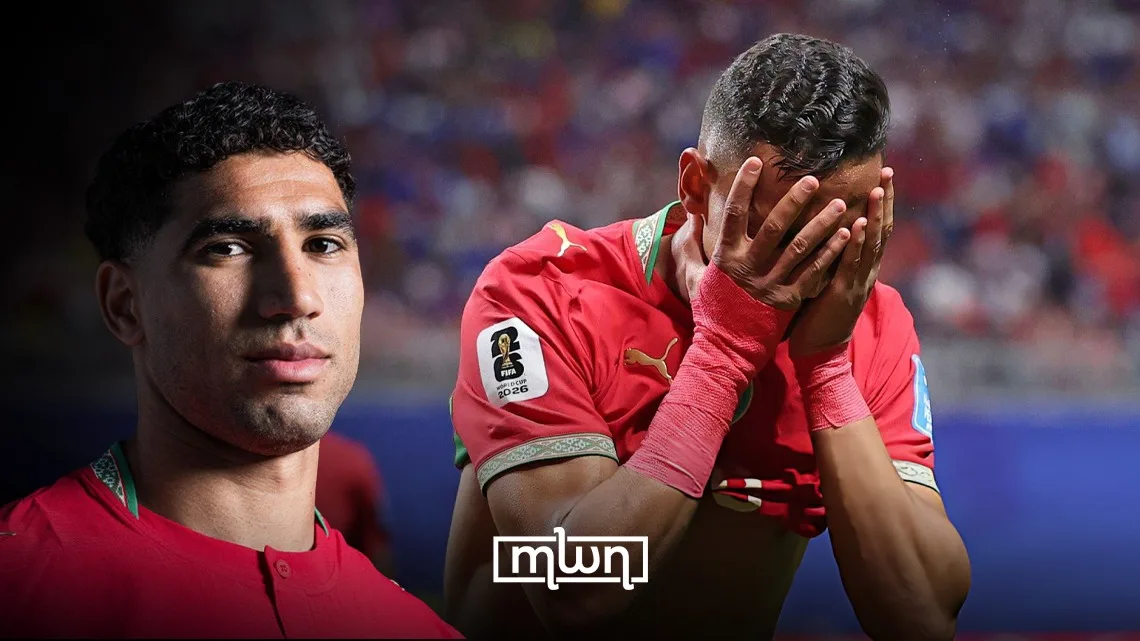
The 2026 FIFA World Cup represents a definitive inflection point for Morocco, marking their transition from a regional powerhouse to a consistent disruptor of the established Euro-centric football hierarchy. This evolution is defined by a convergence of tactical discipline, high-leverage emotional intelligence, and long-term institutional investment. Recent performances against Haiti and the Netherlands illustrate a squad capable of navigating complex match states through both structural rigidity and individual brilliance.
Tactical Fluidity and the Haiti Breakthrough
Morocco’s 4-2 victory over Haiti served as a masterclass in mid-match recalibration. Trailing early, the squad demonstrated a maturation of their offensive system under Mohamed Ouahbi. Soufiane Rahimi’s goal—securing a 3-2 lead—was the game’s primary psychological catalyst. Rather than a mere statistical contribution, Rahimi’s impact validated Morocco’s depth, proving they could maintain clinical finishing and operational focus despite the chaotic variables of a World Cup group stage.
This match highlighted a strategic shift: rewarding technical proficiency that remains stable under duress. By successfully executing a high-scoring comeback, Morocco addressed historical criticisms of North African sides regarding offensive consistency. This performance established a baseline of confidence necessary for the rigorous knockout phases that followed.
Institutional Resilience: The Netherlands Shootout
Eliminating the Netherlands in a penalty shootout stands as an institutional milestone. Ismael Saibari’s composure in the final moments reflects a broader psychological preparedness cultivated within the Moroccan Federation’s training cycles. Success in shootouts is rarely a product of chance; it is the output of rigorous stress-testing and mental fortitude. This victory disrupted the expected tournament bracket and signaled that the gap between traditional giants and emerging contenders has narrowed through superior preparation.
The aftermath of the match—notably the presence of Clarence Seedorf offering consolation to Dutch stars like Virgil van Dijk—underscored the shift in momentum. Morocco’s goalkeeping unit and penalty takers displayed a level of operational discipline that neutralized the Netherlands’ technical pedigree, transforming the Atlas Lions into a formidable knockout-stage opponent where margins are razor-thin.
Cohesion as a Performance Multiplier
Achraf Hakimi’s insights on ABtalks provide a window into the internal culture sustaining these results. Hakimi’s description of the squad’s collective emotional response to Rahimi’s first World Cup goal suggests that the team operates as a unified social unit. This level of cohesion acts as a strategic multiplier; when Hakimi noted that the players “almost cried with him,” he identified a shared narrative of sacrifice that fuels on-field intensity.
This cultural foundation is a critical competitive advantage. By validating Rahimi’s journey from domestic roots to global prominence, the team reinforces a meritocratic environment. This alignment reduces internal friction and ensures that individual success is leveraged to boost collective morale, allowing Morocco to sustain intensity against technically superior opposition.
Global Brand Positioning and Ecosystem Effects
The visibility of Morocco’s success is significantly enhancing its global brand value. Strategic communication and high-profile endorsements from stars like Hakimi create a compelling narrative for international markets. This increased media capital translates into greater influence within FIFA and CAF, while potentially raising commercial valuations for Moroccan talent.
Beyond branding, these results will likely trigger a recalibration of European scouting. Clubs are increasingly targeting the Moroccan developmental system for players who possess the specific blend of resilience and technical skill demonstrated by Rahimi and Saibari. Morocco is no longer just a participant; it is a blueprint for mid-tier nations seeking to bridge the gap with the global elite through structural transformation and unified identity.

Photo by Nasalune-FcK on Pixabay.