Strategic Rotation Stabilization and Peralta’s Analytical Profile
The New York Mets’ tactical framework hinges on starting rotation stabilization, an objective realized through Freddy Peralta’s high-leverage performance at Busch Stadium. Despite an operational disruption caused by a 60-minute rain delay, Peralta maintained peak physical output, with his four-seam fastball topping at 96.2 mph. This velocity, integrated with a diverse arsenal, yielded a 16.3% whiff rate across 92 pitches, signaling a return to elite mechanical efficiency.
Peralta’s dominance was underscored by a stretch of 11 consecutive retired batters, utilizing a vertical and horizontal movement profile that neutralized the St. Louis Cardinals’ core. By distributing seven strikeouts across his fastball (3), changeup (3), and curveball (1), he demonstrated the pitch-sequencing sophistication required to compensate for a lineup still searching for offensive synchronization. His removal after 5 1/3 innings reflects a calculated workload management strategy designed to preserve bullpen assets during the early stages of the 2026 campaign.
Offensive Recalibration and Technical Adjustments
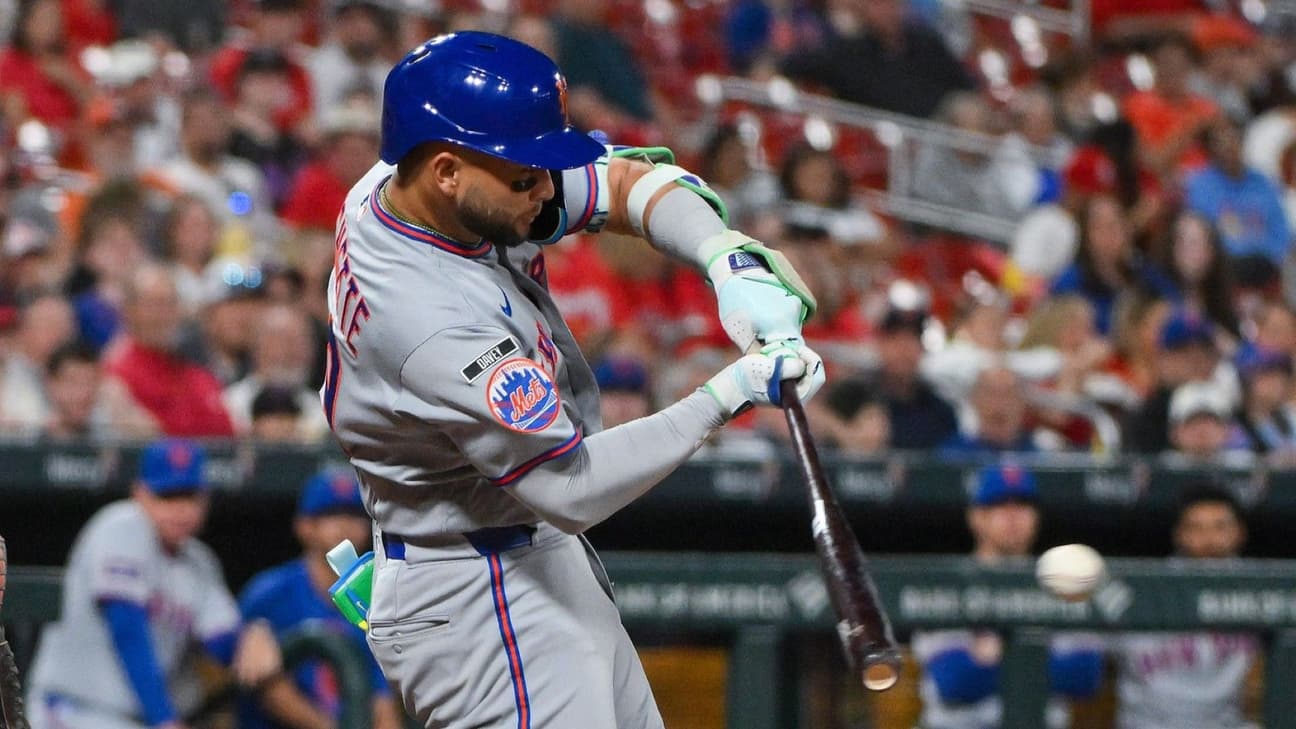
Bo Bichette’s recent technical adjustments highlight a shift toward situational contact optimization. Following a statistical slump in the opening series, Bichette’s two-RBI contribution in a 4-2 victory suggests a pivot toward plate discipline over raw power metrics. This recalibration is vital for a Mets order featuring Francisco Lindor and Juan Soto, where Bichette serves as a necessary bridge to maintain high-leverage offensive pressure.
The current lineup construction tests the team’s collective timing. While Mark Vientos and Luis Robert provide high-exit-velocity potential, the organization’s high-payroll strategy demands immediate results from its veteran core. Bichette’s emphasis on “competing at the plate” signifies an institutional drive to stabilize the middle of the order, providing a buffer as top-tier assets settle into their seasonal trajectories.
Institutional Roster Philosophy and Competitive Dynamics
The 2026 Mets roster exemplifies a high-capital investment strategy, prioritizing proven veteran performance over developmental volatility. Featuring Marcus Semien and Juan Soto, the organization has created a high-floor environment that requires precise pitching execution to minimize financial and competitive exposure. This contrasts sharply with the Cardinals’ prospect-driven model, which relies on the high-energy profiles of Masyn Winn and JJ Wetherholt.
This philosophical divide was evident as Peralta navigated a Cardinals lineup featuring power threats like Jordan Walker and Nolan Gorman. The imminent debut of Kodai Senga further strengthens the Mets’ rotation, creating a dual-threat pitching hierarchy capable of neutralizing elite NL Central offenses. These early-season outcomes will likely dictate the front office’s aggression levels heading into the mid-season trade window.
Operational Resilience and Media Distribution Strategy
Managing high-value assets like Peralta during weather uncertainty requires sophisticated training protocols. His ability to remain sharp post-delay validates the Mets’ conditioning department and managerial foresight. Furthermore, the team’s broadcast strategy—leveraging SNY and WHSQ 880AM (Audacy)—reflects a multi-platform approach to fan engagement, crucial for maximizing sponsorship valuation in a fragmented digital market.
By integrating digital-first consumption models and real-time sentiment monitoring via community threads, the Mets are optimizing their market influence. These engagement metrics serve as a barometer for brand health, ensuring that the team’s strategic direction aligns with the expectations of a high-investment fan base as they continue their road campaign.