Tactical Utility vs. Institutional Volatility
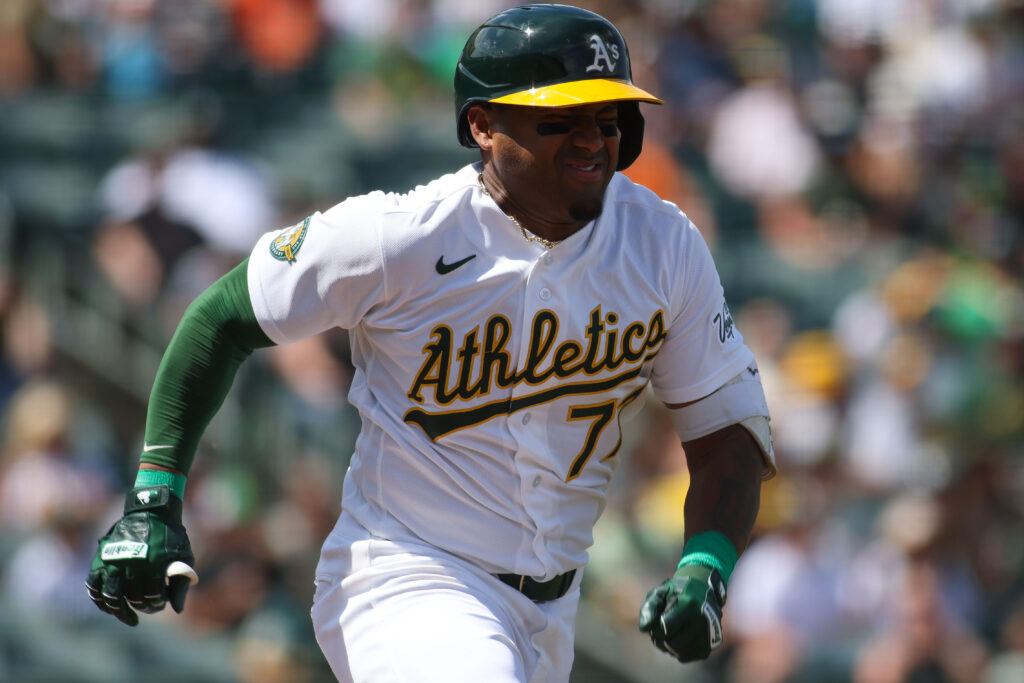
The New York Mets’ acquisition of Andy Ibáñez off waivers from the Oakland Athletics represents more than a depth move; it is a symptom of a front office grappling with a 10-20 start to the 2026 season. By designating Carl Edwards Jr. for assignment to facilitate this claim, the Mets have prioritized defensive versatility over bullpen longevity. This move, first documented by Francys Romero, highlights a reactionary phase in the club’s personnel management as they attempt to stabilize a high-payroll roster that has significantly underperformed expectations.
The Operational Rigidity of the Waiver Claim
A critical variable in this transaction is Ibáñez’s lack of minor league options. Legally, the Mets are compelled to carry him on the 26-man active roster immediately upon reporting. This operational constraint eliminates the luxury of a Triple-A evaluation period, forcing the coaching staff to displace an existing asset to accommodate a player who recently hit .118 through 18 games. Such ‘roster churn’ at the 26th-man spot often signals a lack of internal developmental confidence, shifting the burden to veteran placeholders with established defensive floors.
Statistical Profile: Defensive Hedge Against Offensive Decay
Ibáñez’s value proposition rests on his ability to navigate multiple infield and outfield positions, providing a strategic hedge against the Mets’ recent injury wave. However, his offensive metrics present a stark warning. With a career wRC+ frequently hovering below the league average (85 wRC+ during his Detroit tenure), Ibáñez represents a ‘glove-first’ solution for a team currently producing only 3.40 runs per game. The Mets are banking on a return to his 2023 form—characterized by superior contact rates—to mitigate what has become a systemic scoring drought.
Industry Valuation and the Fungibility of Utility Depth
The trajectory of Ibáñez over the last six months—moving from Detroit to Los Angeles, then Oakland, and now New York—illustrates the modern MLB trend of treating veteran utility men as fungible assets. The Los Angeles Dodgers’ decision to waive him shortly after signing him to a $1.2 million deal suggests that his market valuation is tied strictly to temporary roster needs rather than core contribution. For the Mets, the investment is low-cost, yet the opportunity cost of the 40-man roster spot remains high given the ongoing bullpen crisis.
Macroeconomic Failure and the Search for Leverage
The necessity of claiming a journeyman like Ibáñez underscores the widening gap between the Mets’ payroll and their on-field output. While competitors like the Cincinnati Reds leverage low-cost, high-upside talent, the Mets remain reliant on high-leverage trades and waiver acquisitions to patch structural holes. Internal discussions regarding a pursuit of St. Louis Cardinals’ Riley O’Brien suggest that the front office recognizes the Ibáñez move is merely a marginal adjustment, whereas the true deficit lies in high-leverage relief and late-inning stability.
Conclusion: A Window Closing on the 2026 Strategy
With the 2026 campaign reaching a crossroads, the Mets’ leadership is under immense pressure to convert these marginal gains into wins. If Ibáñez cannot provide an immediate spark or defensive stability, the club faces a total collapse of their current strategic cycle, potentially forcing a transition from ‘buyers’ to ‘sellers’ by the trade deadline. The coming weeks will determine if this claim was a savvy scouting find or simply the latest iteration of a failed roster construction philosophy.