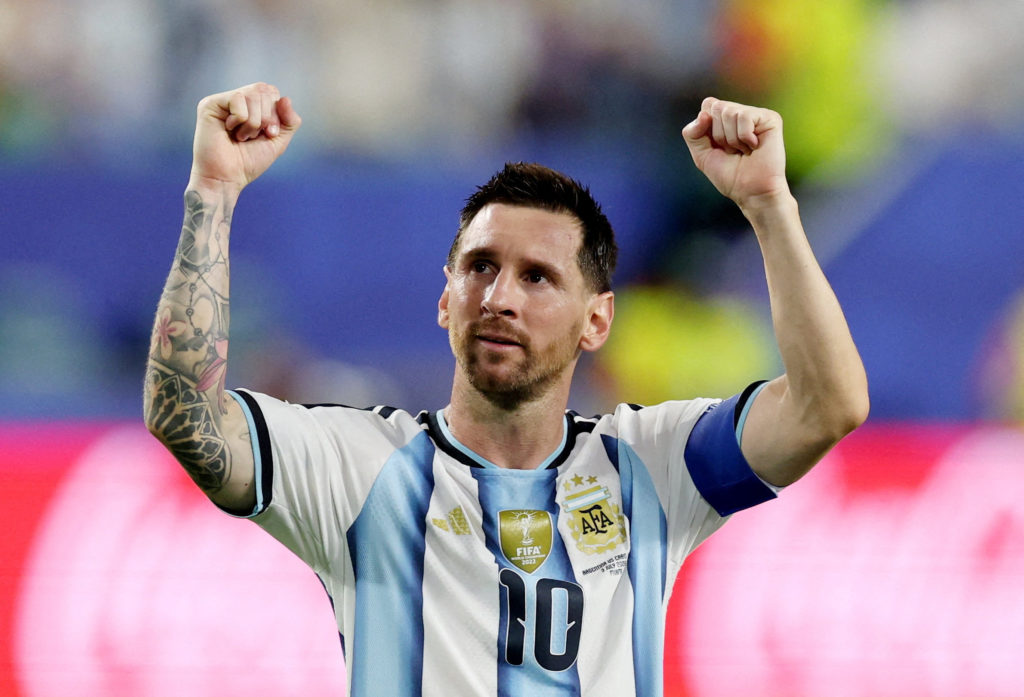
Argentina Survives Scare Against Cape Verde, Advances 3-2 in World Cup Thriller
Argentina has advanced to the Round of 16 in the 2026 FIFA World Cup™ after a dramatic 3-2 extra-time victory over a defiant Cape Verde. The match, called by John Strong and Stu Holden, proved a severe test for the top-ranked Argentinians (FIFA No. 1) against the 67th-ranked Cape Verde, highlighting the tournament’s growing unpredictability.
Cape Verde’s impressive run to this stage, considered by many observers as a potential tournament narrative regardless of the final outcome, contrasted starkly with Argentina’s status as a football powerhouse. The island nation, with a population of approximately 530,000, challenged an Argentinian side representing over 46 million people.
Lionel Messi’s 29th-minute opener was not only crucial in breaking the deadlock but also extended his World Cup goal-scoring streak to an unprecedented eight consecutive games. This goal marked his 20th in World Cup history, placing him two ahead of Kylian Mbappé and underscoring his individual impact on the tournament.
The fiercely contested match saw Argentina repeatedly take the lead, only for Cape Verde to equalize, culminating in a tense 3-2 finish. This back-and-forth scoring demonstrated Cape Verde’s tactical discipline and Argentina’s defensive pressure, forcing continuous adjustments from the favorites.
Post-match, Messi was visibly affected by a head collision with a Cape Verde player. This physical confrontation underscored the high stakes and intense physicality inherent in knockout-stage football, posing potential concerns for player availability in subsequent matches.
Cape Verde’s performance, despite their elimination, has cemented their legacy as one of the World Cup’s most memorable underdog stories. Their ability to compete against a perennial champion like Argentina signifies the evolving global landscape of international football and the increasing competitiveness across confederations.
Argentina’s progression, while secured, was far from convincing. The narrow victory raises questions regarding their tactical execution and defensive solidity against teams employing aggressive counter-attacking strategies. While Messi’s brilliance remains a decisive asset, the team’s ability to manage pressure and maintain control against determined opposition will be critical.
The financial and broadcast implications of such dramatic, close-fought matches are substantial. Underdog narratives and potential upsets generate sustained viewership and discussion, driving commercial interest more effectively than predictable blowouts.
Strategically, Argentina’s reliance on individual brilliance, epitomized by Messi, presents both an advantage and a vulnerability. While it can unlock defenses, it necessitates a robust team-wide tactical framework to ensure consistent performance if key players are neutralized.
The competitive balance of the World Cup is continually being redefined by surprise performances. Cape Verde’s showing elevates their national profile and could inspire future investment in their football development, creating long-term strategic opportunities.
The media narrative, as highlighted by reports from agencies like the Associated Press, focused on the potential for a historic upset. This framing influences public perception and creates psychological pressure for teams navigating the tournament’s latter stages.
Knockout stage operational challenges are immense, demanding meticulous preparation for diverse tactical approaches. Argentina’s ability to adapt to Cape Verde’s unexpected intensity showcases a crucial adaptability for championship contenders.
The capital within the sports industry, from sponsorship to broadcast rights, is significantly influenced by compelling tournament narratives. Underdog stories, even in defeat, generate considerable cultural capital and can translate into increased commercial value.
The performance leverage derived from individual stars like Messi is a well-established phenomenon. His consistent scoring and clutch performances are vital for Argentina, but collective execution under varying competitive conditions will determine their ultimate success.
Comparisons to historical upsets like the ‘Miracle on Ice’ or UMBC’s NCAA upset highlight the magnitude of what Cape Verde nearly achieved, underscoring the fine margins in elite competition.
Argentina’s path forward will be intensely scrutinized. Their capacity to manage the psychological aftermath of this demanding match and address tactical vulnerabilities exposed by Cape Verde will be paramount. Performance leverage will be tested against increasingly formidable opposition.
The broader implications for FIFA and global football include the growing parity and talent distribution across confederations, enhancing the World Cup’s inclusivity and worldwide appeal.
Argentina’s coaching staff faces the strategic imperative to consolidate strengths and shore up defensive frailties that allowed Cape Verde sustained competitiveness. This requires refining game plans and ensuring player readiness for diverse tactical challenges.
The economic impact on host nations and participating countries is significant. Cape Verde’s compelling performance, while not leading to advancement, has undoubtedly generated substantial positive international attention and goodwill.
Ultimately, Argentina’s tournament survival hinges on their ability to consistently translate individual brilliance into cohesive team performance—a challenge central to their campaign as they navigate the knockout stages.