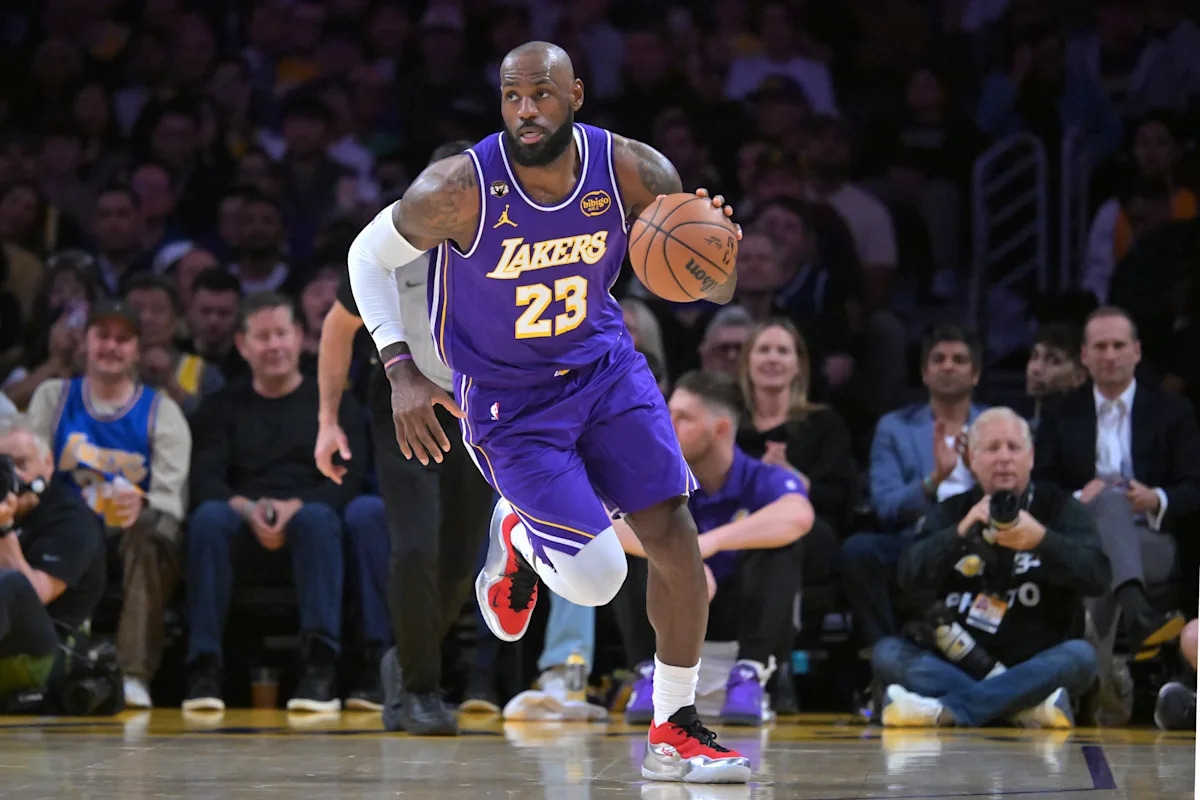
The February 20th contest between the Los Angeles Lakers and the Los Angeles Clippers is framed by significant injury-driven operational uncertainty, fundamentally altering pre-existing market assessments, particularly concerning player performance metrics.
The central analytical pivot is LeBron James’ designation as a game-time decision due to left knee soreness, immediately overriding the Lakers’ recent clean injury report following the All-Star break.
Analytical Impact of Injury Volatility and Prop Market Constraints
This late-stage status downgrade introduces severe operational volatility. The market focus crystallizes on James’ assist prop: Under 6.5 (+116). This projection is not solely based on the knee soreness but is heavily anchored by the return of an elite primary facilitator, Luka Doncic.
Historical performance data indicates a clear ceiling for James’ playmaking when Doncic is active, with James achieving seven or fewer assists in nine out of nine full games where both featured. This established statistical ceiling provides a quantitative basis for the ‘Under’ projection, irrespective of minor knee discomfort.
Comparative Context and Strategic Over-Indexing
The analytical question becomes one of differential weighting: Is the market over-indexing on Doncic’s presence as a performance suppressor, or does the knee soreness provide an exacerbating factor that validates the Under?
Furthermore, the Lakers’ prior positive report followed by a last-minute downgrade suggests underlying load management protocols may be in effect, implying potential minutes restrictions exceeding what is officially disclosed, even if James clears to play.
Betting Ecosystem Response and Market Efficiency
The late notification forces rapid repricing across the entire betting ecosystem. Oddsmakers must adjust correlated markets—totals (set at 226.5), spreads (Lakers -8), and individual player lines—as James’ on-court efficiency dictates offensive pacing.
The Clippers (27-28) enter with momentum from a tight win over the Nuggets and possess a superior season record, positioning them to capitalize if the Lakers’ offensive structure suffers disruption from reduced James capacity. Conversely, the Lakers benefit from an 8-point favorite margin at home (15-10 record).
Scheduling Disparity and Fatigue Factor
A key structural element is the rest differential: the Clippers are on the second night of a back-to-back following a narrow 115-114 victory, contrasting with the Lakers’ extended rest since February 12th. This fatigue factor must be implicitly factored into the spread, even before player availability is confirmed.
Depth Mitigation and Operational Levers
The clearing of Deandre Ayton and, critically, Austin Reaves coming off his minutes restriction (previously capped 21-29 minutes) suggests increased depth penetration for the Lakers. If James is limited, Reaves’ usage rate must surge. However, transitioning players from managed minutes to peak competitive load introduces inherent performance risk that algorithms must quantify.
Algorithmic vs. Subjective Analysis
The reliance on quantitative simulation (e.g., the SportsLine model running 10,000 simulations) underscores the industry’s pivot towards data integration over anecdotal assessment. The model prioritizes stable historical co-occurrence data (James vs. Doncic assist metrics) over recent, potentially anomalous streaks (James’ four-game 10+ assist run).
Competitive Stakes and Divisional Narrative
This fixture carries divisional weight, as the Clippers are competing to win the season series. A road win against a favored, yet potentially compromised, Lakers squad bolsters the Clippers’ contender narrative. For the Lakers, failing to secure the home win against a sub-.500 team with a rest advantage exposes issues in depth management.
Information Governance and Media Monetization
The sequence of the injury report—from clean slate to late downgrade—raises scrutiny regarding NBA compliance standards and internal team communication transparency. The rapid dissemination through media platforms highlights the commercial necessity for publishers to leverage real-time betting-critical information for audience engagement and monetization (app downloads, subscriptions).