Kona Storm Triggers Widespread Grid Failure on Oahu
The severe Kona storm system revealed acute systemic weaknesses in Hawaii’s utility infrastructure, evidenced by Hawaiian Electric (HECO) reporting approximately 40,760 customer power outages across Oahu by Friday midday. The event has moved beyond typical weather disruption, forcing executive-level responses regarding critical service continuity.
Specific Infrastructure Failure and Cascading Impact
A critical failure point was identified: a transmission line pole compromised by a lightning strike. This single event caused immediate isolation of major population centers, disrupting commercial and residential life. The scale suggests this localized failure either impacted major trunk feeders or rapidly cascaded across the distribution network, evidenced by large clusters in vital zones like Ala Moana and Waikīkī (nearly 8,000 customers affected in one incident).
HECO’s response is complicated by the persistent severe weather, impeding diagnostic assessment and repair logistics. The indeterminate restoration times across varied geographic clusters—from Kaneohe (2,250) to Makakilo—suggest the storm’s multi-vector stress (high winds, heavy rain, lightning) has taxed the entire distribution topology simultaneously, not just single points.
Systemic Risk: Government and Institutional Paralysis
The impact escalated beyond utility service, prompting Governor Josh Green to issue an emergency order and close state functions for the second time in recent months. This preemptive shutdown of the Legislature, Judiciary, UH campuses, and state offices underscores a recognized failure in infrastructure resilience against recurring high-intensity weather.
Honolulu Mayor Rick Blangiardi framed the forecast as a severe deluge, compelling a mobilization of civic resources. The immediate suspension of judicial and legislative proceedings creates administrative backlogs. Furthermore, the statewide closure of public and charter schools, even preceding Spring Break, reflects a calculated risk assessment prioritizing public safety (transportation, facility integrity) over immediate educational delivery.
Meteorological Drivers: Multi-Vector Threat Profile
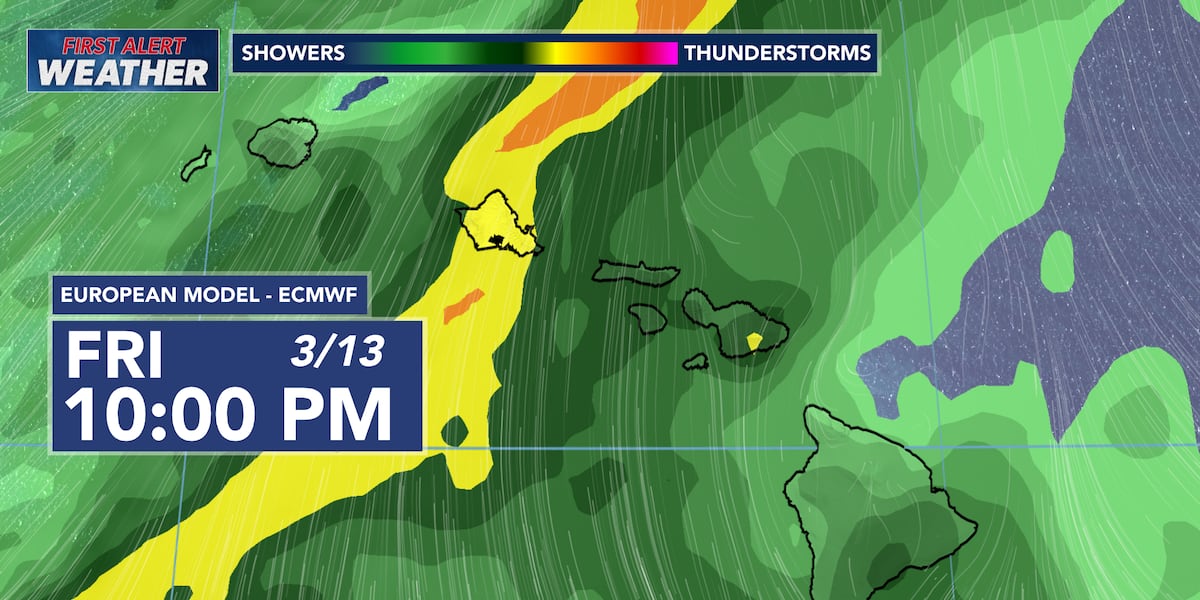
First Alert Weather Days extending through Saturday are driven by a powerful Kona low drawing significant tropical moisture. The forecast details a multi-vector assault: significant flash flooding potential (mountain regions projected for over 10 inches), damaging southerly/southwesterly winds, and severe thunderstorms. This combination overwhelms municipal drainage and existing utility hardening measures.
The southwesterly wind dynamics are crucial, directly influencing which overhead infrastructure components (lines, poles) bear peak loading stress, suggesting further outages are likely as the storm peaks. Concurrently, the atypical nature of the system includes snow/ice threats on the Big Island summits, demanding complex, multi-island coordination of state assets.
Strategic Implications: Resilience Investment Scrutiny
The recurring nature of these severe disruptions refocuses regulatory and investor scrutiny onto Hawaiian Electric’s long-term capital expenditure strategy for grid hardening. The transmission pole failure specifically challenges whether current standards adequately model the increased frequency and intensity of tropical moisture events impacting the state.
The operational context shifts from managing isolated incidents to addressing a pattern of systemic vulnerability. The economic drag—including business continuity failures and administrative halts—far exceeds direct repair costs. HECO faces pressure to rapidly communicate a credible, funded mitigation plan focusing on transmission line survival under extreme electrical and wind loading, potentially necessitating significant capital reallocation. State planners must re-evaluate the cost-benefit of maintaining operational readiness versus investing in infrastructure capable of absorbing these now-predictable high-risk weather windows.