
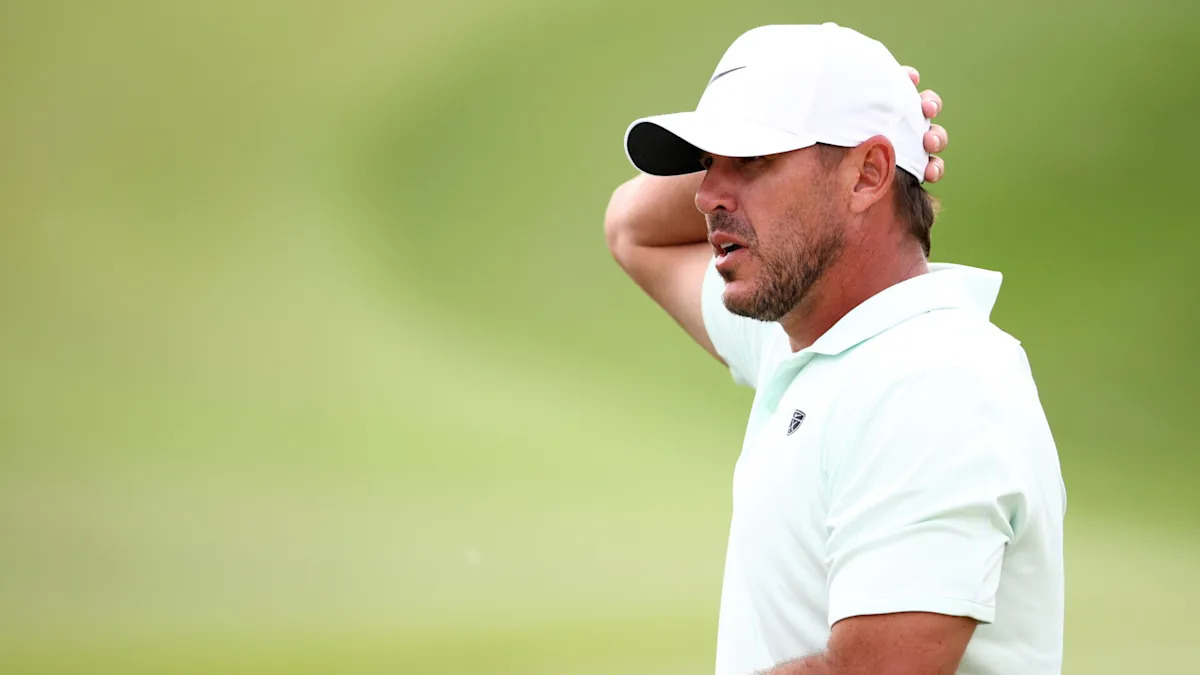
Koepka Withdraws from RBC Canadian Open Amidst Hand Injury Concerns
Brooks Koepka has withdrawn from the RBC Canadian Open prior to the final round, citing a hand injury that has caused significant grip issues and numbness. Describing the condition as unprecedented, Koepka’s inability to properly hold his club necessitated his withdrawal from the event.
This withdrawal, occurring just one week before Koepka is set to defend his U.S. Open title, amplifies concerns about his physical readiness. His performance in the Canadian Open, where he was tied for 32nd and seven shots off the lead after three rounds, was already visibly compromised by the developing injury.
Strategic Impact on U.S. Open Defense
The timing of this injury is critical for Koepka’s U.S. Open defense, a major championship where he has a dominant historical record. The inability to compete or practice effectively in the immediate lead-up to such a significant event presents a substantial competitive disadvantage, particularly for a player whose game thrives on precision and power.
This scenario underscores the vulnerability of elite athletes to unforeseen physical setbacks, despite advanced training and sports science. The focus now shifts to Koepka’s recovery and the potential for this hand injury to affect his performance on a course demanding peak physical condition.
Stakeholder Uncertainty and Performance Vulnerability
For fans, sponsors, and the PGA Tour, Koepka’s withdrawal introduces significant uncertainty. His participation is a major draw, and his absence, especially if it impacts his U.S. Open performance, directly affects engagement metrics and spectator interest. His performance leverage is inherently tied to his physical capacity, which is now compromised.
This incident highlights the fine balance between an athlete’s commitment to competition and the paramount importance of long-term physical health. The decision to withdraw, while potentially preserving his ability to compete at the U.S. Open, means forfeiting crucial competitive reps and exposure in a high-profile tournament.
Downstream Narrative and Competitive Landscape Shifts
The immediate downstream consequence is a diminished narrative for the RBC Canadian Open’s final round. More critically, it reshapes the competitive landscape for the U.S. Open. Koepka’s proven ability to perform under pressure in majors, often overcoming adversity, makes his current physical state a central storyline.
This situation accentuates the intense competitive pressures in professional golf, where a single injury can drastically alter an athlete’s trajectory and market standing. His recovery and potential return to form will be closely monitored by competitors, analysts, and media, influencing betting odds and expert analyses.
Institutional and Media Responses to Player Health
The PGA Tour and tournament organizers must navigate the impact of player withdrawals on event narratives. Media coverage will inevitably intensify, focusing on Koepka’s health status and his prospects for defending his U.S. Open title, thereby shaping public perception and fan anticipation.
The incident also prompts discussions regarding player welfare protocols and injury management within the demanding professional sports calendar. The narrative will likely explore athlete resilience and the strategic decisions made when facing physical limitations, especially in the context of major championships.
Potential Financial Ramifications and Sponsorship Dynamics
Although not explicitly stated, such an injury can indirectly influence capital movement. Sponsors often link endorsements to consistent performance and visibility. A prolonged or recurring hand injury could diminish Koepka’s marketability and the value of his sponsorship deals, necessitating strategic reassessments by both the athlete and his commercial partners.
The financial implications extend to the PGA Tour, as withdrawals by star players can impact ticket sales, broadcast ratings, and overall revenue. The economic ecosystem of professional golf is demonstrably sensitive to the participation and performance of its top-tier athletes.
Impact on Performance Leverage and Competitive Edge
Koepka’s ability to leverage his physical prowess has been a fundamental element of his success, particularly in major championships. The current hand injury directly compromises this leverage, potentially reducing his capacity to execute shots with the required power and control.
This development may create opportunities for other contenders in the U.S. Open, as the perceived strength of the field is altered by the uncertainty surrounding one of its most formidable participants. The competitive dynamics are thus significantly reshaped by this unforeseen physical challenge.
Historical Performance and Future Outlook
Koepka possesses a well-documented history of peaking in major championships, frequently returning from periods of perceived weakness or injury to contend for titles. This demonstrated resilience has solidified his reputation as a clutch performer, making his current predicament a point of significant interest.
The critical question will be whether he can replicate this historical pattern of overcoming physical obstacles to compete at the highest level in the U.S. Open. The outcome will offer further insights into the long-term effects of such injuries on elite athletic careers and the strategies employed for recovery and competitive resurgence.

Photo by Lockenkopf on Pixabay.