The $11.8 Million Purse: Strategic Capital Allocation in The Chase
The 2026 Cook Out Southern 500 at Darlington Raceway serves as a critical financial and competitive launchpad for NASCAR’s 10-race playoff series, known as The Chase. With a total purse of $11,849,963, the event dictates crucial early-season capital momentum, heavily weighted towards performance-based payouts in the initial rounds. This substantial prize pool amplifies Darlington’s commercial significance, linking its historical prestige to the high-stakes financial structure of the modern playoff era. Navigating Darlington’s 1.366-mile asymmetrical oval, a track demanding extreme operational efficiency and precise mechanical execution, directly impacts year-end financial outcomes for teams like 23XI Racing and Joe Gibbs Racing. Early playoff success not only secures immediate winnings but also strengthens sponsor confidence and provides a strategic financial buffer for the subsequent nine championship races.
Pit Road Precision: The 23XI Racing 0.2-Second Delta
Stage 2’s tactical narrative pivoted on pit road execution, specifically the internal competition within 23XI Racing. Tyler Reddick’s temporary loss of the lead to teammate Bubba Wallace was not due to on-track performance but a critical 0.2-second pit stop differential. This marginal gain underscores the decisive role of over-the-wall speed in the playoffs, especially at Darlington where track position is notoriously difficult to regain. Reddick’s decision to pit one lap later than Wallace aimed to leverage fresh tires for the stage’s conclusion, but Wallace’s crew’s superior efficiency effectively negated this advantage. This internal competitive dynamic highlights the intricate management required by multi-car organizations during the Chase, balancing individual driver ambitions with collective operational output.
Mechanical Attrition: Darlington’s ‘Track Too Tough to Tame’
Darlington’s moniker, “Track Too Tough to Tame,” was reinforced by mechanical issues affecting mid-pack competitors, notably Chris Buescher’s structural damage. Reports of a bent toe link following wall contact exemplify the vulnerability of current chassis designs when subjected to Darlington’s high-line demands and 25-degree banking. In a 501.32-mile endurance race, minor structural compromises can escalate into terminal failures, forcing strategic decisions between aggressive racing and equipment preservation. The track’s asymmetrical geometry (25-degree banking in Turns 1-2, 23-degree in Turns 3-4) compels engineers to compromise setups, balancing lateral load management against tire wear and aerodynamic stability. Buescher’s 30th-place finish exemplifies how the technical intricacies of Darlington can derail even competitive efforts, irrespective of driver pace or qualifying position.
Christopher Bell’s Stage Dominance and Playoff Leverage
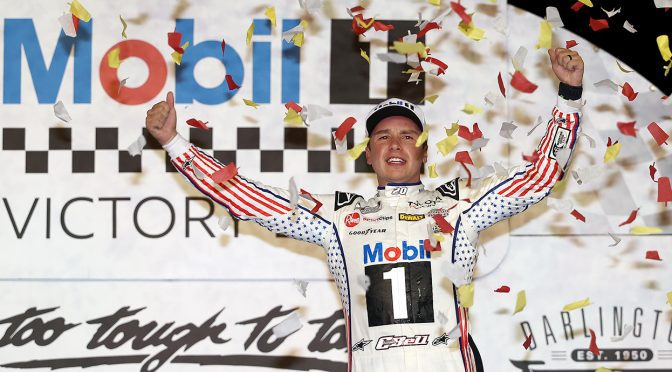
Christopher Bell’s Stage 2 victory, his fifth of the 2026 season, signifies Joe Gibbs Racing’s advanced technical preparedness. By accumulating maximum stage points, Bell strategically front-loads his playoff campaign, building a crucial points cushion that mitigates risk in later rounds. Bell’s ability to maintain pace at the front on Darlington’s abrasive surface indicates a sophisticated understanding of its specific tire degradation curves. His performance contrasts with Kyle Larson’s recovery drive from 16th to 2nd, which highlighted long-run speed and aerodynamic versatility. Bell’s wire-to-wire efficiency in the stage suggests a more optimized short-run strategy, indicating that the final stage would likely be a battle between raw speed and tactical tire management.
The Non-Chase Factor: Josh Berry’s Competitive Context
Josh Berry’s presence in the Stage 2 top 10, as the sole non-playoff competitor, introduced a strategic variable. Non-playoff drivers can influence championship outcomes by acting as spoilers with higher risk tolerance due to no points at stake. Berry’s performance benchmarks his team’s development against championship contenders, validating their technical package. For playoff drivers like Chase Briscoe and William Byron, racing Berry necessitates heightened situational awareness to avoid incidents that could jeopardize playoff advancement. These “spoiler” entries consistently add strategic tension to the Chase, potentially impacting championship favorites.
Economic Impact and Geographic Market Reach
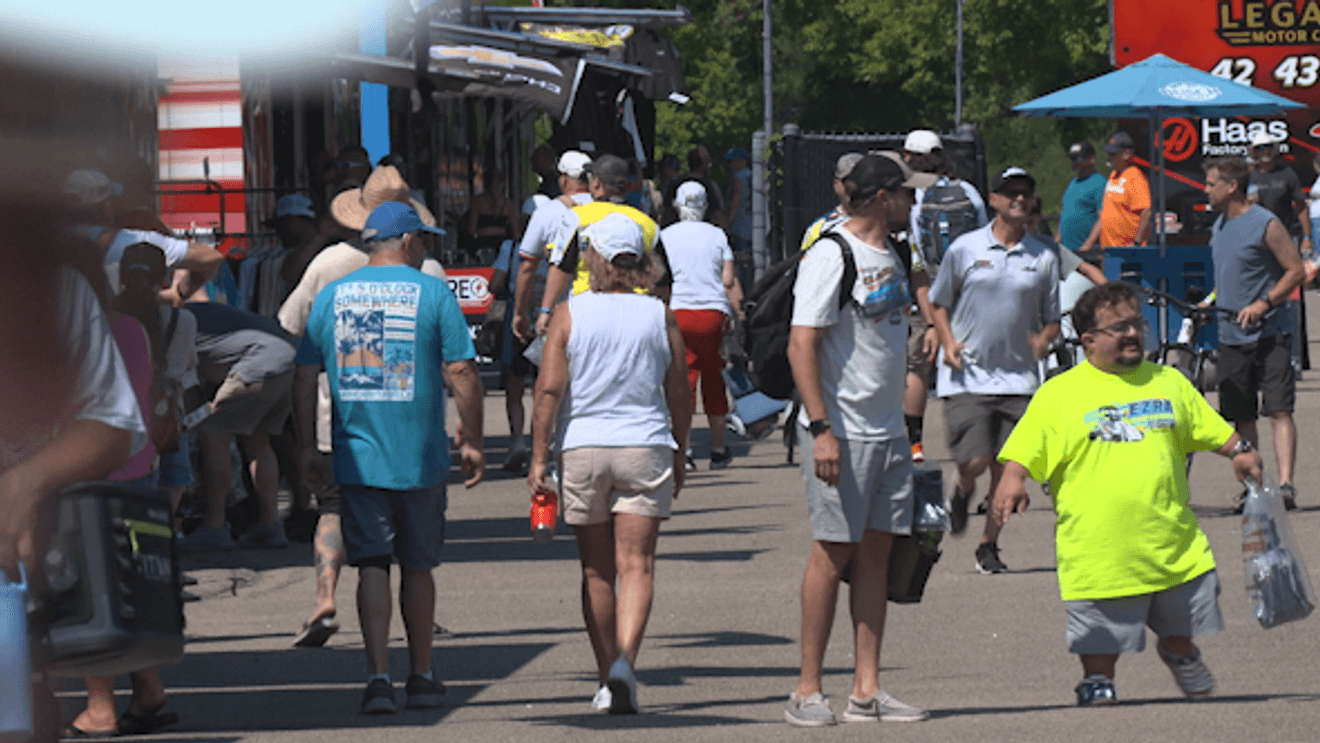
The influx of fans from markets like Texas and Boston to Darlington County reaffirms the Southern 500’s status as a premier destination event. This geographic diversity is a key indicator of NASCAR’s commercial health, demonstrating Darlington’s continued ability to drive high-value tourism and regional economic activity. The event’s success in attracting a national demographic underscores the sport’s transition from regional to national appeal, driven by the unique competitive product offered by historic tracks. This cultural capital provides Darlington with institutional security amidst evolving NASCAR schedules and expansion efforts.
Technical Demands: Physics of the Darlington Oval
The 501.32-mile distance, spanning 367 laps, places extreme demands on both drivers and machinery. Darlington’s 1,229-foot straights offer minimal cooling opportunities, while the high-speed corners necessitate constant steering input and lateral force management. This continuous high-load cycle accelerates right-side tire degradation, making pit strategy paramount. Historical race records, such as Aric Almirola’s 184.145 mph qualifying speed and Matt Kenseth’s 141.383 mph race record, provide benchmarks. While the 2026 event saw defending winner Chase Briscoe achieve a slower average speed (130.148 mph), variances reflect caution periods and track abrasion. These statistical benchmarks are crucial for understanding the evolution of technical regulations and their impact on competition at demanding venues.
Synthesis: Competitive Equilibrium and Institutional Consequences
The 2026 Cook Out Southern 500 showcased a sport operating at a high-precision equilibrium, where tenths of a second on pit road differentiate stage wins from mid-pack finishes. The dominance of Christopher Bell and 23XI Racing’s strategic maneuvers reflect the professionalization across all team functions. As the opening race of The Chase, Darlington establishes a rigorous competitive standard that will shape the championship trajectory. The integrity of teams, mechanical resilience, and crew chief foresight are under intense scrutiny. The $11.8 million purse and national fan draw confirm the Southern 500’s enduring institutional importance. The race’s consequences extend beyond the trophy, influencing financial stability, sponsor relations, and the ultimate pursuit of the 2026 championship title.