
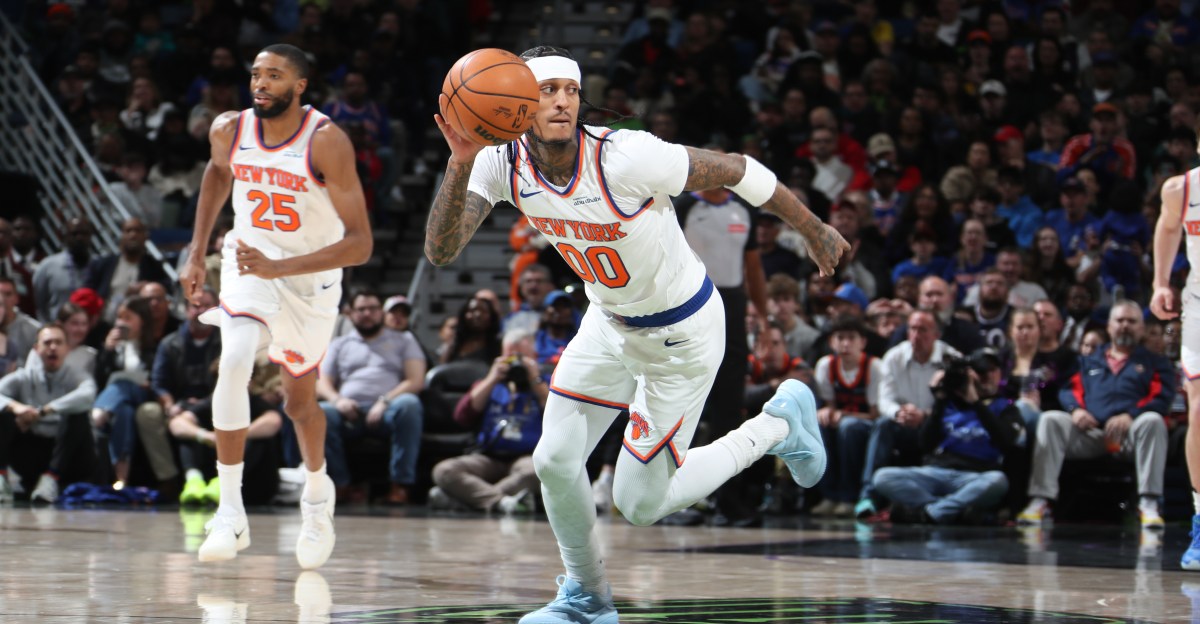
The March 24, 2026, confrontation at Madison Square Garden between the New York Knicks and the New Orleans Pelicans illustrates a stark contrast in organizational efficiency. New York (47-25) enters the contest as a pillar of Eastern Conference stability, while the Pelicans (25-47) continue to grapple with a structural inability to convert individual statistical production into a viable defensive identity.
Defensive Rating Disparities and Systemic Vulnerability
New Orleans’ 24th-ranked defensive rating remains the primary catalyst for their sub-.500 record. Allowing 119 points per game highlights a failure in transition defense and perimeter containment. This 24th-ranked defense directly undermines an offensive output that ranks 20th, leaving head coach James Borrego with a negative net rating that offers a razor-thin margin for error against a Knicks squad currently on a six-game winning streak.
While the Pelicans average 115.6 points per game, their lack of defensive cohesion is magnified in high-leverage environments. Conversely, the Knicks have optimized their scoring efficiency, leveraging disciplined half-court sets to exploit opponents with low defensive resistance. The Pelicans’ strategy of high-volume scoring to mask defensive fragility appears increasingly unsustainable as they face New York’s elite defensive architecture.
Personnel Dynamics: Offensive Gravity vs. Defensive Utility
Trey Murphy III (21.8 PPG) and Zion Williamson (21.3 PPG) serve as the dual engines of the Pelicans’ offense. Murphy’s perimeter gravity provides essential floor spacing, theoretically opening the paint for Williamson’s interior dominance. However, the lack of synergy between these offensive assets and the team’s defensive stops remains a critical failure. Despite Williamson’s ability to force defensive collapses, the Pelicans’ supporting cast has yet to establish a consistent winning culture.
The defensive burden falls largely on Herb Jones, who operates in the 97th percentile for deflections. While Jones is an elite disruptive force, his individual excellence cannot compensate for a collective lack of rim protection. Furthermore, the integration of Dejounte Murray—averaging 18.7 points and 6.2 assists over a 10-game sample—introduces playmaking versatility, though his short tenure has yet to stabilize the team’s fluctuating tactical identity.
Knicks Rotational Depth and Institutional Stability
New York’s current trajectory is a testament to roster depth. Despite injuries to Miles McBride and Landry Shamet (knee bone bruise), the Knicks have maintained their winning momentum. This resilience is rooted in a clear hierarchy and a defensive-first philosophy that minimizes unforced turnovers. The ability to absorb backcourt losses without compromising their 47-25 standing distinguishes the Knicks as a top-tier contender.
Historical data from their December 29, 2025, meeting—a 130-125 Knicks victory—indicates that Jalen Brunson remains the primary tactical threat. His 28-point, 10-assist performance in that matchup exposed the Pelicans’ inability to contain high-usage point guards. Tonight, the objective for New Orleans is to disrupt Brunson’s rhythm while surviving the Knicks’ home-court advantage at MSG.
Market Valuation and Digital Consumption Trends
The economic footprint of Madison Square Garden remains a significant driver for NBA revenue, with the Knicks’ current success inflating secondary market valuations and sponsorship demand. Simultaneously, the shift toward free live-streaming options for this matchup reflects the league’s adaptation to fragmented media consumption. As traditional broadcasting faces disruption, the high brand equity of a winning Knicks franchise serves as a crucial anchor for the NBA’s direct-to-consumer digital strategies.
Photo by admomediaoffice on Pixabay.