
The expansion of the Week 1 college football schedule into a multi-day broadcast event represents a sophisticated recalibration of sports media strategy. By isolating high-profile matchups like Notre Dame versus Wisconsin on a Sunday evening, major broadcasters such as NBC and ABC effectively circumvent the traditional Saturday congestion, ensuring undivided market attention. This deliberate scheduling maximizes the valuation of media rights, creating exclusive windows for premium content and amplifying viewer engagement. This strategy extends to Labor Day matchups, creating a four-day football weekend that boosts advertising inventory and sustained national conversation, a crucial element for sponsors.
The increasing prominence of streaming platforms like Peacock and Fubo in distributing these exclusive Sunday and weekday games reflects the industry’s pivot towards digital consumption. This shift provides media partners with granular audience data for targeted advertising and demonstrates a key metric for future media rights valuations as traditional cable subscriptions decline.
Institutional Pressure and Program Trajectories: Wisconsin’s Fickell Era Under Scrutiny
The Wisconsin versus Notre Dame clash at Lambeau Field is more than a game; it’s a critical barometer for the trajectory of the Badgers under Luke Fickell. The choice of a historic NFL venue elevates the stakes, highlighting the volatility of program prestige. For Wisconsin, this early-season test against a national title contender—Notre Dame, ranked as high as No. 2—presents significant reputational risk. A failure to demonstrate competitiveness could expose structural weaknesses and question the program’s ability to maintain an elite performance floor.
Notre Dame’s strategic pivot to a more aggressive, pass-heavy offensive scheme, led by CJ Carr, adds another layer of tactical pressure. This shift from their traditional ground-based identity is designed to leverage Carr’s specific skill set, forcing opponents to defend the entire width of the field and rigorously testing the depth and versatility of Wisconsin’s defensive secondary. For Wisconsin, the challenge is existential: proving its capacity to compete with the sport’s elite tier. The institutional investment in Fickell was predicated on closing this competitive gap, making this performance a pivotal referendum on the school’s long-term strategic direction.
The Economic Engine of Neutral-Site Kickoffs and Brand Equity
The strategic selection of NFL venues like Lambeau Field for high-profile non-conference games underscores a significant commercial trend. These neutral-site arrangements are high-margin revenue generators for both participating universities and host cities, leveraging professional brand equity to elevate collegiate matchups. The logistical complexity is often justified by increased sponsorship opportunities, premium ticket pricing, and boosted regional tourism, transforming these games into calculated economic activations.
A prime example is the Music City Kickoff in Nashville, featuring Ole Miss and Louisville. This event positions secondary markets as hubs for collegiate postseason-style atmospheres, capturing substantial economic spillover from traveling fanbases while offering a neutral platform for high-stakes inter-conference showdowns (ACC vs. SEC). These contests transcend mere athletics, serving as vital recruiting tools and donor engagement platforms. Success in these high-visibility windows can lead to increased capital inflows through booster contributions and strengthened leverage in future media rights negotiations. Conversely, a poor national showing can diminish a program’s marketability, amplifying the stakes far beyond a standard home-and-home series.
Transfer Portal Dynamics and the Evolution of Roster Management
The Ole Miss versus Louisville matchup distinctly illustrates the transformative impact of the transfer portal on modern college football roster construction and competitive parity. Louisville’s reliance on transfer quarterback Lincoln Kienholz, formerly of Ohio State, exemplifies how programs are strategically acquiring proven talent to bypass traditional developmental timelines. This efficient movement of human capital enables mid-tier programs to rapidly upgrade critical positions, fostering immediate playoff aspirations.
In contrast, Ole Miss prioritizes continuity, featuring a stabilized backfield with quarterback Trinidad Chambliss and running back Kewan Lacy. This emphasis on talent retention offers a strategic advantage over teams still integrating numerous new transfers, highlighting a clash of roster-building philosophies—acquisition versus long-term cohesion. This dynamic will significantly influence the Music City Kickoff outcome and set the tone for both teams’ playoff trajectories.
The broader trend of talent flowing from “blue-blood” programs to schools guaranteeing immediate playing time is actively narrowing the talent gap across the FBS. This redistribution creates more competitive and unpredictable early-season matchups, with high-upside investments like Kienholz potentially yielding signature wins against top-tier opponents and fundamentally altering conference power structures.
Competitive Disparity and Strategic Performance Benchmarks
The significant competitive imbalance often seen in Week 1, exemplified by matchups like Ohio State versus Ball State, underscores the widening financial and athletic chasm between elite programs and the rest of the FBS. For powerhouse teams, these “guarantee games” serve as controlled environments to test depth, refine schemes, and integrate new players before facing high-caliber opponents. For smaller programs, the primary motivation is financial, with substantial payouts vital for supporting athletic department operations.
While essential to college athletics’ economic ecosystem, these games raise questions about competitive sustainability. From a strategic perspective, elite coaching staffs must balance the need for live-game repetitions with the imperative to manage key personnel workload and mitigate injury risks in contests with limited competitive upside. Performance in these scenarios is measured not merely by victory margin, but by efficiency, discipline, and flawless execution against an inferior opponent, preparing the team for upcoming high-stakes challenges against rivals like Texas.
Conference Realignment and the Reconfiguration of Historic Rivalries
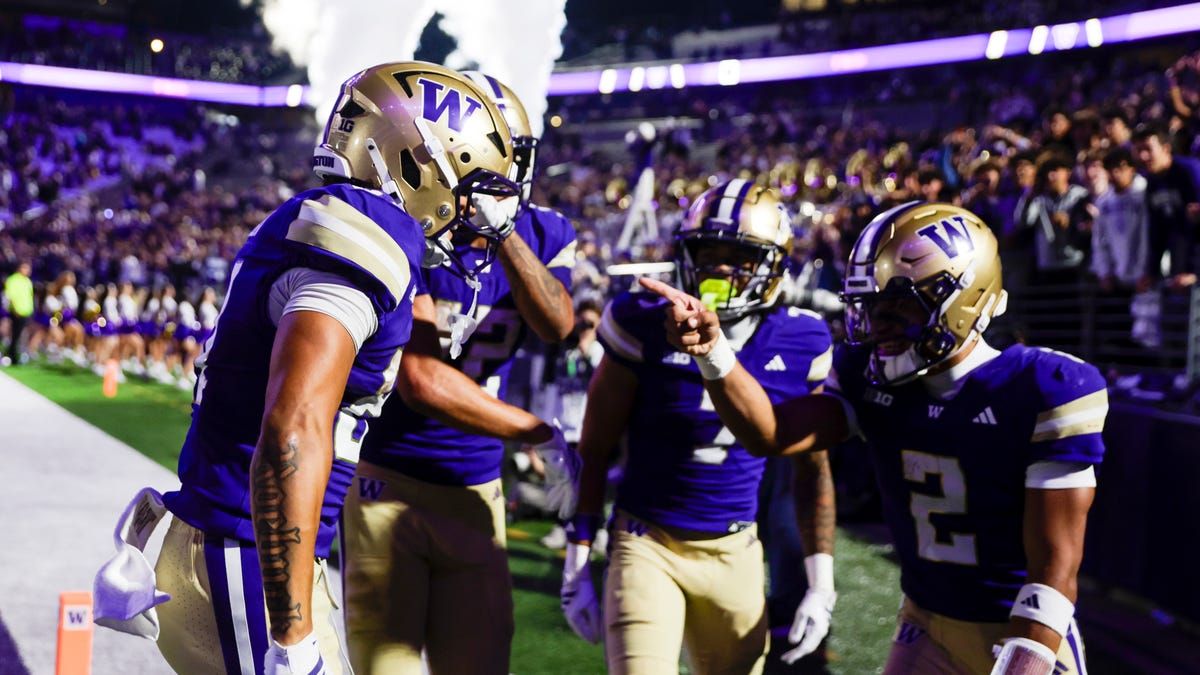
The early-season placement of the Apple Cup between Washington and Washington State represents a notable departure from historical scheduling norms, a direct consequence of ongoing conference realignment pressures. Traditionally a late-season fixture, its move to Week 1 reflects logistical challenges and the institutional necessity of preserving key non-conference rivalries amidst shifting conference landscapes. While the game provides early-season stability for a ranked program like Washington and financial exposure for Washington State, this timing fundamentally alters the emotional and competitive stakes, as teams are still refining identities rather than playing for late-season conference positioning.
The reconfiguration of the Apple Cup serves as a compelling case study for other historic rivalries confronting similar existential threats due to conference expansion. As programs increasingly prioritize lucrative conference schedules, traditional matchups must adapt to new windows or risk being phased out entirely. The successful execution of such early-season rivalry games indicates that despite evolving circumstances, their commercial and cultural value remains a critical priority for athletic departments navigating an unpredictable future.
Playoff Implications and Early Conference Hierarchy Establishment
Week 1’s strategically scheduled Sunday games, particularly inter-conference matchups like Louisville versus Ole Miss, carry significant weight for the College Football Playoff race and early conference hierarchy. Both teams are perceived contenders, and a victory for Ole Miss would reinforce SEC dominance, while a Louisville win would provide a crucial boost to the ACC’s collective resume. These early contests are vital for establishing strength-of-schedule metrics, where a Week 1 loss can have long-term consequences for postseason aspirations.
The pressure is particularly acute for programs like Louisville, tasked with demonstrating that their transfer-heavy roster can compete physically and tactically with the elite. As the season progresses, the outcomes of these high-profile early-season games become critical benchmarks for comparing conference strength. Placing these matchups in exclusive broadcast windows ensures maximum scrutiny, allowing them to shape the national narrative and secure favorable positions in national rankings well before the heart of conference play begins.