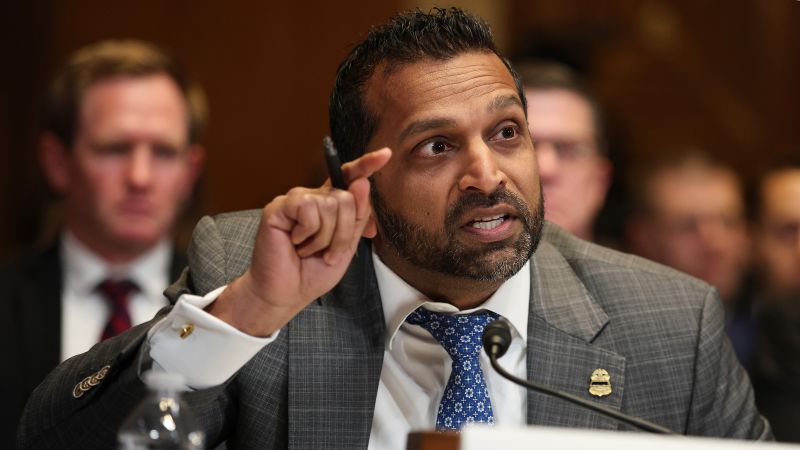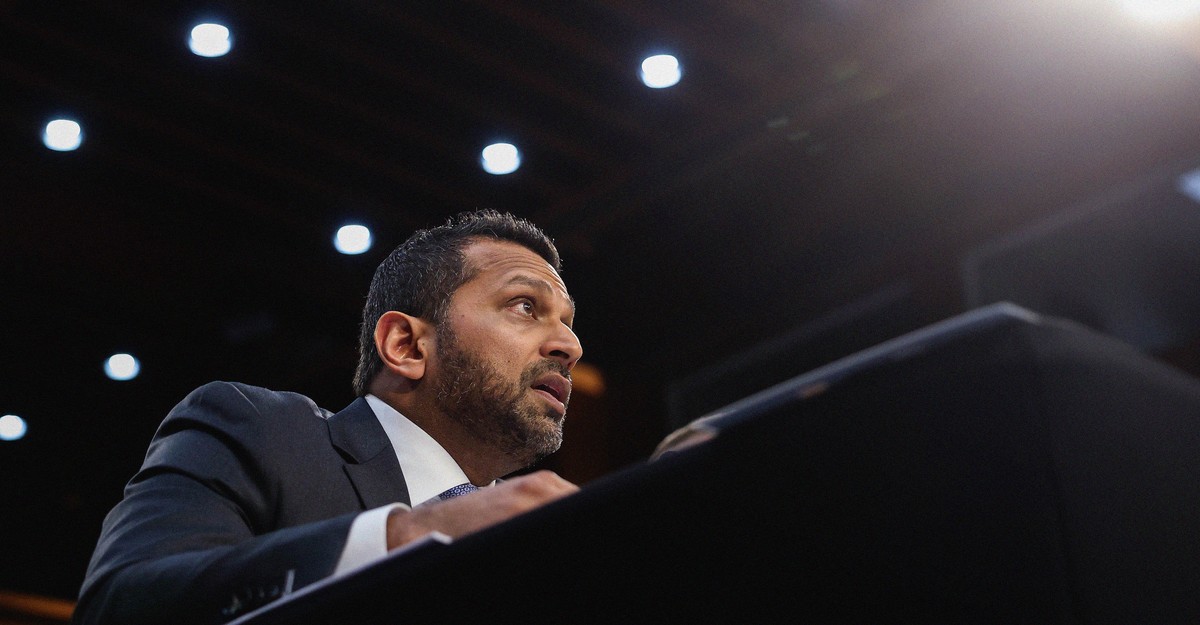
The appearance of FBI Director Kash Patel before the Senate Appropriations Committee represents a watershed moment in executive-legislative relations, signaling a transition from technical fiscal oversight to a high-stakes examination of institutional integrity. Nominally convened to address the 2027 budget request for the Department of Justice’s law enforcement components—including the DEA, ATF, and U.S. Marshals—the hearing pivoted into a critical analysis of the Bureau’s operational shift and the Director’s personal reliability. This friction threatens the traditional ‘comity’ that underpins the federal appropriations process, introducing volatility into the FBI’s long-term funding trajectory.
Senator Chris Van Hollen (D-MD) contextualized the inquiry by scrutinizing reports of Patel’s personal conduct. While the committee’s mandate is primarily fiscal, Van Hollen established a nexus between a Director’s personal judgment and the prudent management of a multi-billion-dollar security apparatus. This line of questioning underscores an emerging legislative view: that personal reliability is an inextricable component of administrative fitness, particularly when overseeing sensitive intelligence and domestic law enforcement operations.
Strategic Atrophy: The Iranian Counterintelligence Pivot
Perhaps the most operationally significant revelation was the termination of specialized counterintelligence agents tasked with monitoring Iranian threats. This personnel shift creates a ‘strategic paradox’: the Bureau is requesting expanded 2027 resources while simultaneously dismantling established expertise in a high-priority geopolitical theater. The attrition of institutional memory regarding state-sponsored kinetic and influence operations poses a systemic risk to domestic security, potentially leaving gaps that cannot be easily filled by non-specialized replacements.
For appropriators, this realignment forces a difficult evaluation of the Bureau’s internal resource allocation. If the FBI is voluntarily reducing its capacity to counter established foreign adversaries, the justification for increased budgetary outlays becomes harder to sustain. Furthermore, this shift may fragment inter-agency cooperation within the Intelligence Community, as partners rely on the FBI’s specialized domestic reach to complete the national threat picture.
Legal Escalation and the Press Subpoena Controversy
The hearing further addressed the FBI’s aggressive use of subpoenas against media organizations. This strategy marks a departure from traditional investigative norms and risks a protracted legal conflict over First Amendment protections. By targeting the press to identify internal leakers, the Bureau risks creating a ‘chilling effect’ on whistleblowers, thereby reducing the transparency necessary for effective congressional oversight. This posture suggests a transition toward a more insular, defensive administrative model that prioritizes internal discipline over public and legislative accountability.
The legal community views these subpoenas as a potential catalyst for judicial redefinition of law enforcement’s reach. If the FBI’s actions are perceived as an attempt to suppress investigative journalism rather than protect national security, the agency may face new legislative or judicial constraints. Such restrictions could inadvertently hamper legitimate criminal investigations that depend on a cooperative relationship with the public and media outlets.
The 18 U.S.C. § 1001 Breakdown
A procedural nadir occurred when Director Patel refused to explicitly acknowledge the legal consequences of providing false testimony to Congress. His avoidance of a direct confirmation regarding 18 U.S.C. § 1001—which criminalizes false statements to legislative bodies—undermined the evidentiary foundation of the hearing. This refusal to validate the legal framework of the proceedings introduces profound uncertainty regarding the veracity of the 2027 budget justifications provided by the Bureau.
This interaction signifies a broader breakdown in the protocols of executive accountability. When the head of the nation’s premier law enforcement agency adopts a defensive stance regarding the legality of their own testimony, it erodes the trust required for the Senate to authorize significant capital expenditures. The resulting reputational damage may complicate future interactions, as legislators seek more stringent verification of the Bureau’s data and operational claims.
Systemic Risks and Inter-Agency Displacement
The highly charged nature of Patel’s testimony has a ‘crowding out’ effect on other DOJ agencies. The DEA, ATF, and U.S. Marshals rely on these hearings to secure funding for critical missions like combating synthetic drug trafficking and ensuring judicial security. However, when the FBI’s leadership becomes a focal point of controversy, the nuanced fiscal needs of these sister agencies are often overshadowed. This systemic inefficiency risks delaying essential funding for public safety initiatives that lack the FBI’s high-profile political visibility.
Ultimately, the 2027 fiscal cycle will be defined by how the Senate balances the FBI’s critical operational needs against a leadership style characterized by disruption and partisan friction. The transition toward performative governance at the top of the Bureau risks alienating the bipartisan coalition necessary for stable, long-term funding, potentially leaving the agency—and the nation—vulnerable during a period of evolving global and domestic threats.