
The public debut of Jersey Mike’s (JMKE) at a $7 billion valuation represents a sophisticated execution of Blackstone’s institutionalization playbook. By pricing the initial public offering at $23 per share, the firm is not merely seeking a liquidity event; it is validating a high-velocity operational overhaul. This transition shifts the company from a five-decade trajectory of organic, founder-led growth to a structured, private equity-driven expansion engine designed for public market scalability.
Institutional Scaffolding and Governance Reengineering
Blackstone’s acquisition of a controlling stake less than 24 months ago catalyzed a fundamental shift in the company’s internal architecture. The transition from founder-centric decision-making to a formal corporate board and a tier of professional managers is designed to mitigate the execution risks inherent in managing 3,300 locations. This fiduciary scaffolding is a prerequisite for the JMKE ticker, ensuring that operational oversight is decoupled from personal legacy and aligned with standardized performance metrics.
This structural evolution professionalizes the management tier to handle the rigorous regulatory and reporting demands of the public markets. By installing institutional governance, Blackstone has transformed Jersey Mike’s into a platform capable of sustaining rapid, predictable growth, moving beyond the idiosyncratic management style typically found in private, founder-led enterprises.
Labor as a Strategic Asset: The Profit-Sharing Model
Central to this IPO is the market debut of Blackstone’s profit-sharing strategy, which converts employee participation into a core competitive advantage. In a quick-service restaurant (QSR) sector defined by labor volatility, granting the workforce a stake in equity serves as a calculated retention lever. By aligning the financial interests of store-level employees with those of public shareholders, the model seeks to stabilize the operational base and enhance service consistency.
This approach reframes labor from a variable cost to be minimized into a strategic asset to be leveraged. In doing so, the company aims to reduce the high costs associated with turnover and training while insulating the brand from the broader industry’s staffing crises. This alignment of incentives is intended to drive store-level efficiency during a phase of aggressive national expansion.
Operational Integrity vs. Value Engineering
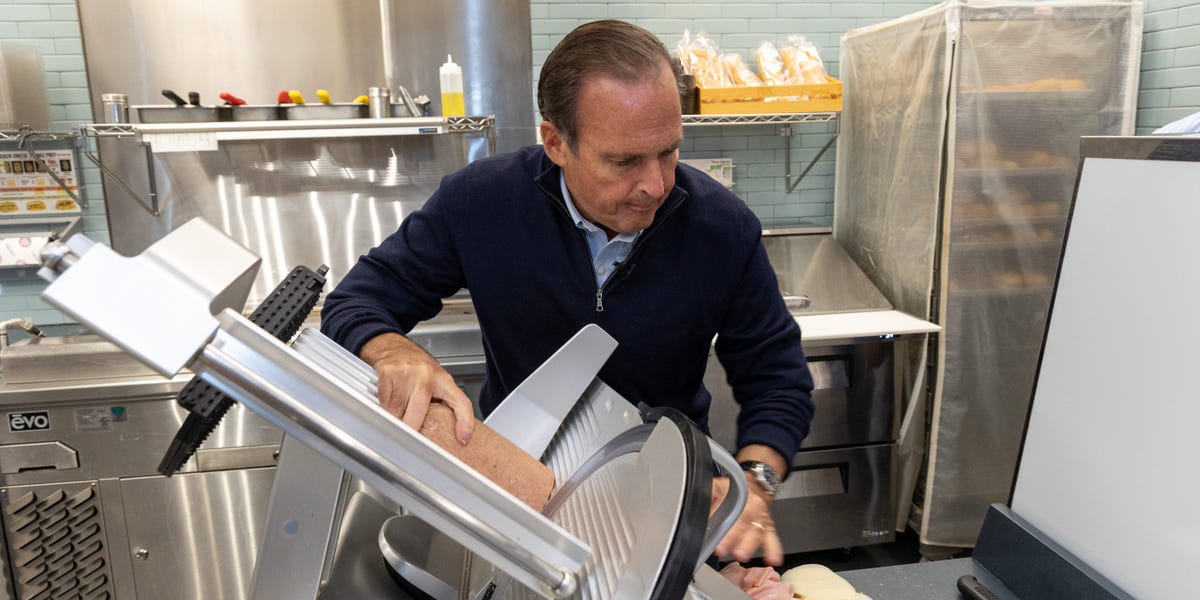
While the governance and capital structures have been radicalized, the core product remains intentionally static. The preservation of legacy supply chains, fresh-slicing protocols, and portion sizes indicates a strategic commitment to brand equity. Blackstone appears to have identified the product’s consistency—rather than margin expansion through quality reduction—as the primary driver of customer lifetime value.
By avoiding the common private equity pitfall of “value engineering,” where cost-cutting degrades the consumer experience, the company maintains its premium positioning. The conservative approach to menu innovation, such as the calculated introduction of the Hot Italian sub, prioritizes operational throughput over experimental complexity. This focus on consistency ensures that the brand’s value proposition remains intact as it scales toward a global footprint.
Valuation Mechanics and Market Trajectory
The $7 billion valuation applies a significant premium to the brand’s historical earnings, predicated on the scalability of its new professionalized framework. The $23 per share pricing reflects a balanced market entry, providing a stable foundation for institutional investors while capturing the company’s future growth potential. With a massive 3,300-store footprint, the valuation is anchored by real-world scale rather than speculative projections.
The speed of this transformation—from acquisition to IPO in under two years—highlights the efficiency of Blackstone’s capital deployment. This rapid maturation suggests the underlying business was fundamentally sound, requiring only the institutional infrastructure provided by private equity to unlock public market readiness. As JMKE, Jersey Mike’s now serves as a benchmark for the rapid institutionalization of legacy food brands without the sacrifice of core identity.

Photo by OProprioMarco on Pixabay.