Inter Milan Seeks Serie A Resurgence Against Udinese Post-Champions League Defeat
Inter Milan returns to Serie A competition against Udinese, aiming to recover from a midweek Champions League setback. The team recently suffered a 2-1 loss to Real Madrid in the Champions League, a result that has intensified scrutiny despite Inter’s otherwise strong domestic performance this season.
Inter Milan has enjoyed a dominant start to the 2026-2027 Serie A campaign. Prior to this fixture, they had secured victories in all three league matches. These wins included overcoming Monza and Cagliari, followed by a hard-fought 3-2 comeback triumph against Napoli, showcasing their offensive prowess and resilience under pressure.
Managerial Philosophy: Continuous Growth and Tactical Evolution
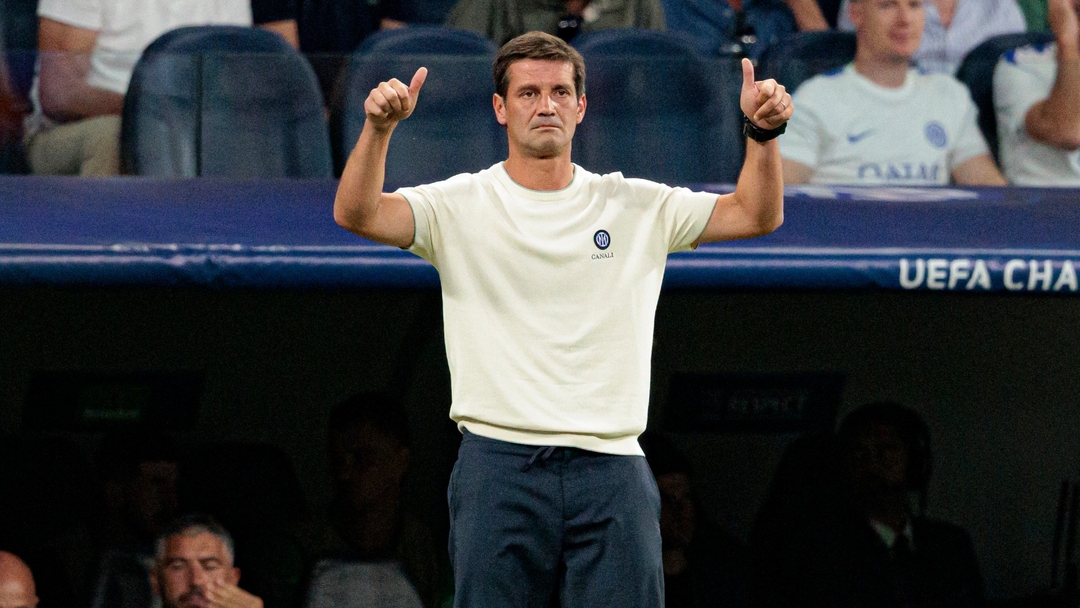
Manager Cristian Chivu has emphasized a strategic focus on long-term development and continuous improvement. He acknowledges that results, particularly in high-profile matches like the Champions League fixture against Real Madrid, invite criticism but stresses the team’s objective: “to keep growing, improving and adding more to our game.” This philosophy prioritizes tactical evolution and depth over immediate outcomes, particularly in European competitions.
Chivu highlights that with only a few weeks of the season elapsed, he is already observing “very encouraging signs from the team.” He stresses the importance of analyzing performances holistically, considering both qualitative aspects of play and quantitative results, as demonstrated in matches against both Real Madrid and Napoli.
Udinese’s Challenge: Tactical Discipline and Resilience
Udinese manager Kosta Runjaic acknowledges Inter Milan as the “best team in Serie A,” citing their summer reinforcements and established squad cohesion. He notes that Chivu has successfully integrated energy into the team’s existing tactical framework, building upon its core principles.
Runjaic recognizes Inter’s ability to dominate in phases against top-tier opposition like Real Madrid, setting a high benchmark for his own team. Udinese must prepare for a demanding match requiring an “excellent performance” and the capacity “to know how to suffer,” indicating a pragmatic strategy centered on defensive resilience and disciplined execution.
Despite facing “several injured players,” Runjaic’s team focuses on maximizing their potential, demonstrating strong team spirit and commitment. The manager emphasizes a fresh start at 0-0, underscoring their belief in achieving a positive outcome through determined performance, regardless of pre-match predictions.
Serie A Standings: Inter’s Position and League Dynamics
The early 2026-2027 Serie A standings illustrate a competitive landscape. Roma leads the table with a perfect record of four wins from four matches, boasting an impressive 11 goals scored and only 1 conceded, marking them as early frontrunners.
Como and another unnamed team are positioned closely, reflecting strong early-season form. Significant point disparities are already evident, highlighting the importance of consistent performance.
Udinese sits 13th with 4 points from three games (one win, one draw, one loss), indicating a mixed start. Meanwhile, teams like Venezia (0 points from 4 matches) and Monza, Bologna, Parma, and Genoa (1 point each) are struggling at the lower end.
Inter Milan’s perfect record, despite potentially playing fewer games than some rivals, solidifies their position as a primary title contender. Their demonstrated ability to secure victories even when conceding, as seen against Napoli, points to a potent attack and resilience.
Strategic Implications: Champions League vs. Serie A
The Champions League defeat to Real Madrid, managed by former Inter coach Jose Mourinho, adds a narrative layer. While Chivu focuses on developmental progress, European performance directly impacts a club’s standing, revenue, brand value, and talent acquisition potential.
Inter’s capacity to “dominate in some phases” against Real Madrid suggests a sound tactical framework, despite the unfavorable result. This analytical distinction is crucial for internal assessment and future strategic planning.
The club’s objective to “add more to our game” signifies a strategic intent to evolve beyond current strengths, potentially incorporating new tactical variations or enhancing efficiency. This forward-looking approach is essential for sustained success in elite competitions.
The contrast between Inter’s domestic dominance and their Champions League outcome underscores the differing demands of each competition. Serie A requires consistent league form, while the Champions League demands peak performance against a diverse array of elite European clubs.
Competitive Positioning and Squad Investment
Inter Milan’s undefeated league record positions them as strong Scudetto contenders. Their consistent domestic performance, coupled with Chivu’s developmental philosophy, indicates a stable and ambitious project.
Udinese, according to Runjaic, is focused on maximizing resources and executing a disciplined game plan against superior opposition. Their ability to compete effectively, even with injuries, highlights their organizational strength and fighting spirit.
Inter’s summer squad strengthening, as noted by Runjaic, demonstrates a commitment to maintaining and enhancing their competitive edge through strategic investment. This is a key driver for sustained success in both domestic and international arenas.
Chivu’s management style, fostering a culture of resilience and development, aims to create a sustainable competitive advantage beyond individual player acquisitions.
As the season unfolds, Inter’s ability to integrate their Champions League experience into their Serie A campaign will be critical. Learning from setbacks and maintaining high standards will define their trajectory in Italian and European football.
Operational and Financial Considerations
Udinese’s injury concerns highlight the operational challenge of squad depth and player fitness. Maintaining competitive performance throughout a demanding season requires robust management of these factors.
Inter Milan’s capacity to absorb a Champions League defeat and refocus on Serie A demonstrates effective squad management and psychological resilience, supported by investment in a deep and talented roster.
Financial implications of European competition are substantial. Champions League success directly translates to increased revenue from prize money, broadcasting rights, and sponsorships, which can be reinvested into the squad.
Udinese’s pragmatic approach, prioritizing performance despite injuries, reflects a strategy focused on tactical discipline and collective effort, a sustainable model for clubs with different financial capacities.
Strategic summer transfer window decisions, such as Inter’s squad strengthening, are directly linked to financial capacity and competitive ambition, representing calculated investments for improved performance and sporting objectives.
Institutional Strategy and Managerial Outlooks
Cristian Chivu’s philosophy of continuous growth and tactical innovation aligns with modern football management, emphasizing evolution to maintain a competitive edge.
Inter Milan’s institutional backing for Chivu, even after a Champions League loss, signifies a long-term vision and confidence in his developmental capabilities, providing crucial stability.
Kosta Runjaic’s analytical and respectful approach, acknowledging Inter’s strengths and his team’s need for resilience, exemplifies experienced coaching and strategic preparation.
The contrast between Chivu’s focus on expansive growth and Runjaic’s emphasis on disciplined execution against a superior opponent showcases diverse strategic thinking within the league.
The long-standing squad cohesion at Inter, as noted by Runjaic, reflects successful institutional strategy in player recruitment and retention, providing a stable foundation for tactical development.
Media Scrutiny and Performance Benchmarking
The intense media scrutiny faced by high-profile clubs is evident in the criticism directed at Inter Milan following their Champions League defeat. Performance is consistently benchmarked against high expectations.
Chivu’s strategic response, focusing on team principles and progress, aims to manage external narratives and maintain internal focus, shielding players from undue pressure.
Inter’s performance against Real Madrid serves as a critical benchmark for assessing tactical effectiveness and identifying areas for improvement in high-level encounters.
Udinese’s manager, by analyzing Inter’s performance phases, engages in similar benchmarking to inform his team’s preparation and tactical adjustments against a formidable opponent.
The media’s role in framing narratives—juxtaposing Inter’s domestic success with their European setback—shapes public perception and stakeholder expectations within the competitive football landscape.
Capital Investment and Squad Building
Inter Milan’s “summer strengthening” directly implies significant capital investment in new players, a strategic move to enhance competitive capabilities and secure future success.
Such investment involves substantial outlays for transfer fees and wages, reflecting a club’s ambition and financial capacity. This capital deployment is a direct lever for improving on-field performance.
Sustained investment is crucial for clubs like Inter to compete at the highest levels. The ability to attract and afford top talent differentiates them in the transfer market.
Udinese operates within a different financial paradigm, focusing on maximizing existing resources and tactical organization, potentially relying more on player development and astute scouting than large-scale capital expenditure.
The varying capital availability among Serie A clubs influences competitive balance. Inter’s strategic investment positions them as perennial contenders, while other clubs seek alternative pathways to success.
Performance Leverage and Tactical Adaptability
Inter Milan’s resilience, exemplified by their 3-2 comeback win against Napoli after being down 2-0, demonstrates significant performance leverage. This ability to overcome deficits is a hallmark of championship-caliber teams.
Chivu’s emphasis on “adding more to our game” signals a strategic pursuit of tactical adaptability, enabling the team to respond effectively to diverse match situations and opponent strategies.
Udinese’s manager acknowledges the need for his team to “know how to suffer,” indicating a tactical approach prioritizing defensive solidity and resilience, a form of performance leverage through defensive organization.
The “domination in some phases” against Real Madrid suggests Inter’s tactical framework can exert influence even against elite opposition, a capacity that can be leveraged for future success.
The interplay between tactical flexibility and player execution is paramount. Inter’s challenge lies in consistently translating tactical intentions into effective on-field performance, particularly in high-pressure European fixtures.
Stakeholder Implications and Competitive Dynamics
For Inter Milan’s ownership and board, performance directly impacts brand value, revenue generation, and strategic objectives. The Champions League result is viewed within the club’s broader developmental trajectory.
Fans of both clubs experience direct emotional and engagement impacts from match outcomes, shaped by narratives of resilience and determination.
Players are motivated by individual and collective success; the Champions League defeat can serve as a catalyst for increased focus and determination in subsequent matches.
Inter’s strong start shapes Serie A’s competitive dynamic, positioning them as leading contenders and influencing other teams’ psychological momentum.
For Udinese, a positive result against Inter would be a significant achievement, boosting morale and potentially impacting their league standing and aspirations.
Market Positioning and Media Narrative
Inter Milan’s consistent Serie A performance solidifies its market position as a dominant force, enhancing its appeal to sponsors, broadcasters, and investors.
The narrative of Inter’s resilience and winning mentality reinforces its brand as an ambitious club, crucial for fan engagement and commercial partnerships.
Management’s framing of the Champions League setback as part of a developmental process aims to mitigate negative impacts on the club’s broader market perception.
Udinese’s focus on performance against a superior opponent contributes to a narrative of grit and determination, fostering fan loyalty and attracting media attention for their fighting spirit.
The ongoing competition within Serie A and European football creates a dynamic media landscape, with each match and result contributing to analysis that influences public opinion and market sentiment.
Long-Term Competitive and Institutional Outlook
Inter Milan’s strategic focus on continuous improvement under Chivu indicates an institutional commitment to building sustainable competitive advantage and long-term success.
The club’s demonstrated resilience in absorbing financial and competitive pressures highlights institutional robustness, vital for navigating elite football’s volatility.
Udinese’s tactical discipline and resource maximization exemplify an institutional strategy for effective competition within financial means, emphasizing organizational strength and coaching acumen.
The continuous evolution of tactical approaches necessitates constant adaptation. Institutions failing to innovate risk falling behind competitively.
Ultimately, long-term consequences will depend on clubs’ consistent execution of strategic visions, effective resource management, and adaptability to the global football market’s dynamic changes.