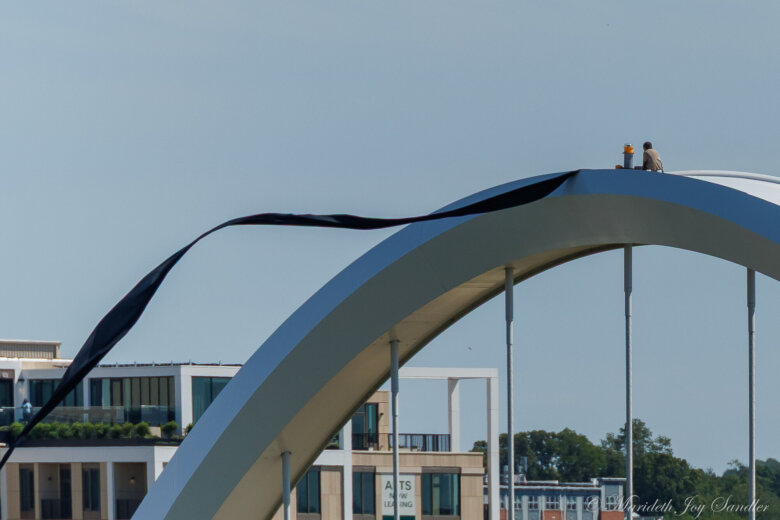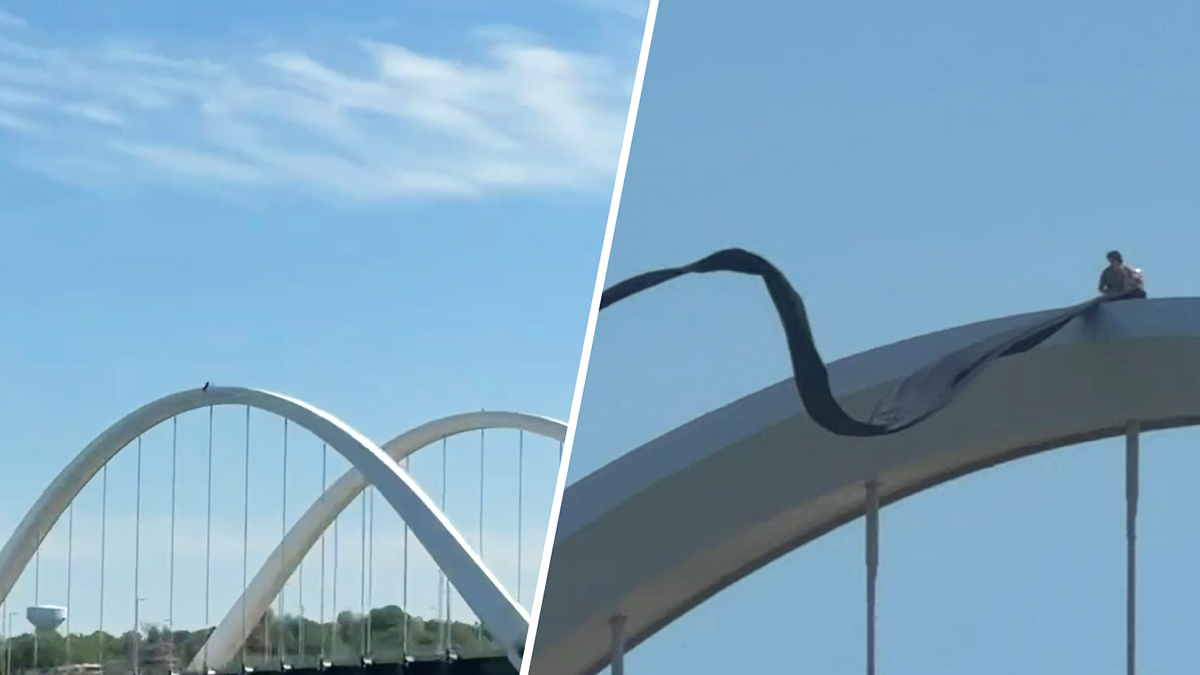
The recent occupation of the Frederick Douglass Memorial Bridge in Washington, D.C., serves as a case study in the intersection of infrastructure design and tactical civil disobedience. When Guido Reichstadter ascended the bridge arches during a Friday afternoon rush hour, the resulting total closure of South Capitol Street demonstrated the asymmetric leverage an individual can exert over a metropolitan transit network. This incident highlights a growing challenge for urban security: the transformation of critical transit nodes into platforms for high-visibility, low-probability security events.
Logistical Cascades and Resource Exhaustion
The immediate suspension of traffic at 3:30 p.m. created a profound logistical bottleneck. South Capitol Street functions as a primary arterial conduit between the District’s core and its southern residential sectors. The timing exacerbated this disruption, overlapping with peak commuter volume and a Major League Baseball event at Nationals Park. This convergence forced a rapid reallocation of municipal resources, shifting police and emergency medical services (EMS) from routine public safety duties to a specialized, prolonged containment operation.
The deployment of D.C. Fire and EMS high-angle technical rescue teams illustrates the specialized resource intensity required for such incidents. These operations necessitate a synchronized multi-agency perimeter involving maritime units for river security and police negotiators. The resulting ‘barricade situation’ classification fundamentally alters the operational tempo, prioritizing the preservation of life over the immediate restoration of traffic flow, thereby granting the activist a multi-day platform for dissent.
Institutional Shifts and Security Precedents
The Metropolitan Police Department’s classification of the event as a ‘barricade’ signals a tactical transition from standard crowd control to a specialized security operation. This designation allows for specific engagement protocols that favor strategic patience over forced extraction. However, the recurring nature of this specific individual’s actions—notably a 28-hour occupation in June 2022—raises critical questions regarding infrastructure hardening and the efficacy of current recidivism deterrents.
Analytically, the activist’s shift in rhetoric from domestic policy (the 2022 Roe v. Wade protest) to ‘existential threats’ (AI development and geopolitical tensions) suggests an evolution toward a more holistic, ideological critique. This transition utilizes the bridge not merely as a site for protest, but as a defensive fortification. By positioning himself at the apex of the steel arches, the individual effectively utilizes the structure’s architectural complexity as a barrier against rapid law enforcement intervention.
Socio-Economic Impacts and Digital Feedback Loops
The economic ramifications of the closure were concentrated within the Navy Yard commercial ecosystem. While partial reopening occurred by 8:00 p.m., the initial total shutdown hindered the influx of spectators for the scheduled Washington Nationals game. Such disruptions impose quantifiable costs on stadium operations and local vendors, who must manage altered consumer behavior and delayed foot traffic.
Furthermore, the incident transformed the immediate vicinity—specifically high-density residential developments like Dock 79—into a theater of surveillance. The use of live-streaming and high-definition photography by the activist creates a real-time digital feedback loop. This visibility bypasses traditional media gatekeepers, allowing the activist to amplify a local disruption into a national narrative, thereby complicating the tactical calculus of authorities who must resolve the situation without escalating the individual’s perceived leverage.
Future Considerations for Urban Resiliency
The Frederick Douglass Memorial Bridge incident underscores the tension between aesthetic urban design and security imperatives. The accessible nature of the bridge’s signature arches provides a literal and symbolic high point for those seeking to disrupt metropolitan stability. Moving forward, urban planners must balance the desire for iconic, open infrastructure with the necessity of physical deterrents that mitigate the risk of high-angle occupations.
As urban centers face increasingly sophisticated forms of tactical activism, the focus will likely shift toward ‘defensive architecture’ and more robust legal frameworks for managing infrastructure-based protests. Until then, the Frederick Douglass Memorial Bridge remains a vulnerable symbol of the fragility of urban transit networks when confronted with motivated, high-visibility disruption.