India and European Union Seal Landmark Free Trade Agreement
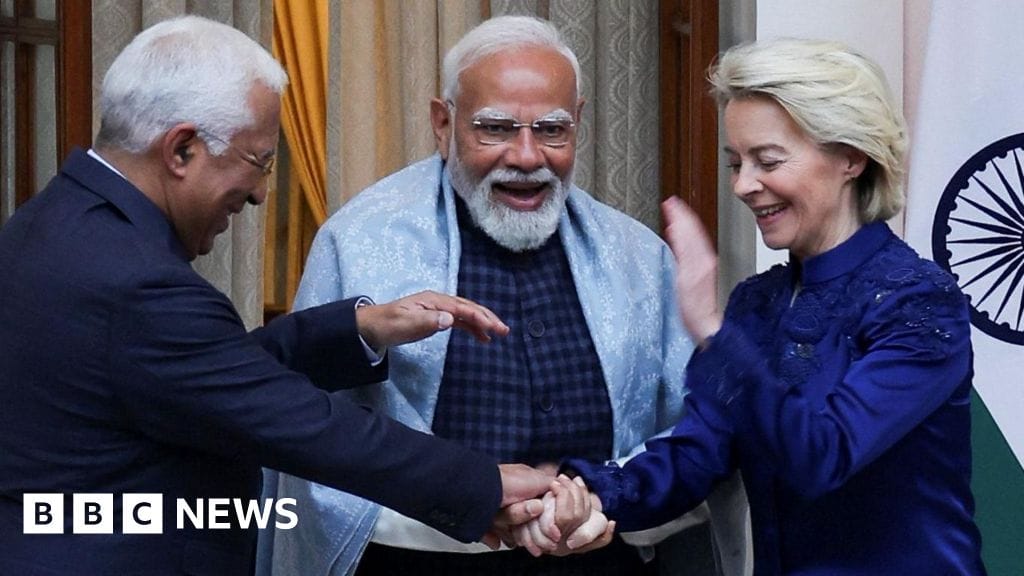
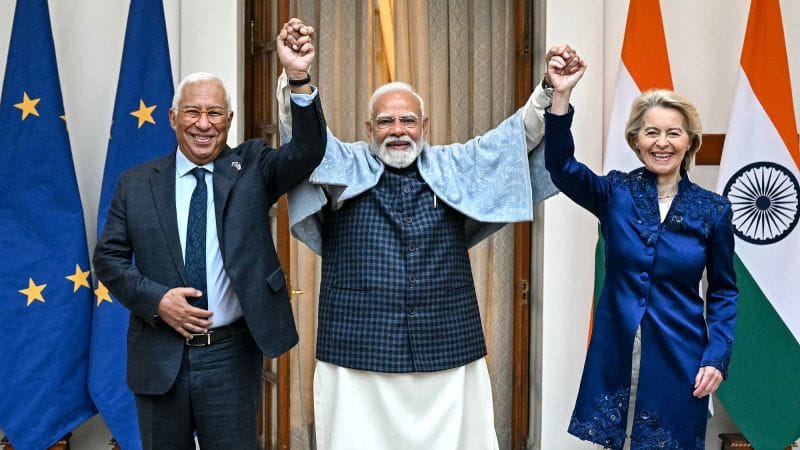
The European Union and India have agreed to a comprehensive free trade deal, described as the largest such agreement ever clinched by either side. This landmark accord was finalized on Tuesday, signaling a significant deepening of economic ties between the two major global players.
The negotiations, which have spanned years, reached a pivotal conclusion as both the EU and India seek to navigate a complex and sometimes unpredictable global trade landscape. The deal is seen as a strategic move to bolster their economic relationship in the face of evolving international trade policies.
Geopolitical Undertones Drive Trade Deal
Beyond the purely economic benefits, the India-EU trade deal is deeply infused with geopolitical considerations. Both entities have found common ground in their shared experience of facing what is perceived as erratic trade policy from a key global trading partner, implicitly referencing the United States under the Trump administration.
This shared experience has fostered a renewed sense of partnership, pushing both India and the EU to seek greater economic independence and strategic alliances. The agreement is thus framed not just as an intercontinental business transaction, but as a response to broader global shifts.
The Shadow of Trump’s Trade Policy
The looming shadow of Donald Trump’s past trade policies has played a significant role in accelerating and shaping the India-EU trade negotiations. During his presidency, Trump adopted protectionist measures and imposed tariffs, leading to trade disputes with various countries, including the EU and India.
These actions created a sense of uncertainty and underscored the vulnerabilities of relying heavily on a single, large trading partner whose policies could shift abruptly. Consequently, both New Delhi and Brussels have been motivated to diversify their trade relationships and secure more stable, mutually beneficial agreements.
Mutual Convergence on Trade Strategy
The convergence of India and the EU in pursuing this trade deal stems from a mutual desire to create a more resilient global trade architecture. Both have been ‘stung’ by the unpredictability of trade relations with the US, prompting them to turn towards each other for a more reliable partnership.
This collaboration is being hailed as the ‘mother of all deals,’ emphasizing its ambitious scope and the strategic importance attached to it by both sides. It represents a concerted effort to strengthen economic ties and reduce dependence on potentially volatile international trade dynamics.
Impact on Indian and European Economies
The immediate and long-term economic implications of this free trade agreement are substantial for both India and the European Union. It is expected to unlock significant trade and investment opportunities, fostering economic growth and job creation on both continents.
The deal aims to reduce or eliminate tariffs and non-tariff barriers on a wide range of goods and services, making it easier and more cost-effective for businesses to trade across India and the EU. This is anticipated to boost exports, encourage foreign direct investment, and enhance competitive positioning in global markets.
Potential Benefits for Consumers
For consumers in India and the EU, the agreement could translate into greater product variety and potentially lower prices. Increased trade flows often lead to greater competition, which can drive down costs for consumers and improve the quality of goods and services available.
However, the full impact on consumer markets, particularly the Indian kitchen as suggested by some analyses, will depend on the specific details of tariff reductions and how quickly businesses can adapt and pass on savings. While the broad strokes are positive, the nuances of implementation will be key.
Broader Context: Shifting Global Alliances
The India-EU trade deal is unfolding against a backdrop of significant shifts in global geopolitical and economic alliances. The rise of protectionism in some major economies has led nations to re-evaluate their trade strategies and forge new partnerships.
This agreement reflects a growing trend of regional and bilateral trade pacts designed to create more stable trading environments. It signifies a move towards a more multipolar world where economic power is distributed, and diverse partnerships are essential for sustained growth and stability.
Strengthening Bilateral Relations
The deepening of trade relations between India and the EU also serves to strengthen their overall bilateral engagement. Beyond economics, the deal is likely to foster closer cooperation in areas such as research and development, technology transfer, and sustainable development.
This holistic approach to partnership underscores the strategic importance of the relationship for both India and the EU, aiming to create a comprehensive framework for collaboration that extends far beyond mere trade in goods and services.
Looking Ahead: Implementation and Future Prospects
The successful implementation of this ambitious free trade agreement will be crucial. Both sides will need to work collaboratively to address any remaining concerns, ensure transparency, and create a conducive environment for businesses to leverage the new opportunities.
The agreement represents a significant step forward, but its true impact will be measured over time by the tangible benefits it brings to businesses, consumers, and the economies of India and the European Union. It is a testament to the enduring power of cooperation in shaping a more stable and prosperous global economic future.