
Gregory Peck’s 1969 Declaration: Deconstructing Academy Autonomy and Studio Influence
In a pivotal 1969 Hollywood Reporter clipping, actor Gregory Peck unequivocally articulated a core tenet of the Academy of Motion Picture Arts and Sciences’ operational integrity. His definitive statement – “There is no studio pressure in any phase of the Academy’s activities. There are loyalties and advocacies, of course, but pressure, no. It’s impossible. We’re not dependent on the studios. We’re not under any obligation to them. They have no leverage at all on the Academy” – served as a strategic demarcation, illustrating the organization’s asserted independence within Hollywood’s intricate power dynamics.
This declaration transcended mere observation; it was a deliberate reinforcement of the Academy’s positioning as an independent arbiter of cinematic excellence. By explicitly disavowing direct studio leverage, Peck, then a highly influential figure, underscored the organization’s commitment to a merit-based evaluation system, ostensibly shielded from overt commercial or corporate influence that could compromise award integrity.
The nuanced distinction Peck drew between “loyalties and advocacies” versus direct “pressure” is critical. While personal and professional affiliations inherently exist among industry professionals, his statement aimed to differentiate these organic, often benign, connections from systemic, coercive control. Such control, if present, could severely undermine the impartiality fundamental to the Academy’s global credibility, particularly in its nomination and voting processes. Operationally, this asserted independence implies a governance model where decision-making power resides primarily with its diverse membership, rather than with external corporate entities.
For studios, this absence of direct leverage, as articulated by Peck, fundamentally reconfigures their strategic engagement with the awards ecosystem. Rather than attempting direct influence, their efforts must strategically pivot towards producing critically acclaimed films, executing sophisticated and compliant awards campaigns, and cultivating goodwill within the Academy’s voting body. This dynamic incentivizes capital allocation towards artistic and cultural resonance, rather than projects designed solely for corporate maneuvering. The perceived fairness of the competition significantly elevates the value of an Oscar win, impacting box office, streaming performance, and long-term film legacy.
The implied financial and operational independence, central to Peck’s remarks, is a cornerstone of the Academy’s long-term viability. Not being beholden to studio funding or directives allows the institution to pursue its mission of advancing cinematic arts and sciences without external commercial constraints. This structural autonomy is vital for mitigating significant reputational risk; any perception of undue external influence would gravely diminish the Oscars’ prestige, cultural capital, and their profound impact on careers and film history.
Historically, Peck’s 1969 statement emerged during a period of substantial industry transformation, as the traditional studio system evolved into more diversified production models. It functioned as a public reaffirmation of the Academy’s foundational principles amidst increasing public scrutiny of institutional practices. The enduring analytical relevance of Peck’s comments lies in their continuous applicability to contemporary debates on awards integrity and industry influence, underscoring the perpetual strategic imperative for the Academy to assert and demonstrate its autonomy.
Katharine Hepburn’s 1974 Appearance: Ceremonial Gravitas and Strategic Storytelling
Further illustrating the Academy’s distinct cultural positioning and its power to command attention, Katharine Hepburn’s singular appearance at the 1974 Academy Awards provided a moment of immense ceremonial gravitas. This rare public engagement for the famously private actress underscored the event’s unique allure and its institutional importance, leveraging an icon’s mystique to enhance its own.
Hepburn’s decision to present the Irving G. Thalberg Memorial Award, rather than accept a personal accolade, strategically highlighted the Academy’s commitment to honoring career-spanning contributions to the industry. This particular award, recognizing producers whose body of work consistently demonstrates high-quality motion picture production, emphasizes enduring impact and leadership over individual performance, thereby broadening the definition of cinematic excellence celebrated by the institution.
Upon approaching the stage, Hepburn’s self-aware quip – “I am very happy that I didn’t hear anyone call out ‘it’s about time!'” – offered a subtle yet potent commentary on public perception and the timing of recognition. Delivered by an industry legend, this remark injected a layer of candidness into the formal proceedings, resonating deeply with audiences and industry insiders alike and humanizing the often-stiff ceremony.
Such meticulously managed moments, blending personal charisma with institutional ceremony, are pivotal in shaping the public narrative of the Academy Awards. They reinforce the event’s status as a cultural touchstone where legendary figures actively contribute to its ongoing legacy and perceived authenticity. The strategic choice of presenters and the nature of the awards they bestow collectively reflect the Academy’s values and its acknowledgment of diverse forms of industry contribution. Hepburn’s participation, for instance, significantly elevated the profile of the Thalberg Award, drawing critical attention to the often-unsung work of producers.
These high-profile appearances strategically enhance the Academy’s brand equity, solidifying its image as the premier institution for recognizing filmic excellence. The cumulative impact of such iconic moments sustains the global interest and respect commanded by the Oscars, extending their cultural influence far beyond the immediate event to impact media discourse, public opinion, and the historical record of cinematic achievement. The Academy’s continued ability to attract and feature figures of Hepburn’s stature, even for a singular, carefully chosen appearance, testifies to its enduring prestige and the perceived significance of its platform as a strategic asset within the global film ecosystem.
Contextualizing Industry Dynamics: Data Privacy and Oscar’s Broader Reach
Beyond the specific institutional dynamics of the Academy Awards, the provided source material uniquely includes a distinct, seemingly unrelated data point: the ability for US residents to opt out of “sales” of personal data. This informational fragment, potentially indicative of a `SCRAPE_FAILED` event or diverse data aggregation, immediately shifts the analytical lens to broader contemporary concerns regarding digital privacy and consumer rights.
The inclusion of such a disparate fact within a collection of industry-related clippings underscores the often-fragmented nature of information streams and the challenges in curating coherent narratives from diverse digital sources. Analytically, this particular data point on personal data sales opt-outs signals an evolving regulatory landscape and heightened public awareness concerning data governance. It implies a significant shift in how individuals interact with digital platforms and highlights the growing strategic importance of privacy controls in the modern information economy.
While not directly tied to the Academy’s core operations or awards integrity, the presence of such information in a broader data set illustrates the pervasive reach of digital policy. This policy framework exerts an indirect, yet significant, influence on all sectors, including the entertainment industry, primarily through evolving consumer trust metrics and the necessity of regulatory compliance. It implicitly reminds us that even established cultural institutions operate within a wider web of technological and societal shifts.
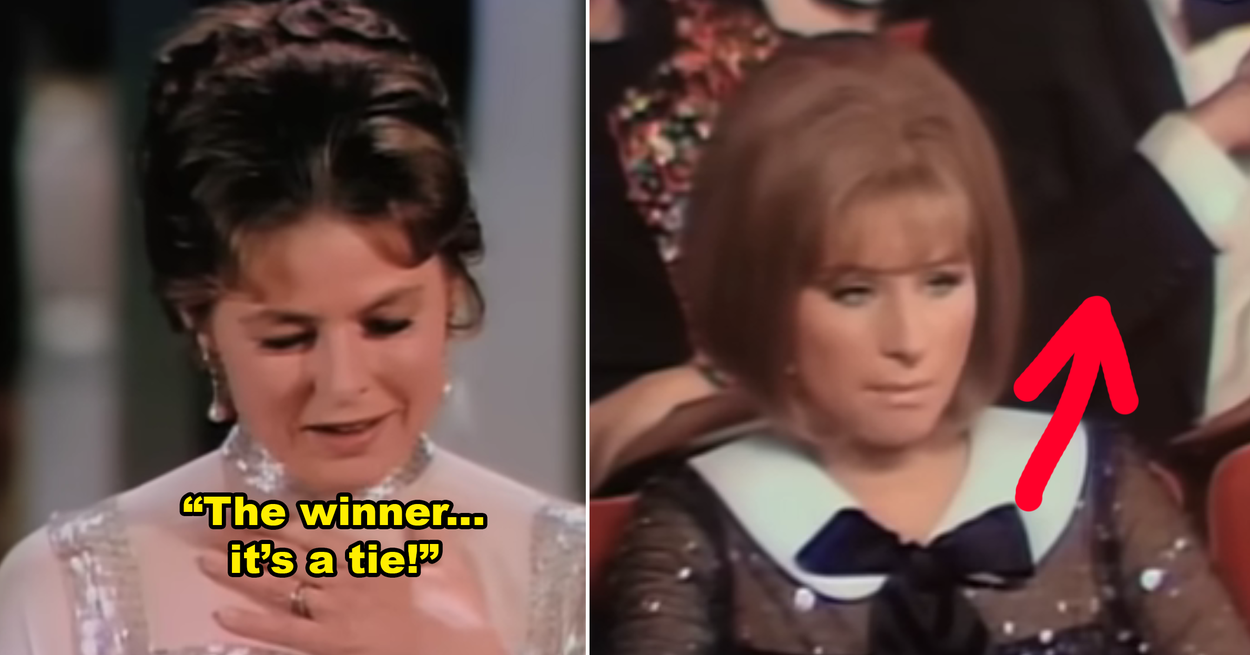
Furthermore, other titles accompanying the source material hint at the diverse and often localized connections to the Academy Awards, mentioning “oscar ties,” “6 Rare (And Shocking) Oscar Ties That Literally Left Hollywood Speechless,” and local industry contributions like a “Greenwich man who worked on ‘KPop Demon Hunters’ and Fairfield hatmaker among CT’s Oscar connections.” While specific details on these individuals or events are not provided, these titles suggest collectively the widespread cultural penetration of the Oscars, touching various communities, creative endeavors, and even niche industries far beyond the Hollywood major studios.
These broader contextual elements, ranging from macro data privacy regulations to micro-level local industry contributions, collectively underscore the multifaceted and interconectado environment in which institutions like the Academy operate. They illustrate how a central cultural event is not an isolated phenomenon but is deeply influenced by, and in turn influences, a wide array of societal, economic, and technological factors, shaping its relevance and impact.
Synthesizing Influence: Autonomy, Cultural Capital, and Industry Evolution
The analytical threads woven through Gregory Peck’s 1969 declaration and Katharine Hepburn’s 1974 ceremonial appearance converge to illuminate a fundamental truth about the Academy: its asserted autonomy is inextricably linked to its immense cultural capital and its strategic influence over the global film industry. Peck’s insistence on independence established the theoretical framework for meritocracy, signaling to studios that direct leverage was futile and redirecting their strategic focus towards artistic quality and sophisticated awards campaigns. This reorientation directly shapes competitive dynamics, incentivizing investment in creatively resonant projects and amplifying the economic and reputational value of an Oscar win for films and talent alike.
Concurrently, iconic moments, exemplified by Hepburn’s rare public presence, function as potent acts of strategic storytelling. They reinforce the Academy’s perceived gravitas and authenticity, transforming the Awards into a cultural touchstone that attracts top-tier talent and garners global respect. The collective weight of such institutional independence and ceremonial spectacle sustains the Academy’s brand equity, allowing it to act as both a barometer and a driver of industry trends and artistic discourse.
However, maintaining this delicate balance of autonomy and influence is a continuous strategic imperative, especially in an evolving digital landscape. The presence of disparate data points, such as consumer data privacy regulations, reminds us that the Academy does not operate in a vacuum. Its foundational principles, established in a different era, must continuously adapt to new forms of public scrutiny, technological shifts, and broader societal expectations, including those related to transparency and ethical governance. Any perceived erosion of its independence or integrity risks diminishing the very cultural capital that underpins its authority.
Ultimately, the Academy of Motion Picture Arts and Sciences’ enduring significance stems from its successful, albeit continuously challenged, navigation of these complex dynamics. By championing an ideal of independence and meticulously cultivating its public image through both explicit declarations and ceremonial acts, the Academy preserves its unique capacity to shape narratives, validate excellence, and profoundly influence the trajectory of cinematic art globally.

Photo by 5480831 on Pixabay.