Florida’s Air Travel System Under Pressure: Spring Break Exposes Deep-Seated Vulnerabilities
During a critical Spring Break period, Florida’s major air travel gateways—Orlando International Airport (MCO) and Tampa International Airport (TPA)—experienced extensive operational disruptions. These multi-day challenges, characterized by widespread flight delays and cancellations, critically highlighted the systemic vulnerabilities inherent in the air travel ecosystem when confronted with the dual pressures of unprecedented passenger volume and adverse meteorological conditions. The incident serves as a salient case study for the fragile interplay between demand, infrastructure, and environmental factors in modern aviation.
On Monday alone, MCO reported hundreds of flight delays and dozens of cancellations. Airport officials explicitly attributed this immediate strain to a combination of nationwide severe weather patterns and an overwhelming surge in travel demand, illustrating how localized events can quickly propagate and overload critical nodes within the national airspace system.
Escalating Disruption: Data Reveals Systemic Fragility Across Florida Hubs
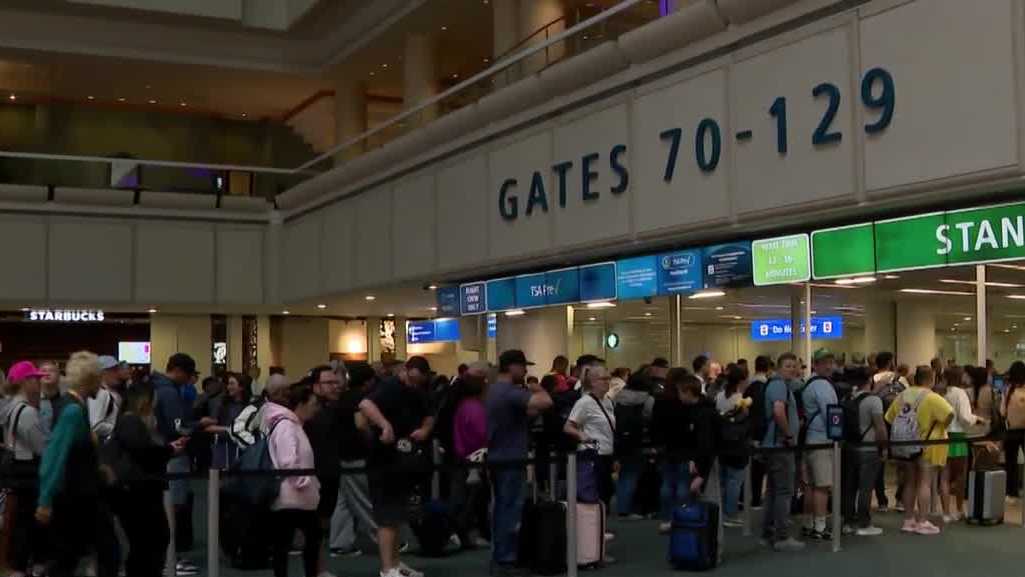
The operational pressures at MCO intensified, with FlightAware reporting over 400 delays and more than 90 cancellations by Tuesday, signaling a sustained inability to stabilize flight operations. Concurrently, security wait times at Terminal C surged to approximately one hour, a stark indicator of infrastructure capacity reaching its critical limits under prolonged peak demand.
Tampa International Airport (TPA) mirrored this acute strain. On Monday, TPA recorded over 240 delayed flights and more than 200 cancellations from a total of 607 scheduled departures. This substantial disruption—over one-third of all flights impacted—underscores the acute sensitivity of regional air traffic to localized weather phenomena, particularly when compounded by high passenger throughput.
The Federal Aviation Administration (FAA) issued a brief ground stop for incoming flights at TPA due to thunderstorms, a vital safety measure that, while necessary, invariably contributes to a cascading effect of downstream delays. This intervention, coupled with an hours-long ground stop at MCO on Sunday that contributed to approximately 500 delays and nearly 100 cancellations, vividly illustrates the intricate interdependencies between meteorological events, air traffic control protocols, and airport operational fluidity. The recurring pattern of such regulatory actions across multiple days and airports reveals a systemic fragility where localized weather events can rapidly propagate into widespread network paralysis.
Consequences on the Ground: Passenger Hardship and Economic Fallout
The direct and most severe consequences of these operational failures were undeniably borne by travelers. Thousands faced prolonged periods of uncertainty and significant logistical challenges, with numerous accounts from MCO and TPA passengers detailing being stranded for extended durations, some reporting waits exceeding 30 hours across various airports.
The palpable frustration was visually underscored by departure boards displaying an overwhelming litany of ‘delays’ and ‘cancellations.’ This stark representation of systemic breakdown erodes passenger confidence, impacts satisfaction, and could significantly influence future travel decisions and perceptions of both airline and airport reliability.
Airline responses, primarily offering travel credit, frequently fell short of meeting passengers’ immediate needs for timely transit or equitable compensation. This critical mismatch between corporate recovery protocols and immediate passenger requirements highlights a significant friction point in managing mass disruption events. The resultant unplanned expenditures for lodging, meals, and alternative transportation, exemplified by a collegiate baseball team forced into extended stays, illustrate the tangible financial and logistical burdens extending far beyond the initial flight ticket cost.
Airline Operational Resilience: Stress Test and Strategic Imperatives
The extensive flight disruptions subjected airlines to a severe stress test of their operational resilience. Managing complex logistical reshuffling—reassigning aircraft, re-crewing flights, and rebooking thousands of passengers across multiple simultaneously disrupted hubs—exposed the limitations of existing contingency planning.
Airlines’ decisions to primarily offer travel credit, rather than immediate cash refunds or guaranteed alternative transportation, underscored a strategic prioritization of liquidity and operational cost management. While this approach impacts financial stability, it often exacerbates passenger frustration, particularly for travelers with time-sensitive schedules or limited financial flexibility. The efficacy of their weather-response protocols, crew scheduling algorithms, and customer service infrastructure was demonstrably overwhelmed by the combined force of peak demand and widespread severe weather, directly impacting brand reputation and competitive positioning.
Infrastructure Deficiencies: Capacity Constraints and Investment Urgency
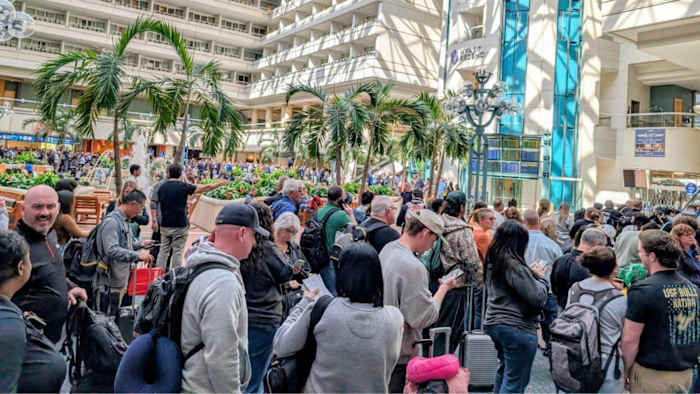
The pervasive security wait times and overcrowded terminals at MCO and TPA unequivocally exposed the inherent capacity constraints of existing airport infrastructure. Terminal designs, security checkpoints, and gate availability, engineered for specific throughput levels, proved inadequate against unexpected surges and prolonged disruptions, highlighting a critical mismatch between infrastructure capability and peak operational demands.
These incidents underscore the urgent imperative for strategic capital investments in airport expansion, modernization of security screening technologies, and optimization of passenger flow. Sustained pressure on operations during events like Spring Break provides invaluable empirical data for future capital expenditure planning, demanding robust, scalable infrastructure—encompassing physical upgrades and advanced digital systems for real-time information dissemination and operational coordination—capable of absorbing both predictable seasonal peaks and volatile weather shocks.
Air Traffic Management: The FAA’s Role and Modernization Imperatives
The FAA’s frequent issuance of ground stops at TPA and MCO underscored the critical, yet double-edged, role of air traffic control (ATC) in managing safety and congestion. While essential for preventing aircraft from landing in unsafe conditions, these regulatory actions inevitably cascaded into network-wide delays and compounded ground-side gridlock. This highlights the delicate balance between safety mandates and the operational fluidity of the airline industry.
The prevalence and duration of these ground stops during peak demand raise significant questions regarding the adaptive capacity of the current ATC system. It strongly suggests a need for strategic investments in modernization, including next-generation technologies and optimized staffing models, to enhance systemic resilience against simultaneous high demand and severe weather events. Effective, integrated coordination between airport authorities, airlines, and the FAA is paramount for future crisis management and mitigating passenger impact.
Broader Economic Impact: Florida’s Tourism Sector Under Threat
The extensive flight disruptions during Spring Break carried significant economic ripple effects far beyond direct airline and airport operations, directly threatening Florida’s tourism-centric economy. Hotels, rental car agencies, and local attractions faced revenue losses from canceled bookings and reduced patronage by stranded travelers or those whose trips were curtailed. While some airport-adjacent businesses saw temporary demand spikes from displaced passengers, this represents an uneven and ultimately negative redistribution of economic activity.
Crucially, the reputational impact on Florida as a premier tourist destination is a paramount concern. Persistent negative travel experiences can deter future visitors, potentially rerouting tourism revenue to destinations perceived as more reliable or less susceptible to such widespread disruptions. This underscores the profound economic vulnerability of tourism-dependent regions to air travel infrastructure limitations and volatile weather, necessitating robust public-private partnerships and contingency planning to safeguard regional economic resilience.
Strategic Outlook: Forging a Resilient Air Travel Ecosystem
The profound disruptions at Florida’s primary airports offer invaluable strategic insights for the entire air travel ecosystem. For airports, this necessitates a critical re-evaluation of expansion projects, terminal design, and the integration of advanced technologies to optimize passenger flow and security during peak demand.
Airlines must fundamentally reassess operational models to enhance their capacity to absorb and recover from widespread weather events without disproportionately degrading passenger experience. This includes refining rebooking processes, bolstering communication channels, and strategically adjusting scheduling to incorporate greater operational buffers during high-risk periods.
Regulatory bodies like the FAA face an ongoing imperative to modernize air traffic control infrastructure and develop more adaptive, climate-resilient strategies for airspace management. Ultimately, fostering a truly resilient and responsive national air transportation system demands a holistic, integrated approach that acknowledges the intricate interconnectedness of infrastructure, technology, human resources, and environmental factors. Proactive investment and collaborative planning are paramount to ensuring the long-term viability of air travel amidst increasing demand and growing climate volatility.