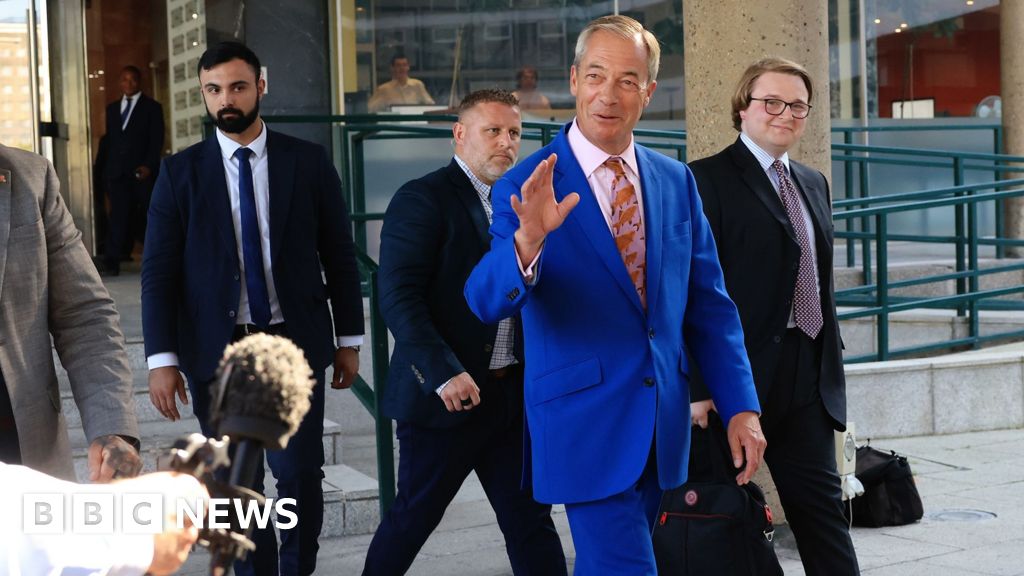
Farage Triggers By-Election Amidst Financial Probe
Nigel Farage’s resignation from Parliament and subsequent declaration to recontest the Clacton seat has ignited a political firestorm. Opponents frame the move as a “desperate stunt” to evade a deepening parliamentary investigation into undeclared financial dealings. This probe focuses on a £5 million gift from crypto billionaire Christopher Harborne and alleged undeclared funding for personal expenses from George Cottrell, investigating their connection to his parliamentary or political activities. Farage denies any wrongdoing. The timing suggests a strategic maneuver to shift focus from these allegations to a direct electoral contest.
Major Parties Shun Clacton Contest, Citing ‘Fake Election’
Labour, the Conservatives, and the Liberal Democrats have explicitly ruled out contesting the Clacton by-election, labeling it a “fake election” and a “circus” orchestrated by Farage. This unified refusal signals a strategic decision to deny Farage a platform and avoid legitimizing what they perceive as a diversionary tactic. Labour’s spokesperson called the move “pathetic” and refused to “indulge” Farage, urging him to “let the parliamentary investigation into his finances run its course.” Conservative leader Kemi Badenoch stated her party would not participate in a contest designed to “distract people.” The Liberal Democrats proposed blocking Farage’s resignation until the standards investigation concludes, highlighting structural concerns about resignations during ethical probes.
Reform UK’s Strategic Positioning and Electoral Calculus
Farage’s decision to recontest Clacton is a high-stakes gamble to leverage his populist appeal, framing the election as a “people versus the establishment” narrative. This strategy aims to reframe the financial scrutiny as an attack by a corrupt system, galvanize his base, and attract disillusioned voters. By positioning himself as a victim of “foul means,” Farage seeks to preempt negative press and investigations, casting himself as a martyr. Clacton, a constituency where he has previously stood, is chosen for its potential resonance with his anti-establishment message, turning the by-election into a referendum on his integrity and the political system.
Institutional Pressures and the Integrity of Parliamentary Processes
The parliamentary investigation into Farage’s finances introduces a critical institutional dimension. The inquiry’s focus on the relationship between gifts, funding, and political activities probes the boundaries of transparency and accountability for elected officials, aiming to uphold parliamentary integrity through the disclosure of financial interests and management of conflicts of interest. The unified boycott by major parties implicitly endorses the importance of the standards probe, signaling that Farage’s electoral strategy will not distract from the institutional process. This collective decision underscores a shared concern for the reputation and functioning of parliamentary democracy, prioritizing the integrity of the investigative process.
Farage’s “people versus the establishment” narrative directly challenges the legitimacy of the institutions scrutinizing him, seeking to erode public trust in the parliamentary standards committee and other authorities. This tactic aims to weaken the impact of any adverse findings. The refusal of mainstream parties to contest the by-election, while avoiding direct confrontation, leaves them open to accusations of abdicating responsibility. This strategic abstention bets that the negative optics of Farage potentially winning unopposed will be outweighed by avoiding a distracting campaign. The situation highlights the difficulty in countering populist narratives when non-engagement can be reinterpreted as weakness.
Downstream Implications for Political Discourse and Party Strategy
The Clacton by-election’s unusual dynamic, potentially allowing Farage to win by default, has broader implications for political discourse at the intersection of populism, financial probity, and electoral strategy. It presents a challenge for established systems: how to address allegations of financial impropriety against prominent figures without appearing politically motivated. The unified boycott suggests a consensus that Farage’s strategy should not be legitimized through direct competition. The long-term impact on Reform UK depends on Farage’s leadership and the resolution of controversies, potentially affecting the party’s growth and institutionalization.
The events underscore a trend of politicians leveraging personal controversies into electoral narratives, turning investigations into badges of honor or persecution. This could embolden others, potentially eroding trust in regulatory bodies. The major parties’ response in Clacton attempts to assert that such tactics will not deter accountability processes. The boycott is a calculated risk, aiming to starve Farage of a direct contest platform and keep focus on the financial investigation, prioritizing institutional integrity.
The situation exposes a potential vulnerability in the UK’s electoral system, where a figure facing allegations can use resignation and re-election to control the narrative. Calls to block resignations until investigations conclude suggest a desire for reforms to prevent such maneuvers from undermining parliamentary oversight and public trust. The impact on Clacton places residents in a unique position to judge their former representative amidst national controversy, with a stark choice between supporting Farage or abstaining, potentially leading to a win with low turnout and minimal electoral mandate.