The Strategic Significance of Dual Launch Windows
The back-to-back launch windows from Cape Canaveral and Kennedy Space Center exemplify the high-density operational capacity of Florida’s spaceport infrastructure. By staging a SpaceX Falcon Heavy morning mission followed by a United Launch Alliance (ULA) Atlas V evening deployment, operators demonstrate the logistical synchronization necessary for rapid orbital access.
These missions target diverging strategic objectives: the Falcon Heavy facilitates heavy-lift requirements for geosynchronous transfer orbits, while the ULA mission accelerates the deployment of low-Earth orbit (LEO) broadband constellations.
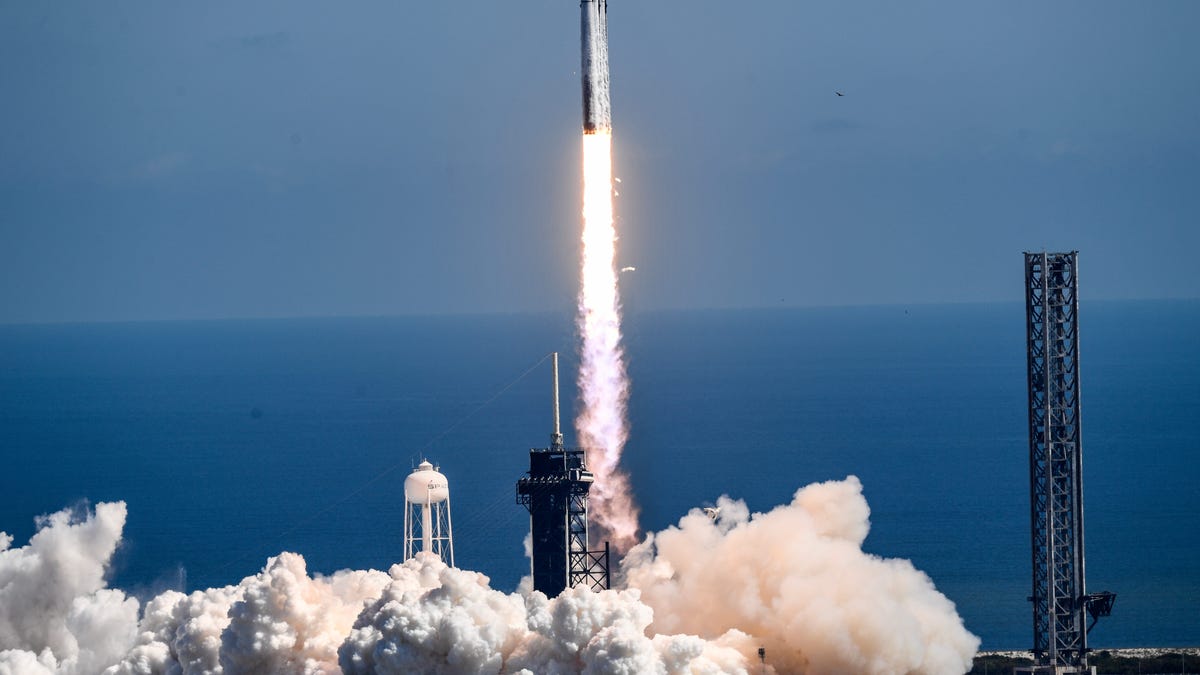
Operational Dynamics: Falcon Heavy
The Falcon Heavy represents a specialized segment of SpaceX’s launch portfolio. Its deployment for the ViaSat-3 Flight 3 mission underscores the necessity of high-thrust capabilities for heavy-lift assets. The procedural recovery of the side boosters remains a critical performance metric, validating an economic model built on hardware reusability to optimize cost-per-kilogram metrics.
Satellite Connectivity Evolution
The ViaSat-3 mission marks the transition toward high-capacity global broadband. By integrating the Inmarsat merger, Viasat’s operational framework consolidates assets to secure market share in the Asia-Pacific region. Placing a six-metric-ton satellite requires precise orbital maneuvering, highlighting the complex five-hour window between liftoff and final deployment.
Market Positioning and LEO Infrastructure
The Atlas V evening launch, carrying 29 Amazon-affiliated LEO broadband satellites, emphasizes the aggressive expansion of LEO constellations. Utilizing five solid rocket boosters, the Atlas V provides the thrust density required to reach critical mass in orbital infrastructure, offering a competitive advantage for rapid service rollout compared to fragmented launch schedules.
Institutional and Regulatory Maturity
Brevard County’s concentration of launch activity underscores the region’s role as a global aerospace hub. The ability of launch sites to manage sequential, high-visibility operations reflects the maturity of current regulatory and safety frameworks. These procedures are essential for maintaining the high-tempo demand requested by both commercial and government stakeholders.
Technological and Economic Synthesis
The aerospace sector is shifting from monolithic satellite architectures to massive, multi-satellite constellations. The capital-intensive nature of this shift, as seen in the long-term development of the Viasat-3 program, demonstrates that return on investment relies heavily on sustained infrastructure deployment. By balancing heavy-lift vehicles with frequent constellation-focused missions, the industry is establishing a resilient, diversified ecosystem for global data and telecommunications infrastructure.