
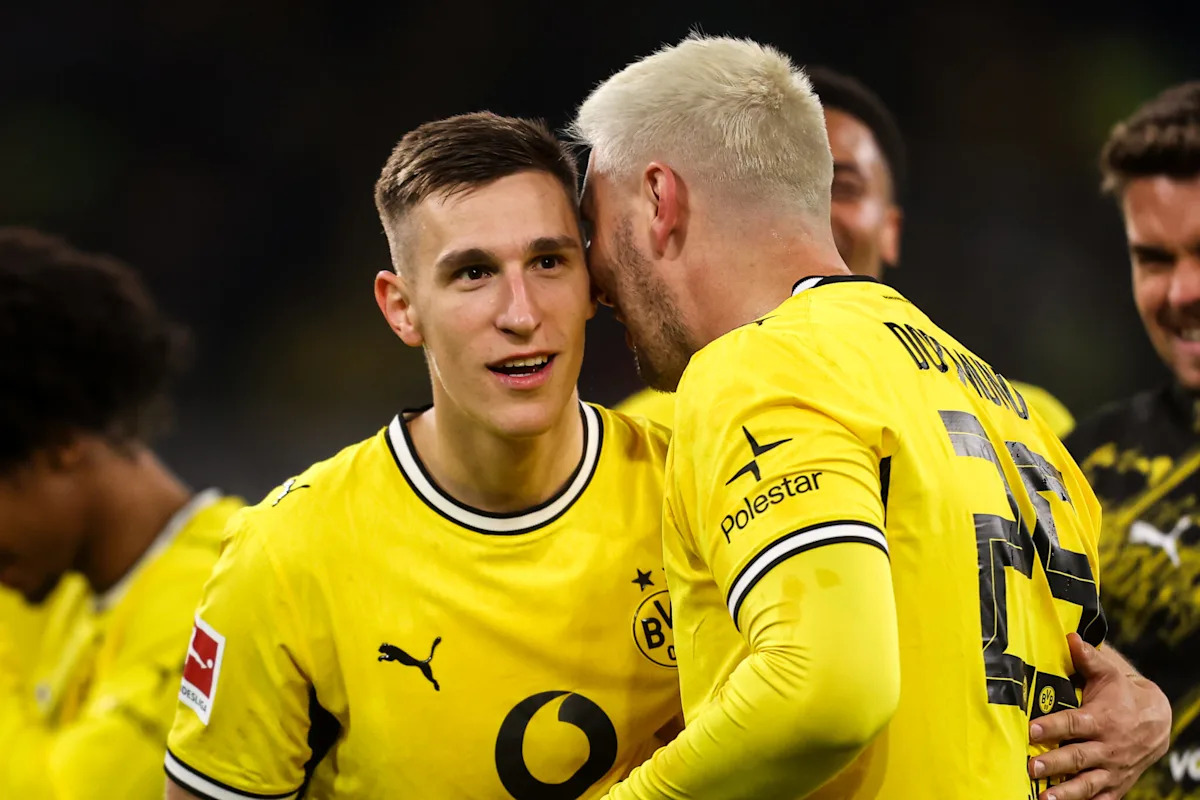
The Bundesliga season finale at the Weserstadion presents Borussia Dortmund with a rare opportunity for strategic auditing rather than desperate point acquisition. Having solidified a second-place finish with 70 points, the fixture against Werder Bremen serves as a controlled environment to test the club’s structural depth and tactical evolution under Niko Kovac.
While Champions League qualification is secured, the objective has shifted toward establishing a performance benchmark. Kovac’s public fixation on reaching 73 points—the club’s highest tally since 2019—is a calculated attempt to quantify institutional progress. This target serves as a psychological floor, aiming to institutionalize consistency in a post-transition year, even as the 16-point deficit behind Bayern Munich highlights a persistent domestic disparity.
Operational Depth and Youth Integration
The forced absence of Emre Can and Ramy Bensebaini through injury provides an operational window to accelerate the integration of high-upside talent. The anticipated inclusion of Jobe Bellingham and Yan Couto in the starting XI is less a necessity and more a strategic investment in market valuation and tactical flexibility.
Integrating Bellingham at 18 allows the technical staff to evaluate his readiness for the expanded 2024-25 European calendar. Simultaneously, deploying Couto in a more aggressive wing-back role signals a shift away from the conservative defensive blocks often seen in the club’s recent away fixtures. This tactical pivot aims to address the ‘away-day bottleneck’ that saw Dortmund drop points at Mönchengladbach and Hoffenheim, identifying whether the squad can maintain its home-turf dominance in hostile environments.
Fiscal Stability and Market Positioning
Beyond the pitch, the runner-up finish secures maximum domestic TV distributions and UEFA prize pools, providing the recruitment department with immediate fiscal certainty. This stability is critical for the retention of core assets like Gregor Kobel and Nico Schlotterbeck, while providing a platform for Serhou Guirassy to consolidate his status as the offensive focal point.
However, the internal narrative remains focused on the ‘ceiling’ of the current pragmatic approach. While Kovac has successfully stabilized the sporting trajectory, the magnitude of the gap at the top suggests that the next phase of the project must move beyond mere point accumulation toward a more dominant, title-contending identity. The Bremen match, therefore, is not a formality; it is the first data point in the 2024-25 strategic cycle.
Photo by hpgruesen on Pixabay.