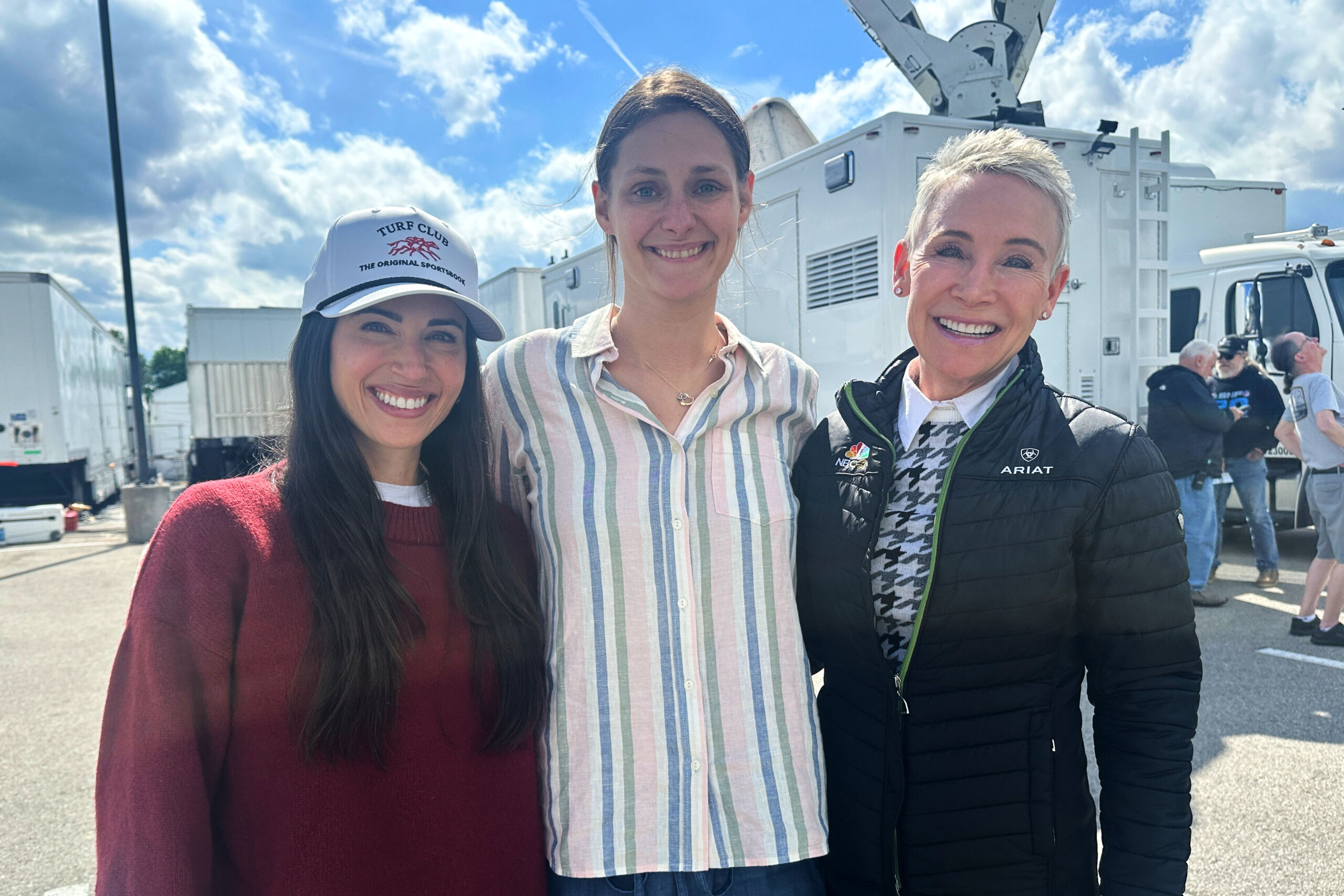
The retirement of Donna Barton Brothers from NBC Sports’ Kentucky Derby coverage, effective after the 152nd Run for the Roses, signifies the conclusion of a 26-year broadcasting paradigm. Since NBC secured the event’s media rights in 2001, Brothers has functioned as a critical institutional anchor, synthesizing the technical rigors of elite horsemanship with the narrative demands of high-stakes sports journalism.
Brothers’ decision to exit at age 60 represents a calculated transition for a broadcast structure that leveraged her dual-competency as a former premier jockey and an analytical authority. Her departure marks the end of an era defined by a unique on-track presence that bridged the gap between the athlete’s immediate post-race psychology and the viewer’s demand for real-time emotional data.
Proprietary Interview Methodology: The Horseback Advantage
Brothers’ primary innovation was the refinement of an interview methodology predicated on spatial and emotional proximity. By conducting interviews on horseback immediately following the finish line, she captured the ‘visceral heart’ of the winning jockey before the cognitive filters of media training or fatigue could sanitize the response.
This operational strategy provided NBC with a proprietary competitive advantage. The ability to intercept participants in the ‘paddock-to-post’ and ‘finish-to-circle’ windows transformed the broadcast from a passive viewing experience into an intimate narrative. This proximity required not only journalistic poise but also the physical skill of a retired professional rider, making the role historically difficult to replicate or outsource.
Strategic Succession and Institutional Stability
The retirement was not a reactive shift but a strategically managed exit finalized two years in advance. By communicating her intent to NBC producer Lindsay Schanzer well ahead of the 152nd Derby, Brothers ensured institutional continuity. This timeline allowed the network to audit its broadcast architecture and plan for the loss of a foundational talent who has been present for every NBC-televised Derby in the modern era.
Her tenure provided a consistent brand identity during a period of volatile media consumption shifts. Her presence stabilized the broadcast through the industry’s transition from traditional linear viewing to multi-platform digital engagement, maintaining a high level of ‘credibility capital’ with both the racing community and corporate stakeholders.
From Credibility Capital to Economic Value
Brothers’ authority was rooted in a professional racing career involving 1,100 wins, positioning her as one of the highest-earning female jockeys in history. This background afforded her access to restricted environments—such as the walkover and the saddling paddock—where trainers and owners are traditionally guarded. This access translated directly into economic value for NBC, as her insights provided the ‘human interest’ data that drives advertiser engagement and viewer retention.
The transition from jockey to broadcaster in 2001 was initially met with internal hesitation; however, her persistence led to the creation of a role that combined technical expertise with physical agility. Her presence in the ‘walkover’—the transitionary phase from backside to paddock—served as a crucial narrative bridge that built suspense and clarified the stakes for a generalist audience.
Conclusion: A Benchmark for Specialized Journalism
As Brothers prepares for her final broadcast at Churchill Downs, her legacy is defined by the professionalization of the ‘second-best seat in the house.’ Her career serves as a structural blueprint for how specialized knowledge can be leveraged to enhance the valuation of sports media products.
The 152nd Kentucky Derby will serve as both a personal milestone and a corporate transition point. While NBC faces the challenge of replacing a talent with such specific physical and analytical requirements, Brothers’ 26-year run has permanently elevated the standards for trackside reporting, shifting the focus from peripheral commentary to essential, high-impact analysis.