
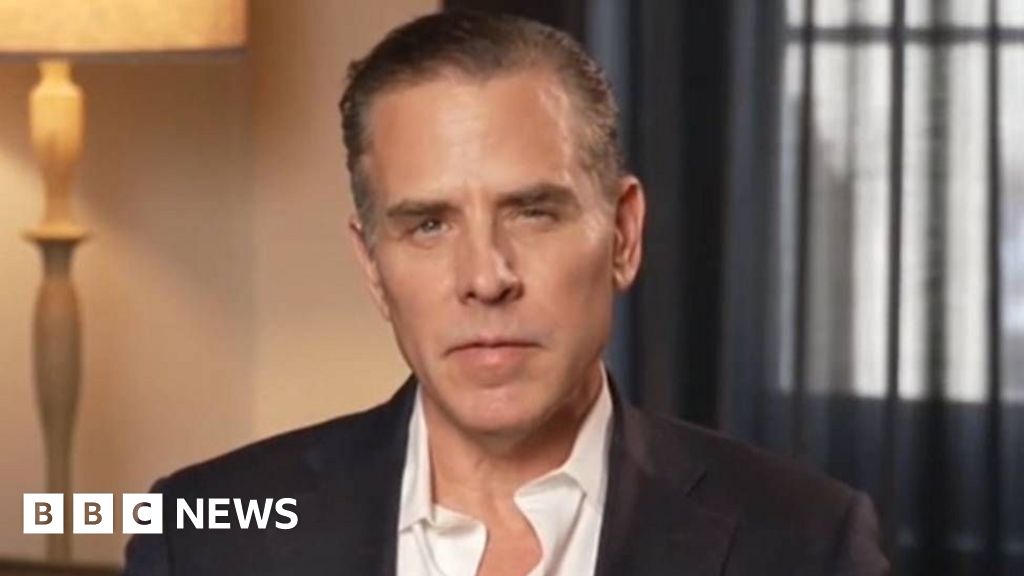
Hunter Biden’s interview with BBC Newsnight transcends typical political damage control, offering an analytical post-mortem on the institutional costs of executive clemency. By admitting that his pardon was neither beneficial for the United States nor the Constitution, he has validated the central critique of the decision: that it prioritizes paternal obligation over the impartial application of justice.
This candid admission shifts the discourse from legal defense to the prioritization of familial security over institutional norms. The framing of the pardon as a necessary shield against the ‘existential threat’ of the incoming administration signals a breakdown in the traditional protocols of the peaceful transfer of power, suggesting a transition from the rule of law to a cycle of preemptive political insulation.
The Institutional Erosion of Executive Clemency
The strategic deployment of the pardon power in this context establishes a volatile precedent for the intersection of dynastic politics and state authority. Biden’s self-identification as ‘the most privileged person there is’ serves as a blunt acknowledgment of structural advantages that undermine the administration’s previous rhetoric regarding judicial equity.
By conceding that the act was ‘not fair’ to the American public, Hunter Biden has traded moral high ground for legal finality. This maneuver seeks to de-escalate immediate political pressure while inadvertently confirming the perception of a two-tiered justice system—a narrative the Biden administration spent four years attempting to dismantle.
Strategic Insulation and the ‘Trump Factor’
The primary justification for the pardon is framed through the lens of political survival rather than judicial error. Biden characterizes the incoming Trump administration as a threat capable of weaponizing the Department of Justice, thereby positioning the pardon not as an evasion of accountability, but as a defensive measure against anticipated executive overreach.
This perspective reveals a profound institutional distrust between successive administrations. The implication is that the pardon power is no longer merely a tool for mercy, but an essential instrument of political protection, potentially incentivizing a cycle of preemptive pardons for family members and associates in future transitions.
Health, Legacy, and the Biden Exit Strategy
The intersection of President Joe Biden’s personal health and his final executive actions adds a layer of biological urgency to the administration’s closing chapter. The focus on the President’s physical challenges suggests that decision-making was increasingly influenced by a desire to resolve familial legal exposure during a period of diminished political capital and declining health.
Hunter Biden’s pivot toward addiction advocacy serves as a rebranding effort to move the public focus from criminal liability to social contribution. By ruling out future political office, he attempts to cauterize the political wound, though the effectiveness of this transition depends on whether his advocacy can remain untainted by the controversies of his past.
Media Strategy and International Narrative Control
Selecting the BBC for this disclosure was a tactical choice to reach a global audience and circumvent the polarized domestic media landscape. This allows the Biden family to frame their narrative as a human-centric story of paternal protection, appealing to universal sentiments that bypass specific American partisan divisions.
For the Democratic Party, these admissions create a rhetorical vacuum. Stakeholders who defended the administration’s institutional integrity must now reconcile those positions with the family’s own acknowledgment of the pardon’s ‘negative’ impact. This fallout may lead to internal party debates regarding future reforms to the executive pardon power and the necessity of stricter ethical boundaries for presidential families.
The Future of Public Trust
The ultimate consequence of this admission may be a further decline in public confidence in the American legal system. When the beneficiary of a pardon admits to its unfairness, it reinforces a sense of systemic inequity that transcends party lines. The legacy of the Biden administration will likely be defined by this tension: the conflict between the President as a constitutional steward and the President as a father shielding his kin from the vagaries of a shifting political landscape.

Photo by dannymoore1973 on Pixabay.