Managerial Reshuffles and Tactical Intersection
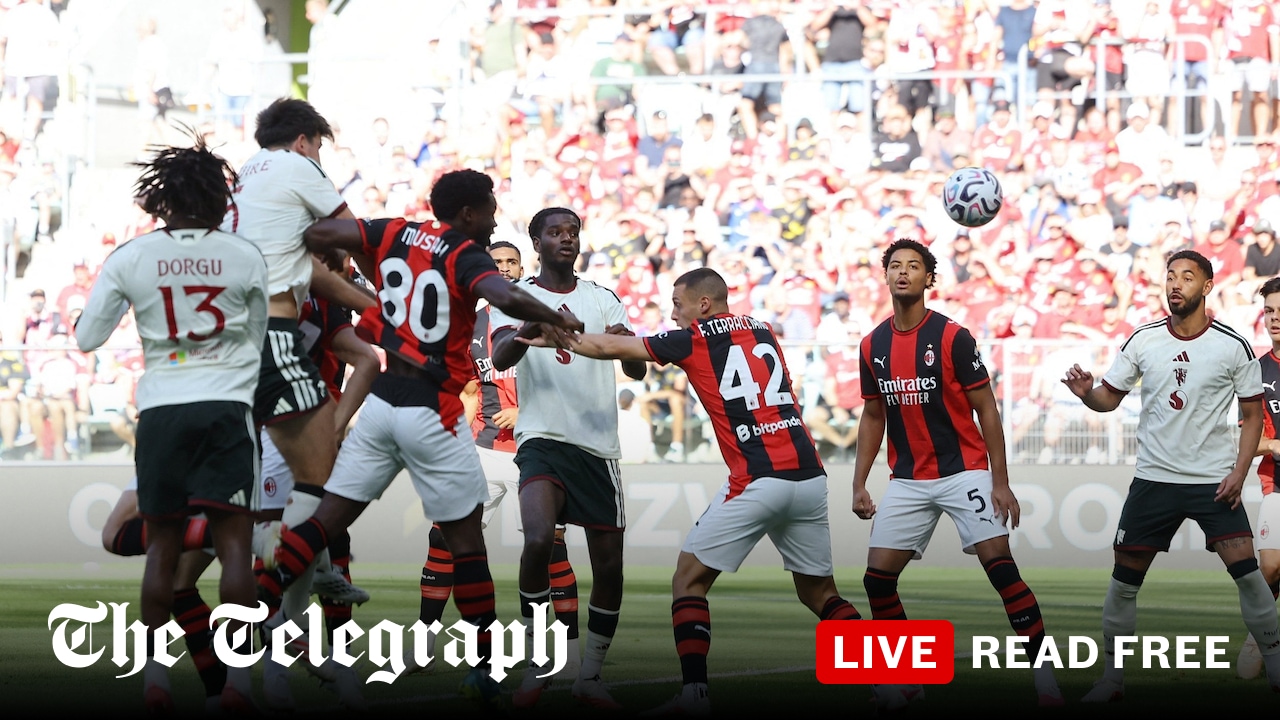
Manchester United concludes its summer preparation in Wroclaw against AC Milan, marking a strategic intersection for two clubs undergoing significant structural and managerial transitions. The friendly pits United’s interim manager Michael Carrick against his immediate predecessor at Old Trafford, Rúben Amorim, whose tenure concluded in early 2026 following internal strategic divergences.
Amorim swiftly transitioned to San Siro after his dismissal from Manchester United, taking the helm at AC Milan as they sought stability following Massimiliano Allegri’s departure. In his Italian presentation, Amorim acknowledged prior missteps in England, framing his Milan appointment as a reset after a challenging exit.
For Manchester United, this fixture serves as a crucial benchmark to assess the tactical stabilization achieved under Carrick. Securing a third-place Premier League finish and subsequent Champions League qualification, United aims to evaluate their tactical coherence against elite European opposition, following earlier tests against Atletico Madrid and Paris Saint-Germain.
Governance Dynamics and Leadership Continuity
Amorim’s departure from Manchester United was precipitated by operational misalignments within the club’s hierarchy during his year-long stint. Strategic disagreements concerning performance trajectory and structural responsibilities led to the administrative rupture in early 2026, necessitating a change in squad leadership.
During his introductory press conference at Milan, Amorim commented on the complex internal environment at United and expressed regret for the inability to address supporters directly upon his exit. His remarks highlighted the rapid deterioration of administrative dynamics when technical objectives conflict with executive governance.
Carrick’s subsequent interim appointment restored competitive stability during the latter half of the domestic campaign. The resulting top-four finish re-established United among Europe’s elite, providing continuity ahead of demanding multi-competition scheduling.
AC Milan’s Strategic Imperatives Under Amorim
AC Milan entered the summer transfer window under considerable domestic pressure, having finished fifth in Serie A, seventeen points behind champions Inter Milan. Witnessing their city rivals secure multiple league titles, the Milan board pursued tactical disruption by appointing Amorim to succeed Allegri.
This Polish encounter tests Milan’s early integration of Amorim’s structural requirements against an opponent demonstrating clear tactical execution. The Italian squad features a refreshed starting lineup including Torriani, Terracciano, De Winter, Pavlović, Chukwueze, Jashari, Musah, Estupiñán, Loftus-Cheek, Cissè, and Ramos, designed to establish a competitive framework.
Milan’s technical depth is further reinforced by substitutes such as Bouyer, Pittarella, Gila, Diawara, Vladimirov, Ricci, Saelemaekers, Bartesaghi, Modrić, Comotto, and Camarda. Rapidly integrating these profiles is critical for the Rossoneri to bridge the competitive gap in Italian football.
Manchester United’s Tactical Framework in Poland
Manchester United’s starting XI in Wroclaw, featuring Lammens, Mazraoui, Maguire, Heaven, Shaw, Tielemans, Santos, Fernandes, Amad, Dorgu, and Cunha, is engineered to test functional versatility. The selection emphasizes central distribution and physical resilience against a potentially aggressive Italian defensive setup.
Carrick retains significant tactical flexibility with substitutes including Heath, Mee, Amass, Dalot, Martínez, Yoro, Collyer, J. Fletcher, T. Fletcher, Mainoo, Gabriel, Lacey, Mbeumo, Rashford, and Zirkzee. This depth allows for management of player output and maintenance of high structural pressing thresholds.
Having maintained an unbeaten European tour against continental rivals, United enters this final preseason phase with established tactical patterns. The Wroclaw fixture represents the ultimate test of squad integration before the commencement of domestic and European competitions.
Broader European Football Competitive Context
The clash between these historic European clubs underscores the divergent trajectories of their respective technical projects. Manchester United leveraged internal interim management to achieve European qualification, while AC Milan opted for an immediate managerial replacement to address systemic underperformance.
Amorim’s swift move from Old Trafford to San Siro exemplifies the volatility of elite European coaching cycles, where tactical reputations can withstand short-term institutional setbacks. His success in implementing his strategic principles at Milan will be pivotal in their pursuit of a credible domestic challenge.
As both clubs conclude their summer programs, the performance indicators from Wroclaw will offer clear markers for their upcoming campaigns. United aims to sustain the momentum built under Carrick, while Milan seeks to validate their strategic restructuring under Amorim.