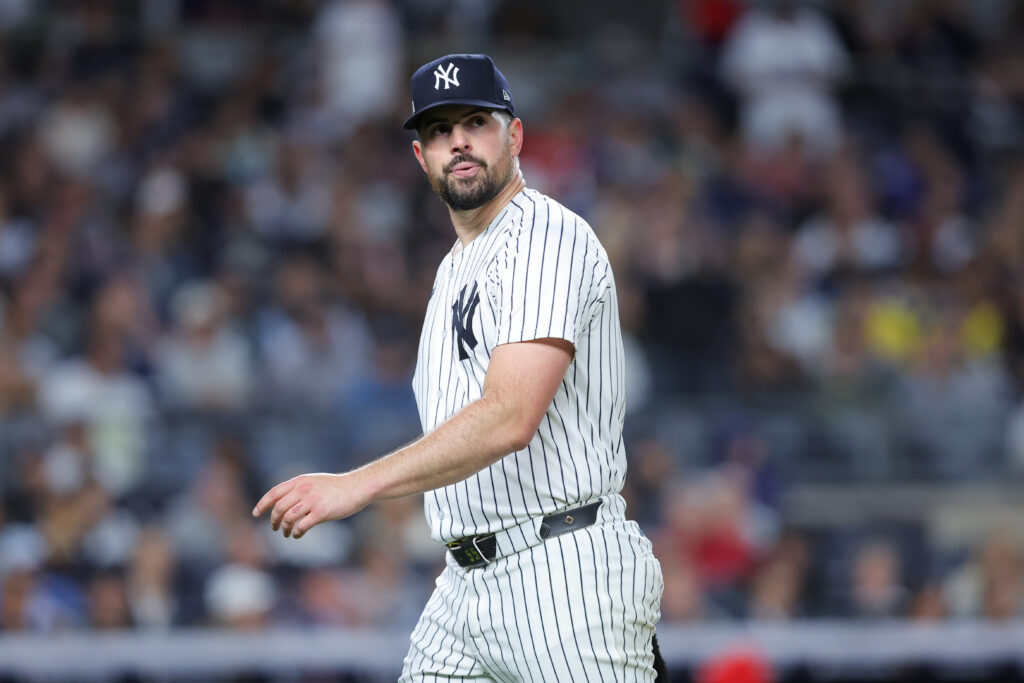
The reinstatement of Carlos Rodón to the New York Yankees’ active roster signifies a critical tactical pivot for the 2026 rotation. Following an October arthroscopic procedure to excise loose bodies and a bone spur in his left elbow, the veteran southpaw transitions from a period of medical stabilization to competitive workload management against the Milwaukee Brewers.
Biomechanical Evolution and Kinetic Freedom
Rodón’s return is defined by a significant mechanical shift: moving from pitching with severe chronic restriction to harnessing an expanded range of motion (ROM). During his 2025 campaign, Rodón managed a league-leading start volume despite limited ROM that impeded daily activities. The surgery was designed to eliminate this mechanical bottleneck, though it necessitates a period of neurological and physical adjustment as he recalibrates his release point and command within this newly accessible mobility.
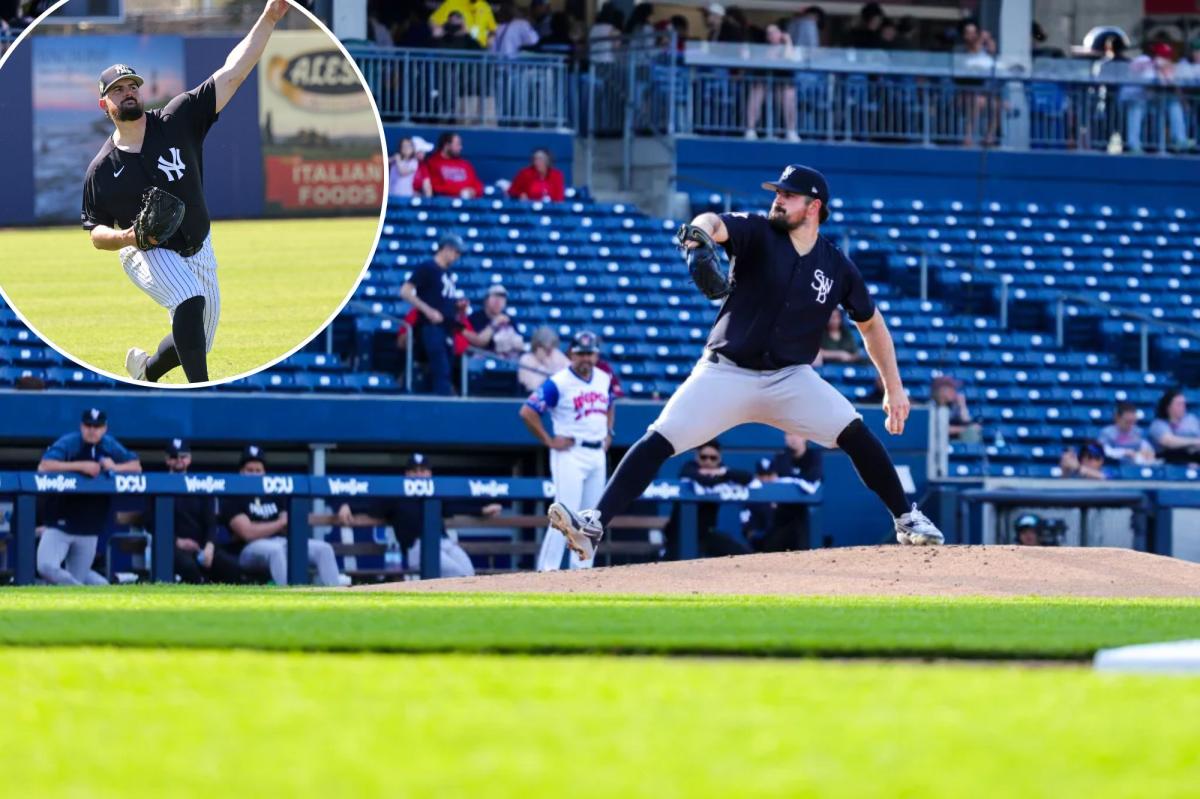
His final rehab appearance with Triple-A Scranton/Wilkes-Barre—yielding six runs over 6 1/3 innings—highlights this transitional volatility. However, the Yankees’ front office prioritized his 83-pitch volume over statistical outcomes, viewing the workload as a successful stress test of his surgically repaired joint.
Strategic Hierarchy and Depth Optimization
By slotting Rodón behind Max Fried and Cam Schlittler, the Yankees have constructed a top-heavy veteran tier designed to insulate younger prospects. This positioning allows Rodón to function as a high-ceiling mid-rotation anchor rather than a primary ace, reducing immediate high-leverage pressure while he regains his competitive rhythm.
The corresponding move—optioning Kervin Castro—prioritizes rotation length over bullpen versatility. This decision ensures the rotation can maintain a high-inning volume, shielding the relief corps from the fatigue typically associated with integrating a starter returning from the 60-day injured list.
Regression Analysis: The 2025 Benchmark
Rodón’s 2025 metrics—a 3.09 ERA and 3.2 fWAR over 195 1/3 innings—serve as the analytical floor for his 2026 expectations. His success was predicated on a 10% surge in groundball rate, a necessary adaptation to mitigate home run variance in hitter-friendly venues. Sustaining this profile at American Family Field will be the primary indicator of his current effectiveness. If his restored ROM does not compromise his vertical approach angle or strike zone efficiency, the Yankees anticipate a continuation of the elite strikeout-to-walk ratios that fueled his sixth-place Cy Young finish.
Institutional Capital and Risk Management
Rodón represents a massive capital investment in the Yankees’ pitching infrastructure. His 33-start durability in 2025 while pitching through pain reinforced his value as a high-volume asset. The organization’s patient rehab progression—moving from High-A Hudson Valley through the Triple-A level—reflects a risk-mitigation strategy intended to secure long-term ROI over short-term roster needs.
As the Yankees navigate a competitive American League landscape, Rodón’s ability to eat innings and provide a left-handed counter-balance to right-heavy lineups is indispensable. His performance in 2026 will ultimately validate the team’s medical protocols and their strategic reliance on high-cost veteran talent to anchor championship aspirations.