
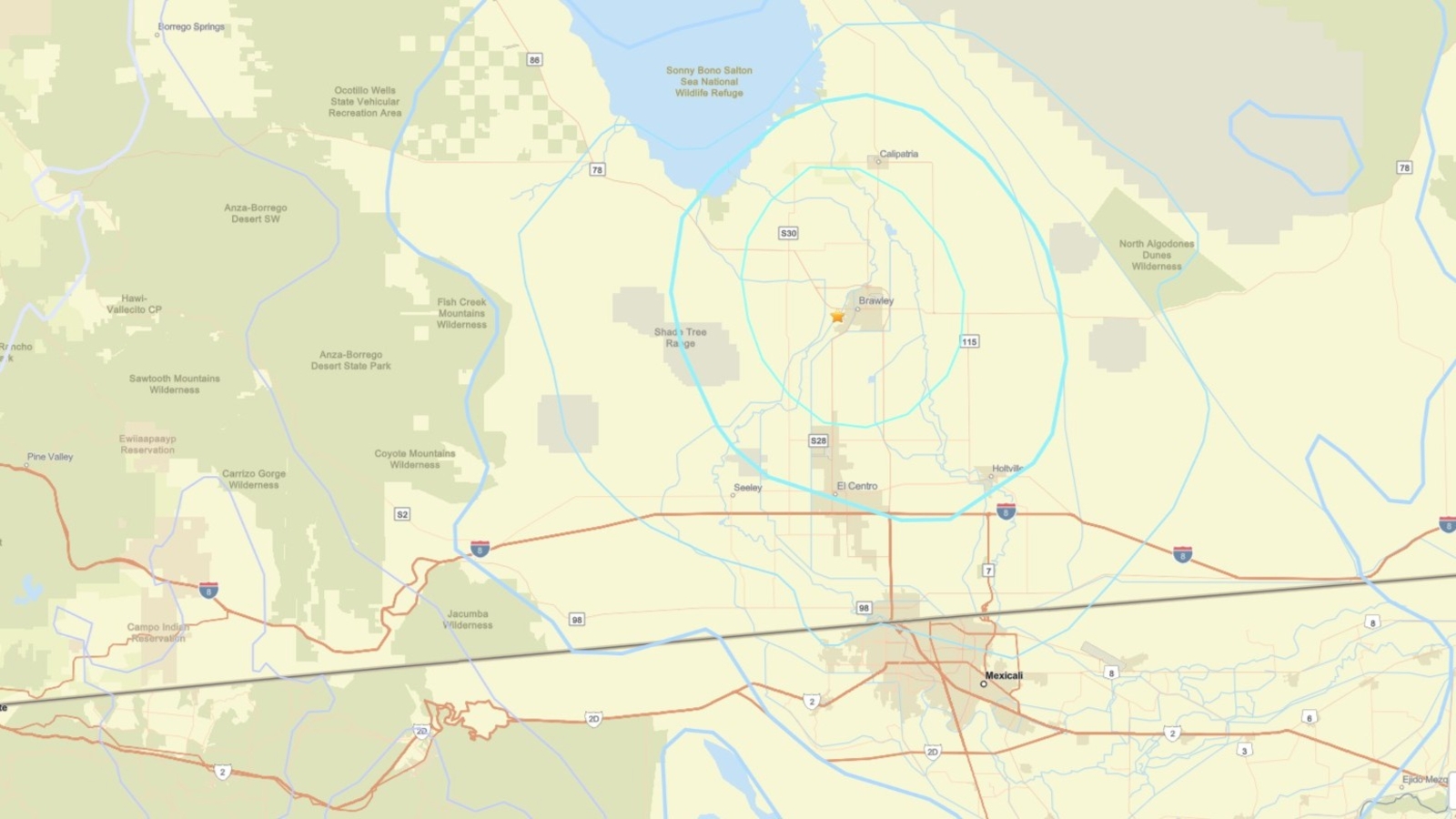
Imperial County Experiences Elevated Seismic Activity
Imperial County, California, including the Brawley area, experienced a notable increase in seismic activity on Saturday evening, culminating in a 4.4 magnitude earthquake. The U.S. Geological Survey (USGS) reported the primary event, underscoring the region’s persistent geological instability and the ongoing seismic threat to its residents and infrastructure.
The seismic sequence began with a 3.5 magnitude tremor located west-south-west of Brawley at a depth of approximately 8.5 miles. This initial event signaled a release of tectonic stress and served as a precursor to subsequent, larger seismic events, illustrating the complex dynamics of earthquake sequences.
Following the initial tremor, at least 11 additional earthquakes were registered, with magnitudes ranging from 2.1 to 4.0. This clustered activity pattern, typical of foreshock-aftershock sequences, indicates ongoing stress adjustments along local fault lines.
The most significant earthquake of the swarm, a 4.4 magnitude event, occurred at 7:22 p.m. at a depth of just over nine miles. The USGS later revised its initial magnitude estimate from 4.1 to 4.4, a standard refinement process as more seismic data is collected and analyzed, demonstrating the dynamic nature of real-time earthquake monitoring.
The final recorded earthquake in the concentrated swarm occurred at 8:13 p.m. Preliminary reports indicated no widespread injuries or significant structural damage, suggesting that the intensity of shaking was manageable for local infrastructure or that epicenters were situated in less populated zones.
Municipal Response and Public Awareness Efforts
Brawley city officials confirmed active monitoring of the seismic events by public safety personnel and issued statements to inform residents. This proactive communication strategy is vital for managing public perception and disseminating accurate information during periods of seismic uncertainty, a key element of emergency preparedness protocols.
While no major damage or immediate safety threats were reported, residents were advised to remain vigilant for potential aftershocks. This standard recommendation reinforces the importance of continuous situational awareness and readiness for evolving seismic conditions.
The municipal response exemplifies established protocols for seismic events, prioritizing immediate assessment and clear public information dissemination. The reliance on local emergency services highlights the coordinated resource allocation and operational capacity required for effective incident management.
Regional Seismic Context and Infrastructure Vulnerabilities
The Brawley area is located within the seismically active Imperial Valley, a region influenced by the San Andreas Fault system and the localized Brawley seismic zone. This geological setting makes earthquake swarms a recurrent phenomenon, necessitating continuous vigilance and investment in infrastructure resilience.
The moderate depth of these earthquakes, generally between 8 to 9 miles, indicates the seismic energy release occurred within the Earth’s crust, sufficient to generate noticeable ground motion at the surface and impact local communities.
The concentration of seismic events, including multiple tremors exceeding magnitude 3.0, signifies ongoing tectonic stress accumulation and release within the local fault network. Such activity can influence the probability of future seismic events in the broader region.
The USGS plays a critical role in seismic monitoring and data analysis, providing essential information for scientific understanding and public safety initiatives. Their continuous data collection underpins emergency management decisions, influencing building codes, urban planning, and disaster response strategies.
Broader Implications for Preparedness and Investment
The recurring seismic activity across California, exemplified by the Brawley swarm and other recent events like those in Mendocino County and near Julian, reinforces the state’s classification as a high-risk seismic zone. This persistent threat necessitates sustained investment in seismological research, advanced early warning systems, and hardening critical infrastructure.
For local governments and emergency managers, each seismic event serves as a practical assessment of preparedness plans and response capabilities. The effectiveness of inter-agency communication, coordination, and resource deployment is paramount in mitigating the impact of future, potentially more destructive, earthquakes.
The economic ramifications of seismic risk are substantial, influencing insurance markets, property values, and construction costs. Businesses and homeowners in seismically active regions face ongoing financial considerations for seismic mitigation and risk management.
USGS data from events like the Brawley swarm contribute to a refined understanding of fault mechanics and seismic hazard assessments. This scientific knowledge is vital for long-term planning and the development of more accurate predictive models, though precise earthquake prediction remains a scientific challenge.
The interconnected nature of California’s infrastructure—power grids, transportation, and communication networks—means that a major seismic event could trigger cascading failures across vital systems, underscoring the need for comprehensive resilience planning.
Consistent seismic occurrences throughout California highlight a systemic vulnerability requiring ongoing attention from policymakers, engineers, and the public, serving as a persistent reminder of dynamic geological forces and the imperative for adaptation and preparedness.
Media coverage of seismic events, such as by KABC, plays a crucial role in public education and awareness. This reporting can shape public perception and motivate individual preparedness actions, like securing homes and developing emergency plans.
The USGS’s iterative refinement of earthquake magnitude measurements, as observed with the M4.4 event, reflects evolving seismological methodologies. This commitment to accuracy is foundational for understanding seismic patterns and informing risk assessments.
Local authorities face the operational challenge of balancing immediate response needs with long-term mitigation strategies. Resource allocation for monitoring, emergency response teams, and infrastructure upgrades is a continuous process driven by the persistent earthquake threat.
The potential for information access barriers during critical events, as noted with website technicalities like disabled JavaScript, emphasizes the need for resilient and accessible emergency communication strategies across diverse platforms.
The geographical distribution of seismic activity across various California counties underscores a statewide challenge that necessitates coordinated efforts and resource sharing among regional agencies and state-level bodies.
Proactive investment in resilient infrastructure and public education yields substantial economic benefits by reducing long-term recovery costs and minimizing disruption following seismic events. This perspective prioritizes risk reduction and resilience building.
Urban planners and building code regulators rely on empirical data from seismic events to inform future development policies and engineering standards, aiming to enhance community seismic resistance.
The effectiveness of emergency response is measured by responder training, equipment readiness, and clear command structures, all of which are critically tested during seismic events.
Seismic risk management involves continuous monitoring, assessment, mitigation, and response. Each event informs ongoing strategic adjustments and resource allocation.
The uneven distributional impact of seismic activity often affects vulnerable communities and older infrastructure more severely, highlighting disparities in preparedness and the need for equitable resilience solutions.
Cascading effects of major earthquakes can extend beyond physical damage to disrupt supply chains, strain public health systems, and impact financial markets, demonstrating the systemic nature of seismic risk.
Seismic events often prompt incremental adjustments to existing protocols, reinforcing the importance of continuous preparedness rather than immediate systemic overhauls, unless a catastrophic event dictates otherwise.
Operational constraints for seismic monitoring agencies include vast geographical coverage, the need for technological upgrades, and complex data interpretation.
Financial exposure for insurance companies is significant, as they bear substantial economic burdens post-earthquake, influencing premium rates and policy availability.
Governance pressures on regulatory bodies are to ensure adequate building codes, consistent enforcement, and effective implementation and maintenance of public safety measures.
The performance of early warning systems, while still evolving, offers a crucial opportunity to reduce casualties and damage by providing advance notice.
Capital movement in the seismic sector is driven by public investment in infrastructure and research, alongside private sector innovation in safety technologies and insurance.
Competitive implications for technology firms lie in developing advanced seismic monitoring, data analysis, and early warning solutions for government and private adoption.
Emergency management agencies focus on robust communication, clear command, and inter-agency cooperation for coordinated responses.
Cultural adaptation in earthquake-prone regions involves continuous education, drills, and reinforcement of safety behaviors to maintain preparedness.
The structural logic of seismic preparedness is a feedback loop where lessons from smaller events inform planning and response for larger earthquakes.

Photo by Makalu on Pixabay.