
Marine Encounters and Coastal Realities
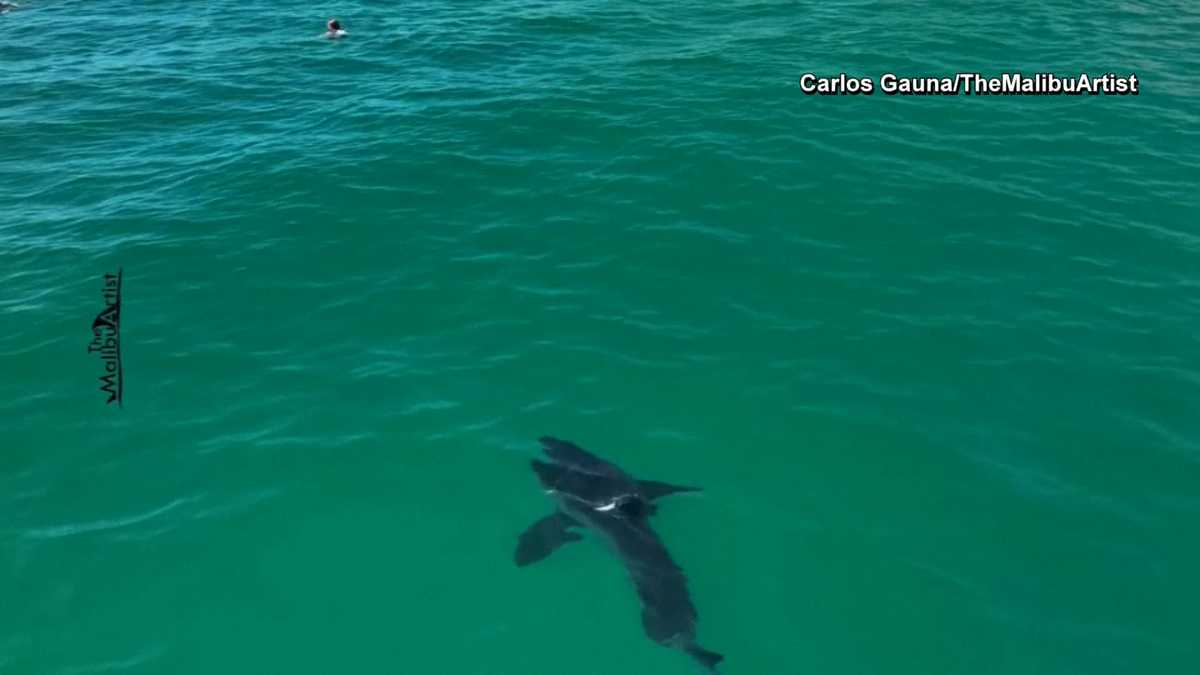
Documenting marine wildlife near populated shorelines creates complex management challenges for coastal municipalities. The recording of a ten-foot great white shark swimming near children north of Los Angeles highlights the intersection of recreational beach use and marine habitats. Aerial drone technology captures granular, localized aquatic activity that traditional shore-based observation routinely misses.
Photographer Carlos Gauna observed the apex predator moving from deeper waters toward unaware swimmers who remained unprompted to its presence. This interaction, marked by individuals waving at the hovering drone, reveals an information asymmetry between aerial observers and bathers. Consequently, coastal authorities must shift reliance toward active technological surveillance to evaluate wildlife hazards in real time.
Environmental Drivers and Marine Biology
The frequency of near-shore encounters correlates with rising ocean temperatures. Elevated thermal baselines alter historical migration and habitation patterns for marine species, including juvenile predators. This shift increases animal presence during specific seasonal windows, expanding the geographic overlap between human recreation and wildlife territories.
Despite increased visual documentation near popular beaches, institutional experts emphasize that higher sighting rates do not forecast a surge in predatory attacks. California State University Long Beach Shark Lab Director Chris Lowe noted that while observation rates climb due to pervasive technology and environmental shifts, behavioral aggression toward humans remains statistically rare. This distinction prevents disproportionate municipal closures while maintaining baseline public awareness.
Institutional Monitoring and Public Safety Operations
Advanced monitoring tools—such as remote-controlled cameras and aerial drones—alter the operational framework of coastal safety management. Lifeguard services and municipal agencies face pressure to interpret high-resolution data streams without inciting undue public panic. Institutional reliance on university-affiliated marine laboratories bridges raw data collection and actionable municipal policy.
Stakeholders across tourism, municipal administration, and emergency services navigate a balance between economic vitality and risk mitigation. Coastal economies rely on uninterrupted beach access, requiring transparent communication grounded in marine science. This ensures public safety protocols evolve alongside environmental conditions rather than responding to anecdotal alarm.
Socioeconomic Implications and Governance
Modern recording technology introduces reputational and economic considerations for coastal regions. Real-time digital dissemination of marine predator sightings influences tourism flows, forcing local authorities to adopt proactive public relations frameworks. Governing bodies must calibrate messaging to prevent misinterpretations of normal marine ecology from damaging commercial interests.
Ultimately, the documented proximity of apex predators to recreational zones tests municipal infrastructure. As environmental baselines fluctuate, coastal institutions must institutionalize adaptive management strategies incorporating continuous scientific assessment. Aligning technological surveillance with rigorous biological interpretation remains vital for managing shared marine environments.

Photo by cocoparisienne on Pixabay.