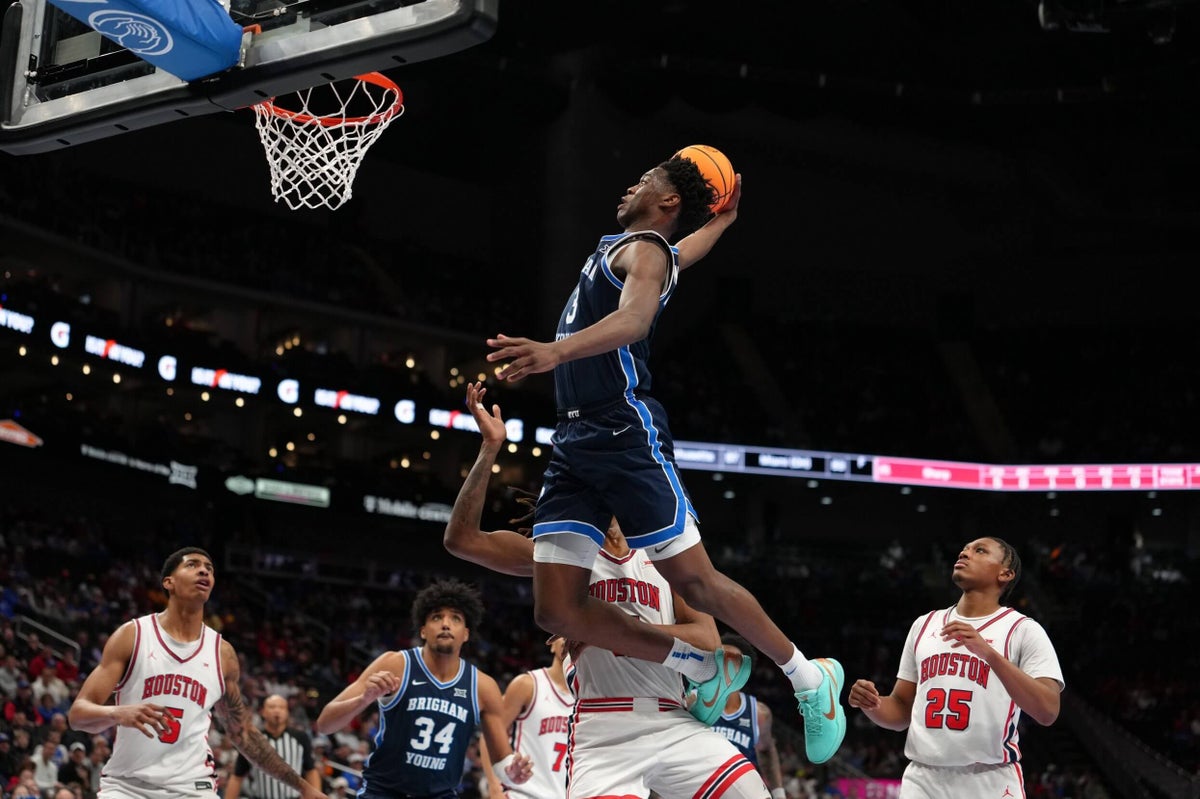
The acquisition of AJ Dybantsa by Brigham Young University transcends standard recruiting success; it represents a fundamental pivot in the institution’s athletic and commercial strategy. By securing the nation’s top-ranked prospect, the program has declared its intent to operate within the elite strata of college basketball—a domain historically monopolized by blue-blood programs.
This transition is physically manifest at the Wilkinson Student Center, where Dybantsa’s personal brand is seamlessly integrated into university retail. The availability of five-star branded apparel and autographed merchandise illustrates a sophisticated embrace of Name, Image, and Likeness (NIL) frameworks, effectively navigating the unique regulatory environment of a church-owned institution.
Institutional Capital and the NIL Framework
BYU’s ownership by The Church of Jesus Christ of Latter-day Saints provides a singular financial foundation. Unlike the decentralized funding models of state universities, BYU utilizes a centralized governance model that must now reconcile institutional mission with high-stakes competitive ambition.
The shift toward aggressive revenue sharing and NIL participation suggests that university leadership views elite athletics as a primary vehicle for global brand visibility. This strategic alignment requires a robust financial infrastructure capable of attracting generational talent in an inflationary market, signaling the end of BYU’s era as a merely regional or niche competitor.
Strategic Recruitment as Proof of Concept
Dybantsa’s recruitment serves as a validation of BYU’s modern operational model. It proves the program can navigate a landscape where professional development and financial incentives are weighed equally with cultural fit. For Dybantsa, choosing BYU provides the leverage of being a foundational centerpiece for a rising power, maximizing his visibility ahead of the NBA draft.
Strategic advantages extend to the postseason; the familiar environment of Portland for the upcoming tournament, combined with the program’s 33rd NCAA Tournament appearance, provides a narrative of continuity essential for deep tournament runs.
Operational Resilience and Roster Dynamics
The program’s stability is currently being tested by physical attrition, most notably the season-ending ACL injury to Richie Saunders. As the team’s third-leading scorer (18.0 PPG), Saunders was central to the Cougars’ offensive efficiency. His absence necessitates an immediate recalibration of the rotation and defensive versatility.
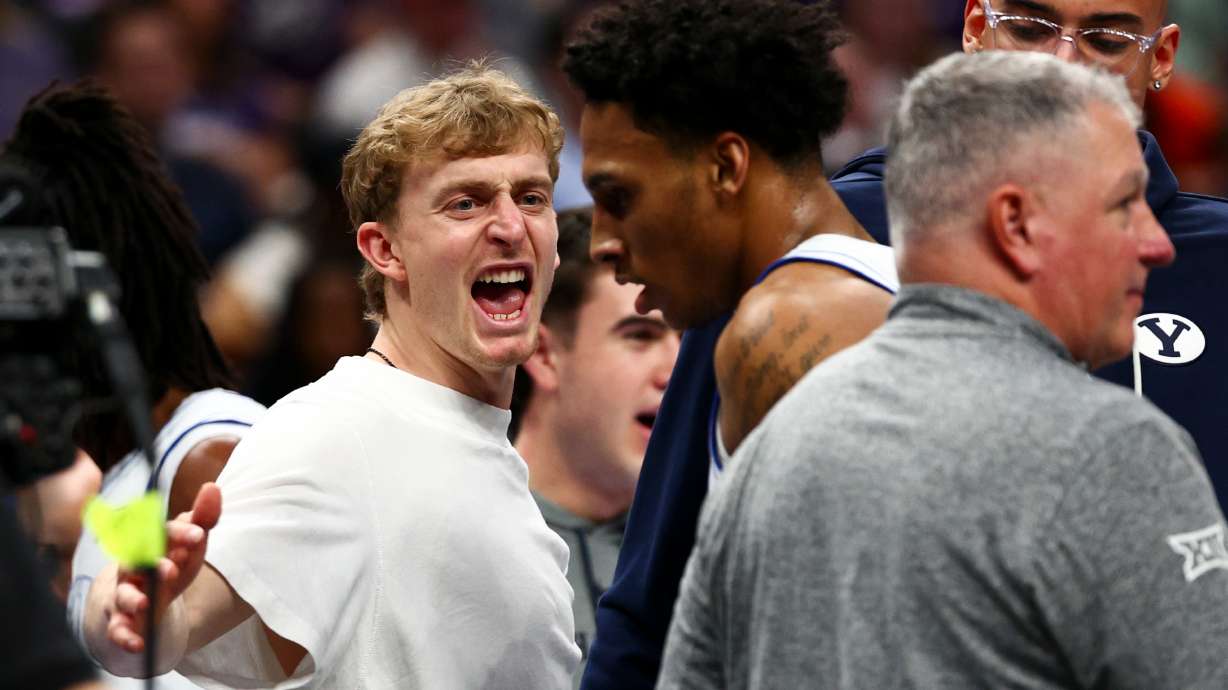
The response to this setback underscores the locker room’s cultural cohesion. The visibility of injured players like Saunders in non-playing capacities, and their interactions with teammates like Jared McGregor, serves as a psychological management tool. This internal support is critical when integrating high-profile freshmen into an established veteran core, ensuring that disparities in NIL valuation do not fragment team unity.
Competitive Implications in the Big 12
Entry into the Big 12 has accelerated BYU’s competitive timeline. The conference demands a level of depth and athleticism that requires a constant influx of professional-grade talent. The Dybantsa acquisition is a direct response to these structural pressures, aiming to move the program beyond consistent participation toward a perennial presence in the tournament’s second weekend.
This synergy of media and commerce—utilizing Dybantsa’s image on sanctioned merchandise—creates a distinct revenue stream. By leveraging its global fan base, BYU is creating a commercial ecosystem that provides a sustainable competitive advantage in the NIL marketplace.
Conclusion: The ‘Bigger Picture’ Standard
The success of the current cycle will be measured by how well BYU balances its traditional values with the demands of elite athletics. The Dybantsa era has already altered the global perception of the program, proving that BYU is a viable destination for the country’s best athletes. The “bigger picture” is no longer a goal; it is the new operational standard for BYU basketball.