A Silent Nest, A Collective Sigh
The stillness hung heavy over the Big Bear nest, a stark contrast to the usual anticipation that had captivated millions. For weeks, observers from around the globe had watched with bated breath, tracking every movement of Big Bear’s beloved bald eagle couple, Jackie and Shadow. Their two precious eggs represented not just new life, but a symbol of hope and the enduring majesty of the wild.
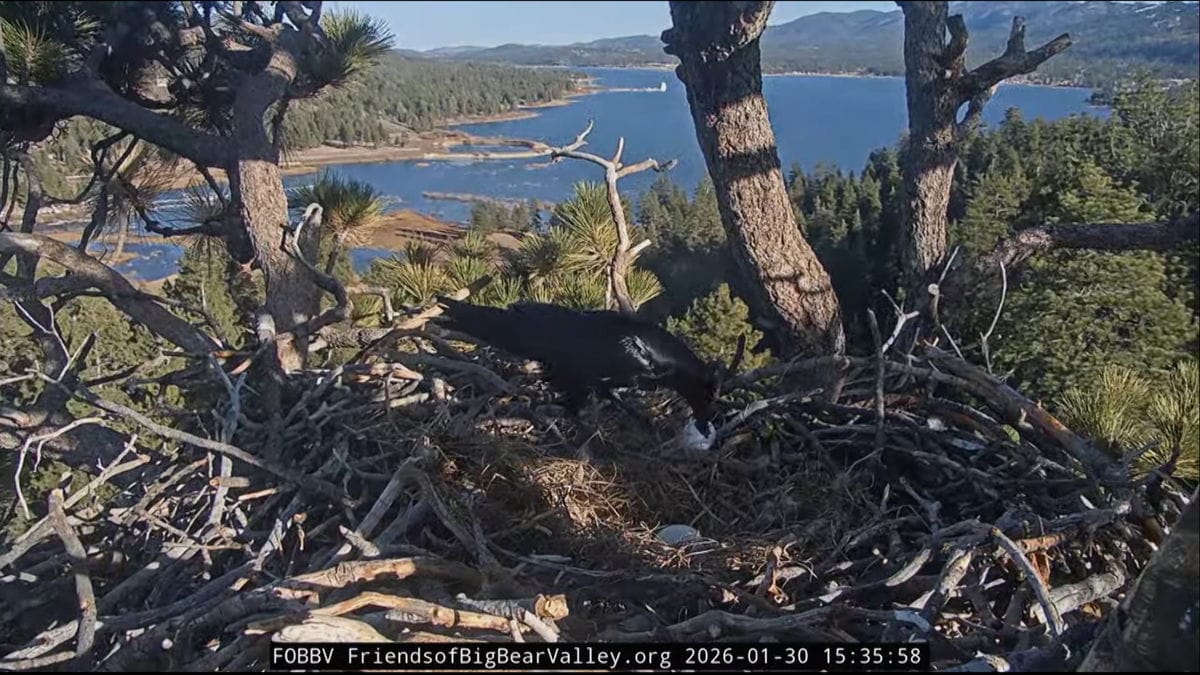
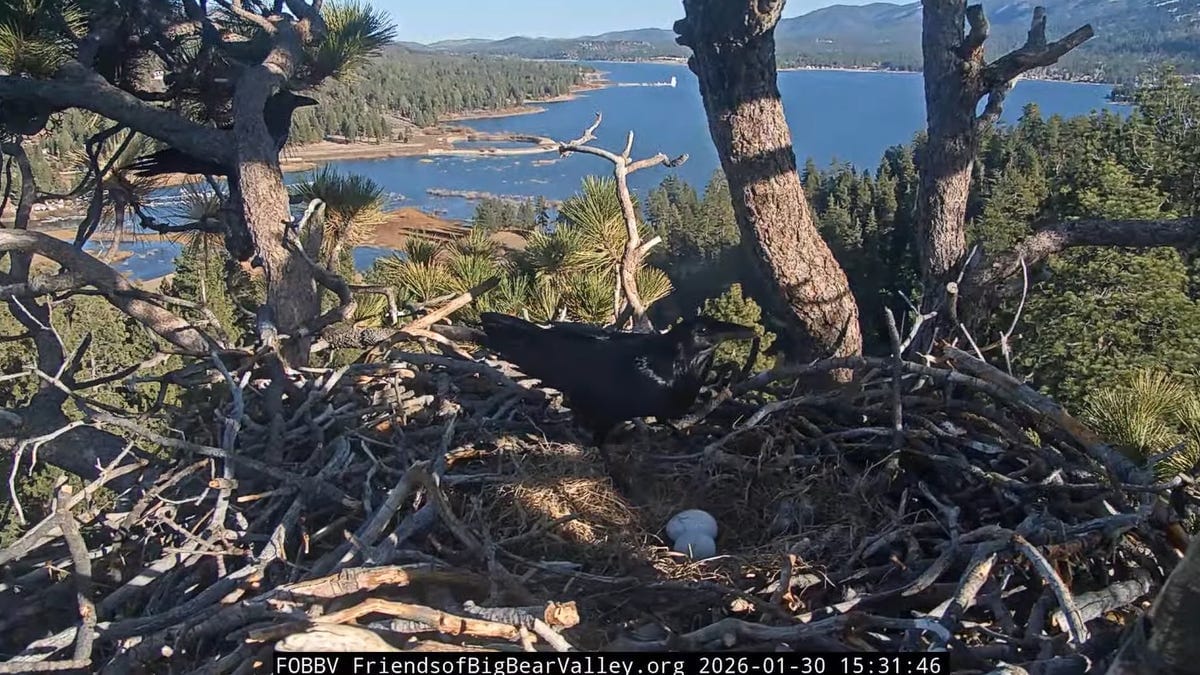
However, this past Friday, that widespread anticipation turned into profound heartbreak. In a tragic turn of events, Jackie and Shadow’s eggs were definitively lost, breached and damaged by invading birds, identified as ravens, during a critical period when the nest was left unguarded for several hours. The incident, occurring around 3:30 p.m., marks a somber end to this particular nesting season for the iconic pair.
The Public’s Window to the Wild
The story of Jackie and Shadow is more than just a wildlife anecdote; it’s a testament to the powerful connection humans forge with nature, often through the lens of technology. Live webcams, trained on nests in remote locations, have transformed figures like Jackie and Shadow into household names, fostering an unprecedented level of public engagement with the natural world.
These digital windows offer an intimate glimpse into the intricate lives of creatures often unseen, allowing us to witness the daily struggles, triumphs, and heartbreaks of wildlife. Viewers become invested, celebrating every milestone and mourning every loss, creating a global community united by a shared appreciation for nature’s raw beauty.
The widespread emotional response to the loss of Jackie and Shadow’s eggs underscores this unique bond. For many, these eagles are not merely birds; they are ambassadors of the wild, their story echoing the larger narrative of conservation and the delicate balance of ecosystems.
A Symbol Reborn: The Bald Eagle’s Enduring Journey
The bald eagle (Haliaeetus leucocephalus) itself carries a profound weight of symbolism, particularly in North America. As the national bird of the United States, it embodies strength, freedom, and resilience. Its journey from the brink of extinction to a remarkable recovery is one of the greatest conservation success stories of modern times.
Decades ago, widespread use of the pesticide DDT devastated bald eagle populations, leading to thin eggshells that broke under the weight of incubating parents. By the mid-20th century, the species was critically endangered, its majestic presence fading from the skies it once dominated. A concerted effort, involving habitat protection, banning DDT, and public awareness campaigns, slowly but surely brought the eagles back.
Today, bald eagles thrive across much of their historic range, a testament to what dedicated conservation efforts can achieve. Their return serves as a powerful reminder of nature’s capacity for recovery and humanity’s responsibility to protect it.
The Rigors of Parenthood: Life in the Nest
For bald eagles, raising a family is an arduous, year-round commitment. Nest building begins months before eggs are laid, with pairs constructing massive structures, sometimes weighing over a ton, high in sturdy trees. These nests are often reused and expanded upon year after year, becoming true landmarks in the eagles’ territory.
Once the eggs are laid, usually one to three, incubation is a shared responsibility, with both male and female taking turns to keep the eggs warm and protected from the elements. This period is particularly vulnerable, as eggs require constant temperature regulation and protection from predators. Any prolonged absence from the nest can be catastrophic, a harsh reality witnessed at Big Bear.
If successful, the tiny eaglets hatch after about 35 days, demanding constant care, food, and protection for several months until they fledge. The entire process is a delicate dance between instinct, survival, and the unforgiving laws of the wild, where only the strongest survive and thrive.
Nature’s Unforgiving Hand: The Raven Invasion
The details emerging from Big Bear paint a stark picture of nature’s indifference. Jackie and Shadow, like all wild creatures, must leave their nest periodically to hunt for food, stretch their wings, or defend their territory. On Friday, it was during one such necessary absence, lasting several hours, that vulnerability turned into tragedy.
Invading birds, specifically identified as ravens, seized the opportunity. Ravens are highly intelligent and opportunistic birds, known for their scavenging habits and, at times, their predation on eggs and hatchlings of other species. Their ability to exploit unguarded moments is a part of their survival strategy in a competitive environment.
Around 3:30 p.m. on Friday, the nest was invaded while the eagles were away, breaching both of their freshly-laid eggs. A raven cracked one of the bald eagle eggs at the Big Bear nest, with both eggs ultimately lost after being left unguarded for several hours.
This incident serves as a visceral reminder that the wild is not a sanitized paradise. It is a place of constant struggle, where life and death intertwine, and even beloved figures like Jackie and Shadow are subject to its unyielding rules. The loss, though painful for human observers, is a natural, albeit brutal, part of the ecosystem’s cycle.
Beyond the Nest: A Story of Resilience
While the loss of the eggs is undeniably disheartening, the story of Jackie and Shadow, and bald eagles as a species, is far from over. These magnificent birds have faced far greater challenges throughout history and have consistently demonstrated an extraordinary capacity for resilience. They will likely attempt to nest again, continuing their vital role in the ecosystem.
The public’s investment in these eagles also extends beyond the current heartbreak. It fosters a broader appreciation for wildlife, encouraging support for conservation efforts that protect not just eagles, but all species facing threats in a rapidly changing world. The empathy generated by observing their lives fuels a greater commitment to environmental stewardship.
The loss in Big Bear is a poignant chapter, but it is just one chapter in a much larger, ongoing narrative of wild existence. It reminds us that while we celebrate life, we must also acknowledge death as an integral part of nature’s intricate design.
Reflection on Nature’s Cycle
In the wake of such a loss, many find themselves reflecting on the fragility of life and the immense power of nature. The wild does not bend to human desires or sentimentality; it operates on its own ancient laws of survival and adaptation. This incident, while sad, is a vivid illustration of those immutable truths.
The legacy of Jackie and Shadow, even through this moment of sorrow, endures. They continue to teach us about perseverance, the beauty of the wild, and the vital importance of protecting the precious natural heritage we all share.
“The wilderness does not care for our hopes, but it perpetually reminds us of life’s unyielding cycle – a tapestry of beauty, struggle, and unending resilience.”