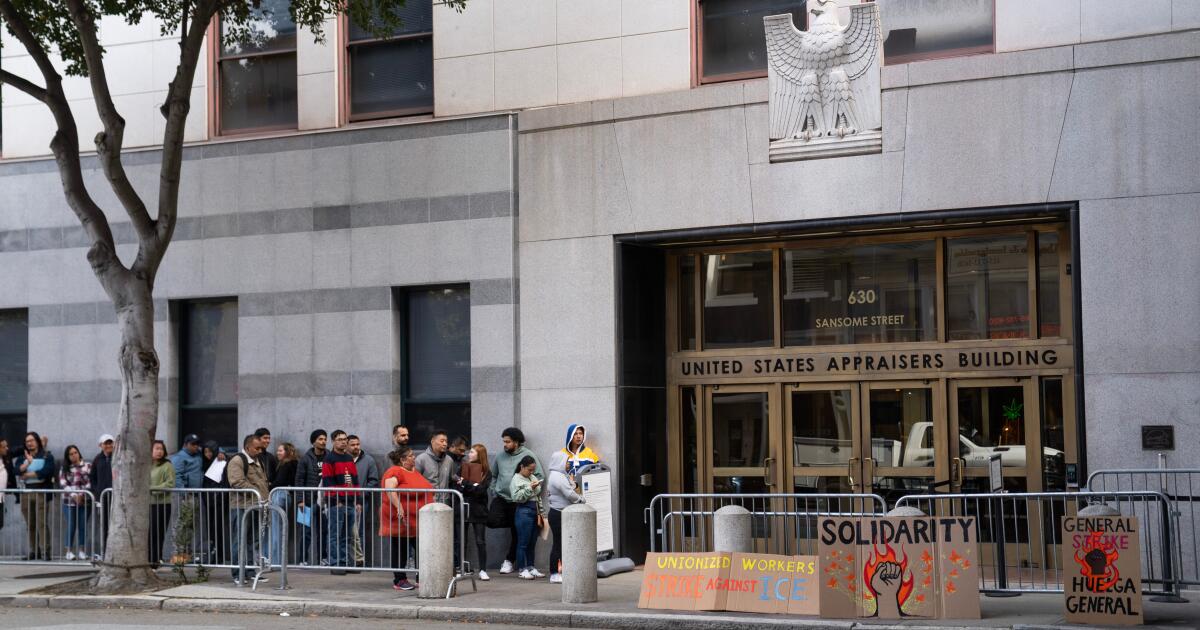
The United States Department of Homeland Security has introduced an interim final rule that alters the processing architecture for affirmative asylum seekers. Announced by U.S. Citizenship and Immigration Services (USCIS), the regulation eliminates mandatory preliminary interviews for specified applicants, redirecting them straight to immigration judges for removal proceedings rather than conducting local credible fear or persecution risk assessments.
This operational shift targets approximately 444,000 pending cases involving individuals and family units. The administration frames the policy as an administrative necessity to alleviate a system backlog exceeding 1.4 million cases. By bypassing the initial USCIS investigative tier, the federal government aims to accelerate docket throughput and streamline federal immigration management.
Operational Restructuring and Institutional Objectives
Bypassing affirmative interviews represents a structural departure from traditional administrative workflows governed by the Executive Office for Immigration Review and USCIS. Historically, the preliminary interview functioned as an administrative filter to vet applications before formal court dockets became congested. Eliminating this evaluation shifts the primary burden of adjudication entirely onto immigration courts, altering how federal agencies allocate administrative bandwidth and legal resources.
Federal officials maintain this restructuring is essential for operational efficiency, national security alignment, and enforcement predictability. However, the operational consequences extend directly into the judicial sphere, where existing dockets face an immediate influx of newly referred removal cases.
Stakeholder Implications and Legal Frameworks
Immigration advocates and legal practitioners have expressed concern regarding the rule’s implications for applicant due process. Critics argue that bypassing the initial interview deprives applicants of an evidentiary forum to document complex persecution claims. Legal representatives contend that routing individuals directly into removal proceedings functions primarily as an expedited mechanism for generating rejections and deportations rather than balanced administrative reform.
The interim final rule took effect immediately, subject to a 60-day public comment period, creating an immediate compliance window for legal service providers. Because a single case file frequently encompasses multiple family members, the aggregate number of affected individuals remains extensive.
Systemic Realities and Institutional Context
The intersection of administrative rulemaking and judicial capacity defines the current trajectory of federal immigration policy. By modifying the procedural threshold for affirmative applicants, the executive branch has asserted its authority to restructure agency priorities in response to systemic volume. The long-term efficacy of reducing backlogs depends on the capacity of immigration courts to absorb the diverted caseload without compounding existing systemic delays.