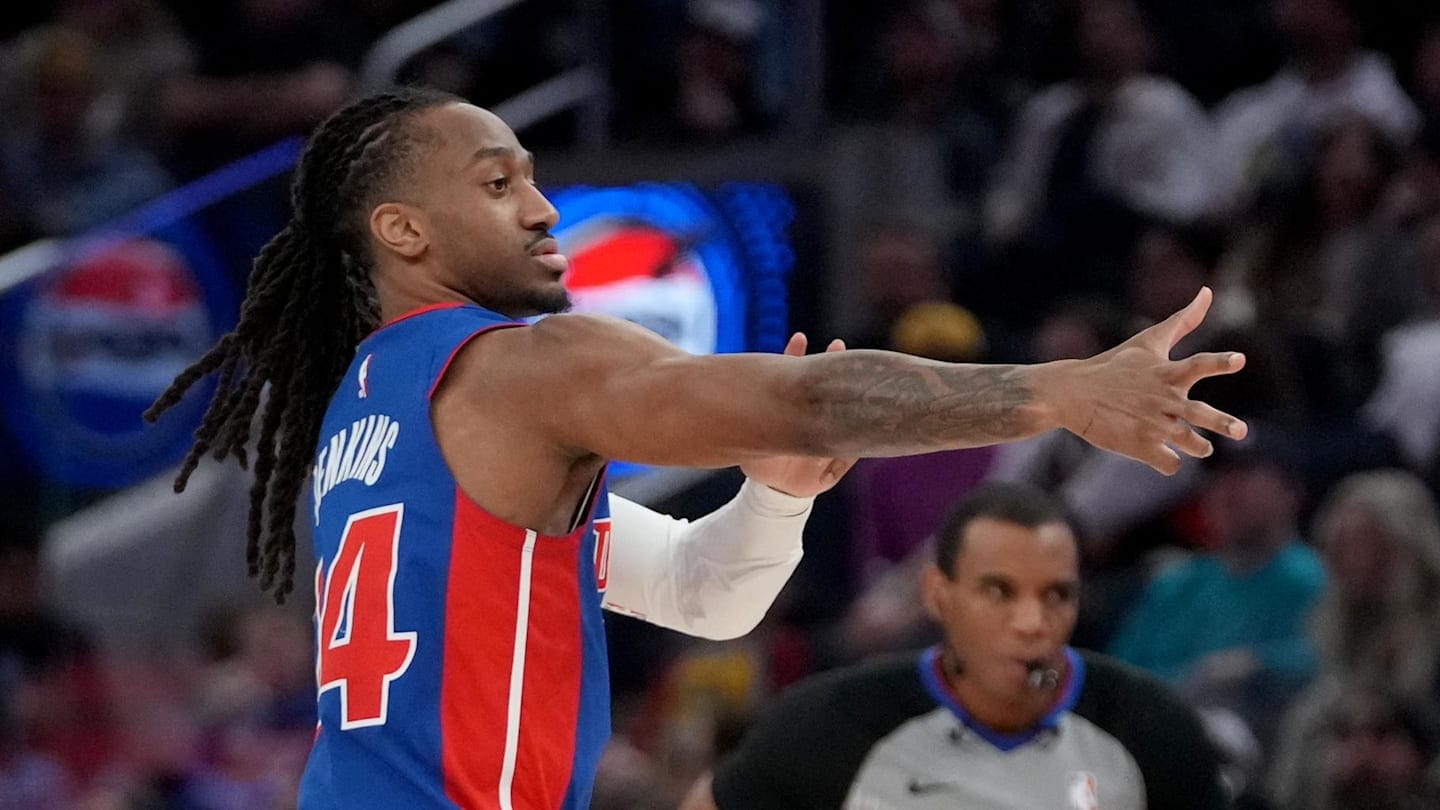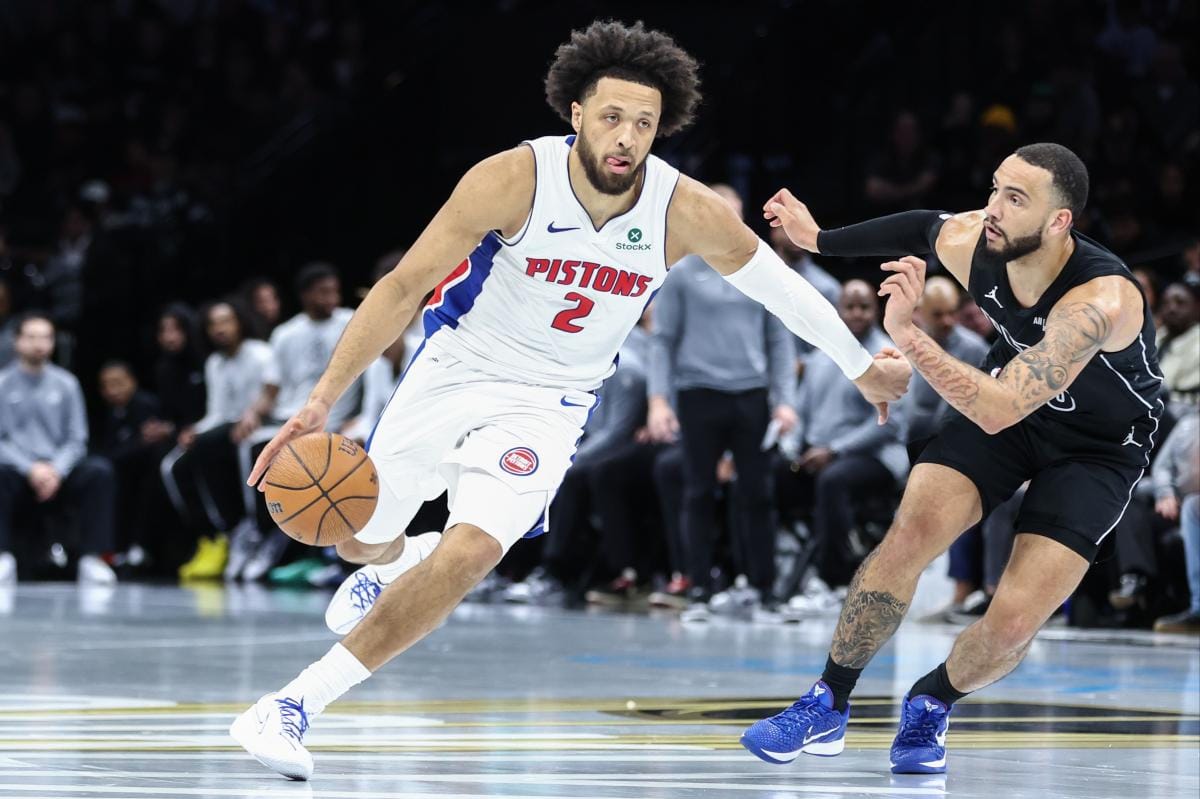
In the relentless churn of the National Basketball Association’s vast 82-game regular season, certain matchups are destined to be footnotes, easily overlooked amidst the league’s grander narratives. Yet, even the seemingly unremarkable clash between the Brooklyn Nets and the Detroit Pistons—a skirmish closing out the Nets’ road trip, with Detroit returning home—reveals itself upon closer scrutiny to be a surprisingly potent microcosm of contemporary cultural and economic forces. It is not merely a contest of athletic prowess, but a theater where the lines between sport, digital commerce, psychological incentive, and the very architecture of modern attention are not just blurred, but actively, perhaps irrevocably, dissolved. To dismiss this game as mere filler is to miss a crucial chapter in the ongoing story of how our leisure is commodified, how our loyalties are monetized, and how the ancient human thrill of competition has been profoundly re-engineered for the digital age.
The Manufactured Drama: From Court to Console
The narratives spun around such games often serve less as objective reportage and more as marketing fodder, designed to ensnare the fickle gaze of the modern consumer. Here, we encounter the Brooklyn Nets, fresh off snapping a dispiriting seven-game losing streak with a victory over the Utah Jazz—a narrative arc of redemption, however minor, ready-made for consumption. On the opposing bench, the Detroit Pistons are framed as “resurgent,” a term often deployed to imbue struggling franchises with a manufactured sense of momentum, to imply a competitive parity that might not always be borne out by on-court performance. This carefully constructed duality of the “struggling team finding its feet” versus the “resurgent underdog” is a standard trope, serving to elevate even the most lopsided of contests into a palatable drama. The mention of a promising rookie, Egor Demin, further personalizes the spectacle, offering a nascent individual story for fans to track, an investment in potential that transcends the immediate outcome.
However, this veneer of organic competition and burgeoning talent exists alongside a stark, almost transactional reality. The prevailing sentiment, as gleaned from the preparatory dispatches, is that the Eastern Conference’s “top team” views this particular Detroit encounter as a “breather”—an almost dismissive characterization that lays bare the hierarchical nature of the league and, by extension, the broader entertainment ecosystem. Such framing, while perhaps pragmatic, subtly undercuts the notion of every game as a high-stakes battle, revealing instead a calculated allocation of effort and expectation. It is a tacit acknowledgment that some events are designed less for peak athletic engagement and more as strategic waypoints in a longer season, or, more cynically, as mere slots in a broadcast schedule that must be filled, regardless of inherent competitive tension. The very act of scheduling, broadcasting, and reporting on such a game, irrespective of its perceived significance, sustains the vast economic machinery that underpins professional sports.
The Gamblification of Fandom: Algorithms, Incentives, and the Attention Economy
The true profundity of this ostensibly minor NBA fixture, however, emerges when one considers the adjacent, yet inextricably linked, economic ecosystem. The “Sleeper Fantasy Promo Code NYPBONUS: Get free $20 + 100% deposit match up to $100 for Nets vs. Pistons” is not merely a marketing gimmick; it is a profound commentary on the contemporary commodification of attention and the sophisticated psychology of user acquisition. This seemingly innocuous offer unveils a meticulously designed strategy to transform passive spectators into active, financially vested participants. The “free $20” acts as a potent behavioral hook, a no-risk entry point designed to overcome initial inertia and lower the barrier to engagement. It is a classic loss leader, a small immediate cost offset by the potential for significantly larger future revenue streams generated by sustained user activity.
The “100% deposit match up to $100” deepens this psychological commitment. It speaks directly to the principle of reciprocity and the anchoring effect, framing the initial deposit not as an expense, but as a leveraged opportunity, effectively doubling the perceived value of a user’s initial outlay. This strategic deployment of incentives is not unique to fantasy sports; it mirrors tactics seen across countless digital platforms, from ride-sharing apps to online retail, all vying for precious screen time and discretionary income. For a game like Nets vs. Pistons, which might otherwise struggle to capture widespread interest, these promotions inject an artificial, yet undeniably effective, layer of personal stake. Suddenly, the nuanced performances of a rookie like Egor Demin, or the strategic decisions of a coach in a ‘breather’ game, gain a new, immediate financial resonance for a segment of the audience, transforming the abstract concept of team victory into tangible, personal gain or loss.
“The modern sports fan is increasingly an economic actor, whose engagement is cultivated not just through loyalty to a team, but through direct financial participation in the unfolding drama.”
Furthermore, the persistent narrative around player availability, such as the recurring absence of a key figure like MPJ—a detail, as per the source, presented within the preview context—underscores the hyper-analytical, data-driven nature of this new fan economy. In traditional fandom, a player’s injury is a setback for the team; in the world of fantasy sports and betting, it is a critical data point, triggering immediate adjustments in projections, odds, and personal investment strategies. Every injury report, every coaching decision, every streak or slump becomes fodder for algorithms and individual analysis, dictating the financial viability of one’s fantasy roster or betting slip. This elevates a previously peripheral aspect of sports consumption to a central, analytical endeavor, demanding constant vigilance and a sophisticated understanding of probability and performance metrics.
The Global Spectacle, Local Economics: A Latin American Lens
While the immediate context of a Brooklyn Nets versus Detroit Pistons game unfolds within the specific cultural and economic landscape of North American sports, its underlying currents resonate globally, particularly in burgeoning digital economies like those across Latin America. The NBA, with its global brand penetration and accessible digital content, has cultivated a significant following in countries like Mexico, where sports fandom is fervent, though traditionally centered on soccer. The proliferation of mobile technology and improved internet infrastructure in major urban centers such as Mexico City has lowered the barrier to entry for international digital services, including fantasy sports platforms.
For a Mexican audience, the appeal of a Sleeper Fantasy promo code, offering “free $20 + 100% deposit match up to $100,” translates into a compelling proposition, particularly when framed against local economic realities. While a hundred dollars might represent discretionary spending for some in more developed economies, in many parts of Latin America, such an amount holds greater relative purchasing power, making the incentive disproportionately attractive. The promise of free capital to engage in a popular, skill-based game taps into a universal human desire for opportunity and entertainment. This phenomenon highlights how global digital economies leverage localized purchasing power discrepancies to expand their user base, transforming global entertainment into a locally impactful economic activity.
The strategic deployment of these platforms, targeting new markets, isn’t just about entertainment; it’s about establishing digital ecosystems that capture and retain user engagement, turning every game, no matter how minor, into a potential touchpoint for revenue generation. The psychology of the “free trial” or “matched deposit” works universally, exploiting cognitive biases related to perceived value and risk aversion. For a population often navigating economic uncertainty, the idea of leveraging a small initial investment into a larger sum, even in a game of chance and skill, holds a powerful allure. This illustrates a broader trend where global digital platforms are not merely content providers but are increasingly becoming financial intermediaries, subtly integrating elements of speculative investment into everyday leisure activities.
Moreover, the detailed tracking of player statistics and game outcomes for fantasy purposes fosters a new kind of analytical engagement among fans. This shifts fandom from passive appreciation to active, data-driven participation, cultivating a deeper understanding of the game’s intricacies, even if driven by pecuniary motives. This intellectual engagement, though born from a desire for financial gain, inadvertently educates a broader audience on the nuances of international sports, thereby reinforcing the NBA’s global cultural footprint. The Nets-Pistons game, in this light, becomes a vehicle for both entertainment and economic activity, a digital bridge connecting a basketball court in Detroit to a smartphone screen in Mexico City, all mediated by algorithms and incentivized transactions.
The Erosion of Purity: Sport as a Traded Commodity
The implications of this pervasive gamification extend far beyond the balance sheets of fantasy sports companies; they touch upon the very essence of sport itself. Traditionally, the purity of athletic competition—the pursuit of victory for its own sake, the display of skill, the narrative of effort and triumph—was considered paramount. Yet, in an era where every dribble, every shot, every injury is immediately processed through a financial lens, the notion of ‘purity’ becomes increasingly anachronistic. The “resurgent Pistons” are not just battling for pride; they are moving variables in countless betting slips and fantasy rosters. The Nets’ attempt to “steal a game” is not just about team morale; it directly impacts the financial outcomes for millions of online participants.
This re-frames the athlete not just as a performer, but as an asset, whose performance is meticulously tracked, quantified, and traded, albeit indirectly, by a global audience. The emotional investment of traditional fandom—rooted in geographic loyalty or shared identity—is supplemented, if not gradually supplanted, by an economic investment. This shift introduces a different kind of tension, one that is less about collective triumph and more about individual financial return. It raises uncomfortable questions about the integrity of the game when personal monetary stakes become intertwined with athletic outcomes, even if the players themselves are insulated from these direct financial pressures.
The digital platforms facilitating this transformation are masters of psychological engineering. They understand the human propensity for risk and reward, the thrill of prediction, and the allure of perceived control over uncertain outcomes. By embedding these elements directly into the consumption of sports, they have created a self-reinforcing loop where entertainment fuels engagement, and engagement, in turn, fuels further economic activity. The NBA, as a global entertainment conglomerate, benefits immensely from this expanded ecosystem, where its core product—basketball games—serves as the fundamental data stream for a vast, ancillary industry. This particular Nets-Pistons game, therefore, is not merely a scheduled event; it is a data point, a transactional opportunity, and a subtle yet potent cultural artifact reflecting the relentless march towards the full financialization of leisure.
Ultimately, the seemingly mundane spectacle of two mid-tier NBA teams squaring off in Detroit offers a profound reflection on the trajectory of modern entertainment. It illustrates how sporting events, regardless of their intrinsic competitive weight, have been seamlessly integrated into a larger digital economy driven by data, algorithms, and carefully calibrated psychological incentives. The Nets-Pistons game, therefore, stands as a testament to an era in which the boundary between play and profit has not merely blurred, but has become an intentionally engineered, highly profitable, and culturally pervasive landscape. It signals a future where the fan is not just a spectator, but an active, financially entangled participant, continually drawn deeper into the intricate web of gamified reality.