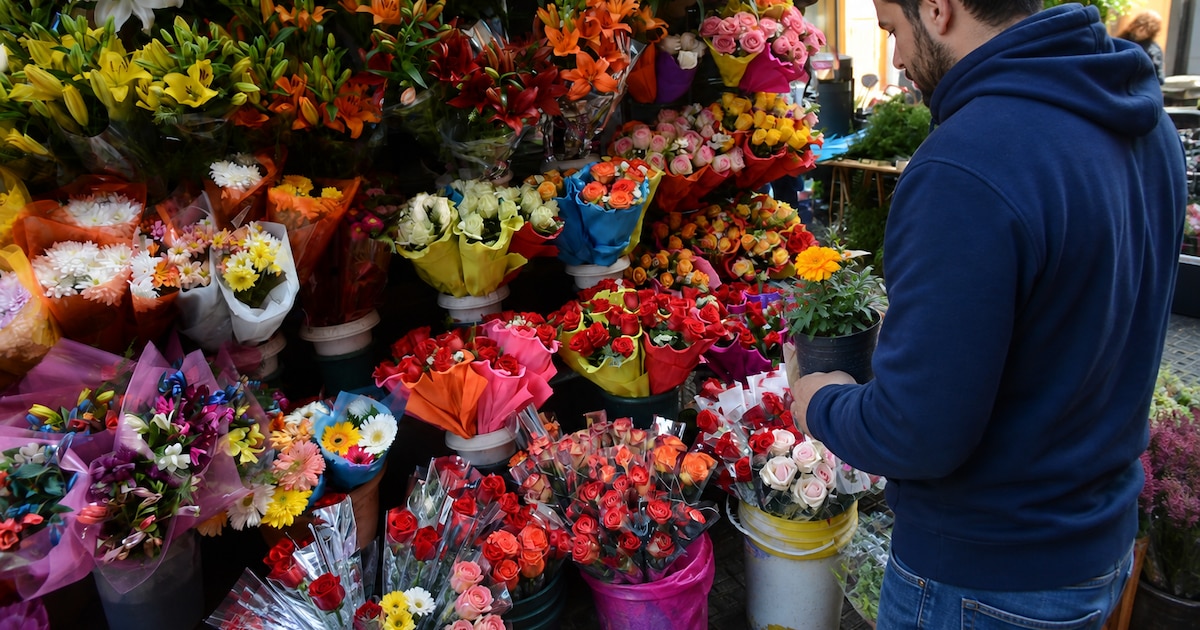
The institutionalization of the September 21 yellow flower tradition marks a distinct convergence of legacy media intellectual property, algorithmic velocity, and compressed retail cycles. Originating as a narrative device in the 2004 Argentine telenovela Floricienta, the tradition has evolved via TikTok and Instagram into an annual liquidity event for Latin American floral retailers, generating concentrated demand within an ultra-short 24-hour fulfillment window.
Tiered Pricing Architecture and Inflationary Exposure
Pricing strategies in key urban hubs, particularly the Buenos Aires metropolitan area, demonstrate acute market segmentation calibrated to absorb persistent inflationary pressure while maximizing volume across diverse socioeconomic cohorts:
- Entry-Level / Accessible Volume: Individual potted plants establish an accessible threshold at approximately $2,400 ARS, maintaining participation among price-sensitive buyers. Base-tier cut stems, such as field lilies, set the cut-flower baseline at roughly $35,000 ARS.
- Mid-Tier Core Inventory: Standardized gift units, including half-dozen rose bundles priced at $65,000 ARS and substantial sunflower arrangements at $80,000 ARS, serve as the primary revenue drivers for traditional florists.
- High-Margin Bundled SKUs: Premium arrangements scale upward to $300,000 ARS by pairing floriculture with confectionery, branded plush toys, and specialized packaging, shifting transactions from commodity purchasing toward high-margin experience consumption and social signaling.
Supply Chain Risk Mitigation: The Perishability Hedge
Concentrating annualized demand into a single calendar day introduces extreme inventory volatility. Retailers face an asymmetric risk curve: stockouts lead to immediate revenue forfeit, while surplus fresh-cut inventory suffers total margin destruction within 48 to 72 hours due to post-peak biological decay.
To hedge against biological perishability, secondary and tertiary markets have diversified heavily into artificial “eternal flowers.” In regions such as Parral, Mexico, non-perishable units retailing from 70 MXN provide micro-retailers and street vendors with a zero-spoilage buffer. This shift preserves working capital, stabilizes gross margins, and transforms an ephemeral horticultural holiday into a durable, carry-over inventory category.
Platform Economics and Distribution Vulnerability
The operational mechanics of Meta and ByteDance algorithms function as zero-CAC (customer acquisition cost) demand aggregators for the floral sector. Audio synchronization via the “Flores Amarillas” audio asset reinforces a performative consumer loop, coercing participation through digital peer validation.
However, this reliance presents structural vulnerabilities. The retail sector’s exposure to centralized platform distribution coincides with broader institutional headwinds, including Meta’s ongoing regulatory and legal scrutiny regarding platform design and minor safety—challenges carrying potential liabilities approaching $17 billion. Shifts in algorithmic weightings, policy adjustments, or platform fatigue represent unhedged external risks to retail traditions dependent entirely on digital reach.
Macro Divergence and Cultural IP Longevity
The geographic migration of the trend highlights how cultural assets detach from geographic context when mediated by digital networks. In Argentina and the broader Southern Hemisphere, September 21 coincides with the astronomical vernal equinox, compounding retail momentum with organic seasonal transitions. Conversely, in Northern Hemisphere markets such as Mexico, the tradition operates independently of local agrarian cycles, sustained entirely by the enduring equity of the Floricienta narrative.
This cross-border persistence underlines the prolonged commercial lifecycle of serialized television IP in the digital age. By translating narrative nostalgia into annual transactional volume, physical retail captures unexpected yield from algorithmic engagement, provided supply chains maintain the agility to absorb extreme seasonal demand spikes.