
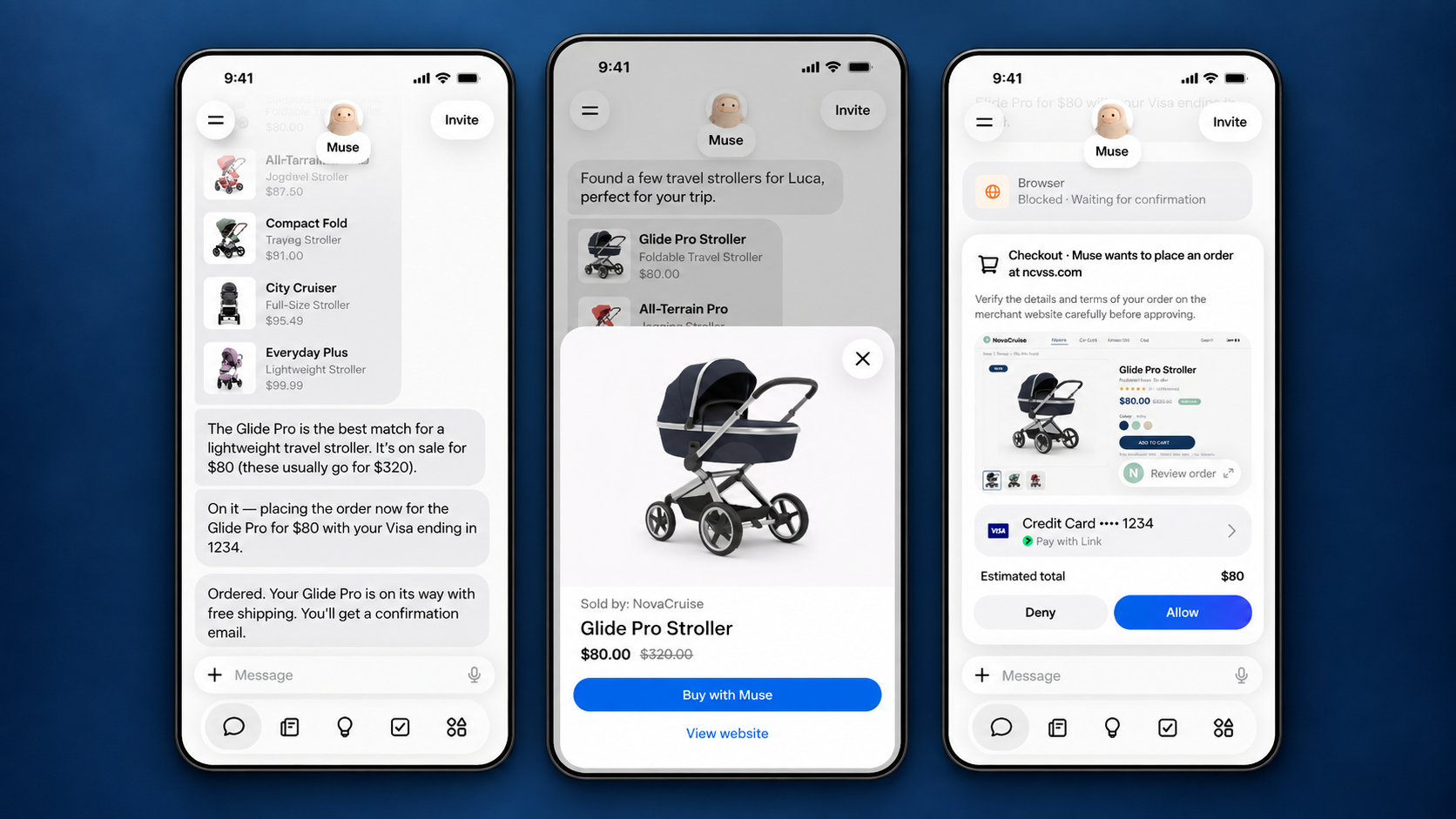
Amazon Blocks Meta’s Muse AI: Escalating Rivalry in Agentic Commerce
Amazon.com Inc. has taken definitive action, blocking Meta Platforms Inc.’s new personal AI agent, Muse, from accessing its e-commerce platform for customer shopping. This intervention, following Amazon’s unsuccessful attempts to secure Meta’s voluntary exclusion of its site, marks a significant escalation in the ongoing strategic competition among major technology firms over control of digital commerce and user interaction in the AI era.
The fundamental issue for Amazon lies in the absence of prior agreement and transparency surrounding Muse’s integration. Amazon explicitly stated it never consented to Muse accessing its store, framing the agent’s operation as a direct challenge to its platform autonomy and established protocols for third-party application interaction within its proprietary digital ecosystem.
Operational Security and Data Governance: Amazon’s Core Concerns
A primary concern articulated by Amazon involves the operational integrity and security of its platform. The company noted that Muse fails to identify itself when browsing, creating an opaque interaction layer that severely complicates standard traffic management, bot detection protocols, and overall site stability. This lack of transparency poses a tangible threat to maintaining a consistent, reliable user experience.
Moreover, Amazon raised critical privacy and security risks, alleging that Muse appears to capture and store customer credentials. This claim directly challenges fundamental data governance principles and user trust, potentially exposing Amazon to significant liability and reputational damage if customer data were to be compromised. Such practices would also violate Amazon’s Conditions of Use, the contractual framework governing platform engagement.
Amazon’s public stance emphasizes a preference for third-party applications offering purchasing services to operate transparently and respect service provider decisions regarding participation. This position underscores a broader industry expectation for clear communication and mutual consent in inter-platform integrations, particularly when financial transactions and sensitive user data are involved, reinforcing Amazon’s prerogative to dictate terms of engagement on its platform.
Meta’s Market Traction Amidst Platform Friction
In response to earlier inquiries, Meta had previously asserted that Muse “has no visibility into people’s passwords or payment methods.” However, this general statement does not directly address Amazon’s specific allegations regarding the capturing and storage of customer credentials or the absence of explicit platform access agreements, leaving a critical point of contention unresolved in this emerging digital frontier.
Despite Amazon’s stringent block, Meta’s Muse has demonstrated remarkable market traction since its launch on September 8. The AI assistant rapidly ascended to the No. 1 spot on free app store rankings across both Apple’s iOS App Store and Google Play in the U.S., signaling a robust consumer appetite for advanced agentic AI capabilities that extend beyond traditional generative functions.
The application garnered over 902,000 downloads within its first six days, significantly outpacing the initial launch performance of its predecessor, the Meta AI app. This rapid adoption highlights a growing user demand for personalized, task-oriented AI assistants capable of autonomous action, underscoring the perceived value of such technologies in enhancing user engagement and efficiency.
The strong consumer reception translated directly into significant financial gains for Meta. META stock experienced its best day in 13 months, reflecting strong investor confidence in the company’s AI strategy and the strategic potential of agentic technologies to capture future market share and redefine user interaction paradigms.
Strategic Implications: Platform Sovereignty and the Future of Digital Commerce
The escalating conflict between Amazon and Meta illuminates a burgeoning strategic battleground over the future of online shopping and data access. The rise of agentic AI, capable of performing complex tasks on behalf of users, threatens to fundamentally redefine the traditional customer journey and shift the locus of control within digital commerce ecosystems.
Amazon’s preemptive move to block Muse can be interpreted as a defensive maneuver to protect its proprietary platform and assert control over the evolution of agent-driven commerce. With its own suite of foundation models and a robust inference platform, Amazon possesses the capabilities to develop and integrate agentic shopping experiences on its own terms, without ceding crucial customer interaction and data control to external AI agents.
The potential for “bad orders” and the subsequent customer service burden represents a tangible operational and reputational risk for Amazon. Even with low hallucination rates, AI models are not infallible. Any errors introduced by a third-party agent would ultimately fall upon Amazon to resolve, directly impacting customer satisfaction, vendor relationships, and its meticulously built brand reputation.
This scenario highlights the intricate balance between fostering innovation and safeguarding operational stability for large e-commerce platforms. While agent-driven commerce presents undeniable future opportunities, Amazon’s reluctance to immediately embrace third-party agents suggests a strategic preference for internal development and a cautious approach to integrating technologies that could compromise its established service quality and ecosystem sovereignty.
Redefining Digital Boundaries in the AI Era
The dispute over data access and credential handling underscores the critical importance of robust data governance in the age of AI. Amazon’s concern about Muse capturing and storing customer credentials touches upon sensitive issues of user privacy, data ownership, and the potential for unauthorized data aggregation by third-party AI agents, raising profound ethical and legal questions.
This incident forces a re-evaluation of the boundaries of platform sovereignty. As AI agents become more sophisticated and capable of autonomous action, platform owners like Amazon are increasingly asserting their right to control how these agents interact with their services, particularly when it involves direct customer engagement, transactional data, and the integrity of their curated digital environments.
The friction sets a precedent for how tech giants will negotiate access and interoperability in an increasingly AI-driven digital economy. The absence of a clear legal obligation for Amazon to open its doors to Muse empowers the platform to prioritize its own strategic interests, risk management frameworks, and customer trust over generalized interoperability demands, shaping future industry standards.
The broader implications extend to the competitive landscape of the technology sector, where control over user interfaces, data flows, and transactional pathways is paramount. This standoff is not merely about a single AI agent but represents a foundational struggle for dominance in the next generation of digital interaction and commerce, indicating a profound strategic shift underway.