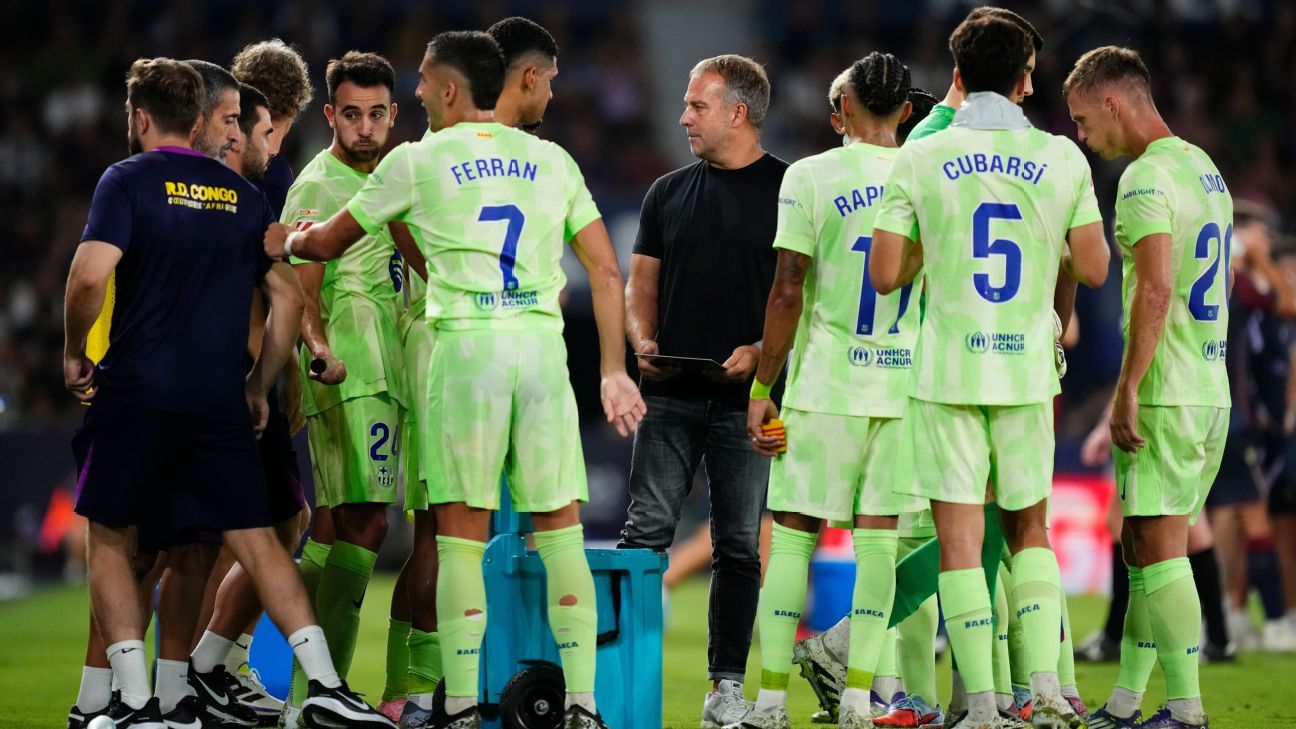
Barcelona vs. Newcastle: A Microcosm of European Football’s Strategic Evolution
Hansi Flick’s assertion of the Premier League as the “best in the world,” driven by unparalleled financial capacity and robust club strength, signals a profound structural shift in European football economics. This capital accumulation directly translates into a competitive advantage, enabling Premier League teams to attract and retain elite talent. For Barcelona, a club defined by its rich history and distinctive playing philosophy, this financial disparity mandates a strategic reliance on inherent quality and cohesive play.
The Champions League clash between Barcelona and Newcastle United, therefore, transcends a mere knockout fixture. It serves as a compelling microcosm of the broader strategic tension: established continental powers confronting the ascendant financial force of English football. Barcelona’s commitment to its unique “style” and “huge quality” represents a deliberate strategic choice to leverage institutional identity and footballing philosophy against competitors backed by significant capital investment.
Strategic Divergence: Financial Leverage vs. Legacy Preservation
Eddie Howe’s declaration of this fixture as the “biggest game in Newcastle United’s history,” while perhaps a strategic hyperbole, unequivocally signals the club’s profound institutional ambition. Fueled by new ownership, Newcastle’s pursuit of Champions League progression is a critical strategic imperative, promising enhanced brand visibility, increased commercial revenues, and a stronger magnetic pull for elite talent in future transfer windows. This aligns with their long-term strategic plan to establish a consistent presence among Europe’s footballing elite, extending beyond historical domestic achievements.
For Barcelona, this match is a vital test of their enduring status and adaptability within a financially stratified landscape. Their “strategic response, emphasizing its ‘quality’ and distinctive ‘style’,” as Flick articulated, represents an attempt to cultivate non-financial competitive advantages. This involves a renewed focus on youth development, tactical innovation, and maintaining a powerful institutional identity that resonates globally. The Champions League, beyond prestige, is a crucial financial artery; success secures substantial prize money, broadcast revenues, and commercial opportunities vital for Barcelona’s operational budget and squad development, making each stage a high-stakes financial and sporting endeavor.
Operational Precision: Navigating Player Welfare and Tactical Imperatives
Barcelona’s meticulous preparation for this critical Champions League fixture exemplifies the operational complexities of elite football. A “heavily rotated side” in their preceding La Liga match against Athletic Club underscores a strategic balance between domestic commitments and high-stakes European competition, aimed at optimizing player fitness and mitigating injury risks. Such squad management decisions are not arbitrary; they reflect a calculated tactical response to player availability and the imperative to field the strongest possible eleven.
Specific player returns, such as Pedri after Marc Bernal’s illness recovery, and Ronald Araujo stepping in for the injured Eric Garcia, directly influence tactical flexibility and team strength. The management of these availability issues, alongside changes like Robert Lewandowski replacing Ferran Torres and Raphinha’s inclusion, highlights the constant challenge of maintaining squad depth and health through a demanding season, which requires robust medical and performance staff.
Beyond selection, Barcelona’s logistical arrangements—flying directly from Bilbao and utilizing Matfen Hall for “decompression” before a light training session—reveal a sophisticated, performance-oriented approach to athlete preparation. This strategy seeks to mitigate travel fatigue, optimize physiological recovery, and foster mental readiness, acknowledging that marginal gains in these areas can be decisive in high-stakes encounters and contribute significantly to macro-level strategic outcomes.
The Champions League: A Nexus of Financial Imperatives and Legacy Building
The Champions League represents more than just sporting glory; it is a crucial nexus for financial health and institutional trajectory. For Newcastle, deep progression significantly enhances commercial appeal, accelerates revenue growth through sponsorship and merchandise, and provides capital for future investments, solidifying their ambition to reshape their historical identity and achieve consistent elite European presence. Success against a European giant like Barcelona would powerfully validate their strategic investment and accelerate their continental recognition.
Conversely, Barcelona approaches this fixture from a position of defending its illustrious legacy and maintaining its status as a European powerhouse. Flick’s insistence on playing “like Barça” is a commitment to an institutional philosophy honed over decades, serving as a strategic anchor in a fluid, financially driven landscape. Consistent Champions League performance is not merely about prestige but about sustaining a critical revenue stream for their ambitious operational budget and ongoing squad development. The club’s financial vitality is intrinsically linked to its ability to compete at the highest European levels.
This encounter, therefore, is a profound illustration of modern football’s complex interplay: strategic ambition clashing with operational execution and financial realities. It demonstrates how clubs adapt within a globalized, capital-intensive industry where success is measured not only in trophies but also in sustained institutional growth and market positioning. Barcelona vs. Newcastle is a defining marker in the evolving narratives of both clubs, influencing their immediate competitive standing and long-term strategic placement within the global football ecosystem.