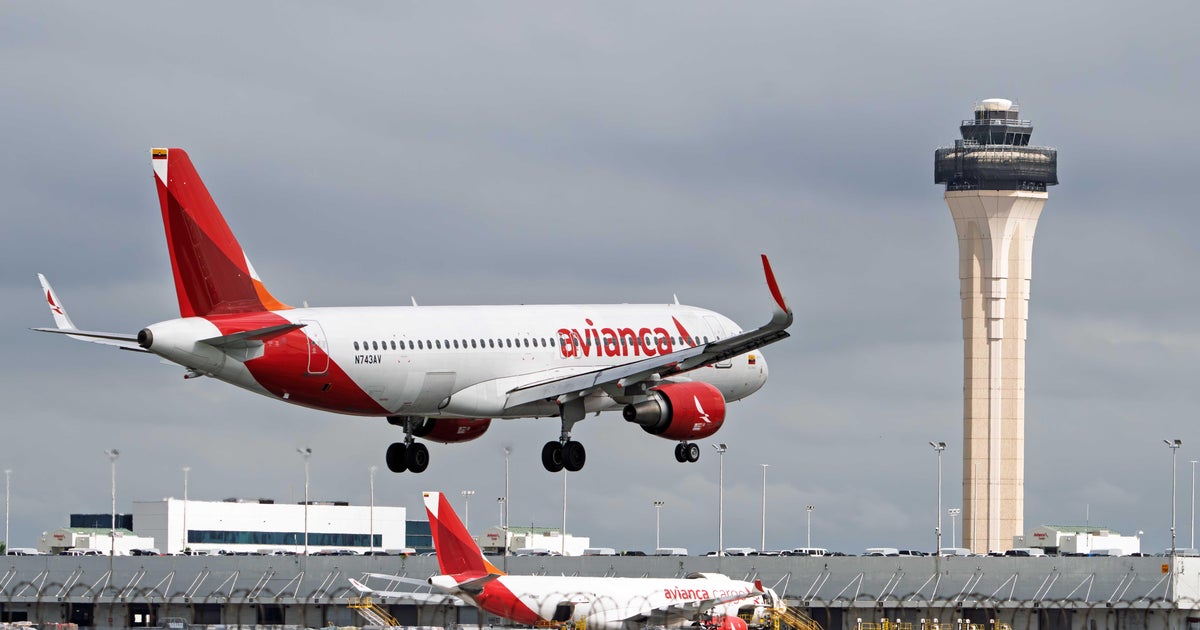
An unexpected high-altitude turbulence encounter forced an international commercial flight to execute an unscheduled diversion, highlighting the operational strains and immediate medical demands imposed on cross-border aviation corridors. Avianca Flight 42, operating a scheduled route from Medellin, Colombia, to John F. Kennedy International Airport in New York, altered its flight path to land at Miami International Airport early Friday morning. The diversion unfolded following an encounter with severe atmospheric instability that compromised cabin stability and caused sudden injuries among occupants.
First responders met the aircraft directly on the tarmac after it completed an emergency arrival at approximately 3:30 a.m. local time. Miami-Dade Fire Rescue mobilized significant resources to evaluate passengers and crew members reporting injuries sustained during the disruption. The incident highlights the systemic coordination required between civil aviation flight crews, territorial air traffic controllers, and municipal emergency management services during urgent mid-flight crises.
Mid-Route Diversion Mechanics and Flight Path Management
The operational decision to divert an international passenger service en route between South America and the northeastern United States requires a balance of procedural safety margins and acute logistical triage. While bound for John F. Kennedy International Airport, the flight crew on Avianca Flight 42 faced sudden in-flight conditions that shifted priorities from schedule adherence to life-safety preservation. Redirecting the aircraft toward Miami International Airport provided access to expansive runway infrastructure and sophisticated emergency medical networks capable of managing multiple simultaneous casualties.
Navigating an unscheduled approach into a major hub during off-peak hours introduces specific operational complexities. Although airspace congestion at 3:30 a.m. is generally reduced compared to daytime operational windows, aerodrome staffing and emergency deployment protocols must rapidly adjust to sudden mass-casualty alerts. The safe arrival of the airframe without secondary ground incidents confirms the execution of standard emergency descent procedures designed to stabilize affected passengers as quickly as possible.
Atmospheric disruptions of this severity alter flight path economics and fuel reserve calculations. Crews managing acute onboard medical emergencies face constraints regarding rate of descent, structural load management, and cabin air pressure stabilization. The transition from cruise altitude toward the Miami terminal environment demonstrates standard operational priorities where physical occupant distress supersedes original route continuity.
Discrepancies in Casualty Counts and Medical Assessment
Emergency medical declarations following the landing revealed slight numerical divergences between municipal responders and the operating carrier, reflecting different administrative classification thresholds. Miami-Dade Fire Rescue confirmed that personnel evaluated multiple injured individuals and subsequently transported eight people to Miami hospitals, with at least one casualty requiring transfer to a specialized trauma center. Conversely, airline representatives communicating with regional media stated that nine total individuals suffered injuries, delineating the victims as six passengers and three operating crew members.
Such reporting variances frequently occur in the immediate aftermath of mass-casualty incidents due to divergent categorization metrics between local triage teams and corporate passenger manifests. Municipal first responders count and track individuals who meet strict criteria for municipal hospital dispatch and ambulance transportation. Corporate carrier representatives often aggregate all documented physical impacts, encompassing crew members who receive occupational health evaluations or individuals treated for minor trauma directly within the terminal perimeter.
The dispatch of at least one passenger to a designated trauma facility indicates that the atmospheric instability generated forces sufficient to inflict critical physical trauma. Rapid acceleration and abrupt loss of vertical control inside a commercial cabin subject occupants to uncontrolled impacts against overhead bins, service consoles, and interior fixtures. The requirement for trauma-level intervention confirms that the atmospheric disturbance went well beyond standard light or moderate turbulence thresholds.
Operational Exposure of In-Flight Personnel
The confirmed injury of three crew members out of the corporate tally of nine casualties highlights the unique physical vulnerability faced by airline staff during abrupt atmospheric disruptions. Flight attendants remain disproportionately exposed to sudden vertical air movements because operational duties require them to navigate cabin aisles, secure service equipment, and assist passengers while unrestrained by seat belts. When turbulence manifests without advance meteorological indication, crew members often absorb the most severe dynamic forces before they can reach crew jumpseats.
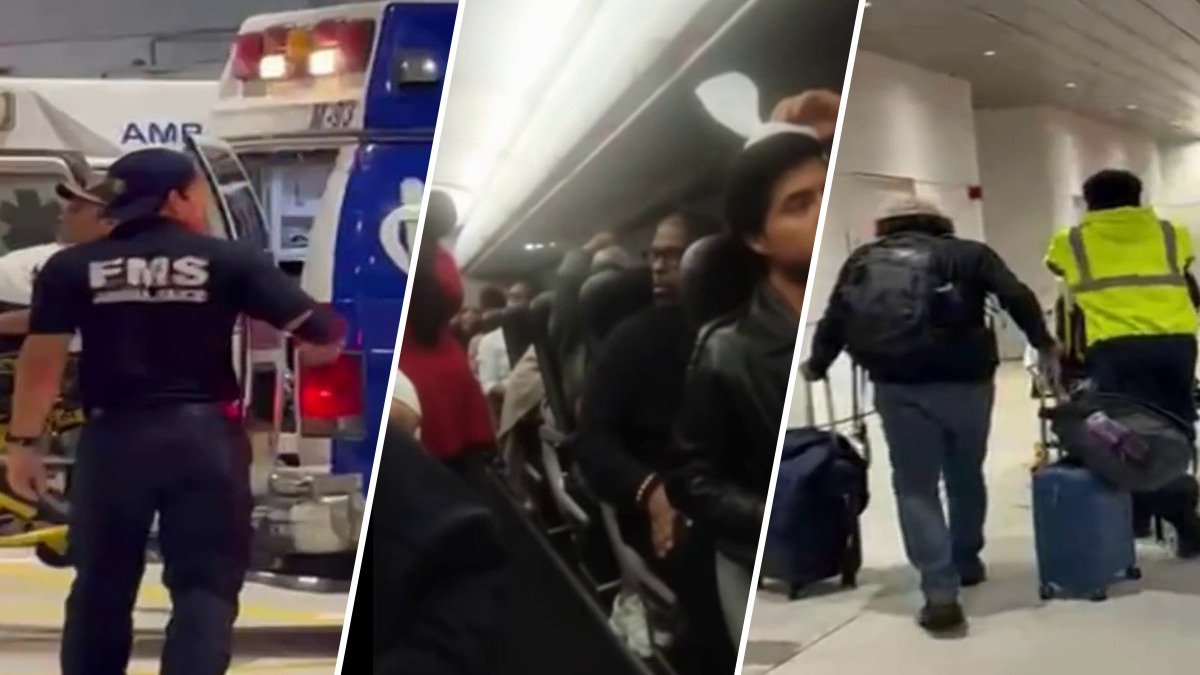
Visual documentation recovered from inside the aircraft and broadcast by regional media outlets showed injured personnel, including an identifiable flight attendant in uniform, being transported on stretchers alongside passengers immobilized by neck braces. These injuries reflect the classic clinical patterns of severe turbulence exposure, which predominantly consist of cervical spine trauma, blunt-force impacts, and head injuries. The presence of cervical collars demonstrates that medical personnel treated the event as high-energy blunt trauma with significant risk of vertebral instability.
The loss of functional crew capacity mid-flight introduces distinct operational vulnerabilities for the remaining crew. In-flight incapacitation of multiple cabin attendants reduces the crew-to-passenger safety ratio mandated for emergency egress and in-flight security management. Had the aircraft encountered further operational complications, a reduced contingent of able-bodied attendants would have complicated standard cabin management procedures.
Terminal Logistics and Emergency Ground Mobilization
Witness testimonies from passengers already present at Miami International Airport described an extensive ground-support mobilization assembled alongside the arrival gate prior to disembarkation. Eyewitnesses documented between five and seven emergency ambulances staging with active warning beacons immediately adjacent to the aircraft parking location. This substantial presence reveals that airport operations centers activated mass-casualty coordination mechanisms well before the aircraft touched down on the runway.
Staging multi-unit emergency vehicles near active taxiways requires careful ground traffic control coordination to prevent operational disruptions across airfield surfaces. Miami-Dade Fire Rescue mobilized sufficient resources to establish an immediate field triage perimeter at the gate, isolating patients requiring emergency transport from ambulatory passengers awaiting rebooking. Media documentation showed passengers being transferred to regional hospitals accompanied by their personal baggage, reflecting an expedited triage model where affected travelers were released directly from the airport system into municipal healthcare custody.
Cellular video recorded within the passenger compartment immediately after the disturbance portrayed travelers holding ice compresses against head wounds while automated or crew instructions reinforced the necessity of remaining seated with lap belts fastened. These images corroborate passenger statements recounting sudden, disorienting violence during the flight that fundamentally shook their sense of transit security. Such firsthand documentation provides investigators with a time-stamped visual baseline detailing interior structural condition, fixture detachment, and immediate occupant reactions.
Carrier Position and Regulatory Obligations
In official communication issued in Spanish, Avianca characterized the incident as an encounter with unexpected turbulence, a descriptor that carries specific technical and legal weight within aviation regulatory frameworks. Clear-air turbulence and sudden vertical atmospheric wind shear often escape airborne radar detection systems, limiting a flight crew’s ability to alert occupants in advance or deploy precautionary seat belt directives. The carrier’s characterization underscores the operational challenge of forecasting localized, volatile atmospheric phenomena across equatorial and maritime transit zones.
From an international carrier liability perspective, passenger injuries sustained during international air transit fall under established multinational treaties, primarily the Montreal Convention. Under these frameworks, an unexpected and external in-flight event that causes bodily harm typically triggers carrier responsibility, provided passengers establish that an abnormal accident occurred within the operational chain of flight. Documenting whether seat belt illumination signs were active, whether advance meteorological advisories were available, and how quickly the crew responded represents the core baseline of standard aviation safety oversight.
Aviation safety authorities routinely launch administrative inquiries into severe turbulence events that yield multiple hospital admissions or trauma-level injuries. Investigators collect flight data recorder telemetry, cockpit voice recordings, atmospheric monitoring logs, and internal cabin damage assessments to reconstruct the aircraft’s dynamic motion profile. These investigations analyze the vertical acceleration vectors sustained during the event to determine if the forces exceeded established airframe structural tolerances.
Airframe Integrity and Fleet Redeployment Pressures
Following a severe turbulence encounter resulting in occupant injuries, an aircraft cannot simply be returned to service or ferried onward to its original destination without extensive technical evaluations. Aviation maintenance regulations require comprehensive conditional inspections to evaluate the structural integrity of the airframe, wings, engine pylons, and internal structural attach points. Maintenance engineers must verify that the airframe did not suffer permanent deformation or micro-fracturing under high-G vertical loading before authorizing the aircraft for commercial operations.
These technical demands create immediate logistical friction for an international carrier. The unexpected grounding of an aircraft scheduled to complete a New York-bound leg cascades across network operations, requiring the dispatch of replacement aircraft or the re-accommodation of unaffected passengers on alternative flights. The grounded airframe ties up regional apron capacity and diverts specialized engineering personnel to conduct airworthiness diagnostics outside their primary operating base.
Furthermore, internal cabin structures that absorbed passenger or equipment impacts must undergo structural restoration and safety sign-offs. Damaged overhead compartments, detached passenger service units, and emergency oxygen equipment compartments require complete inspection and replacement where stress thresholds were breached. These physical repairs must be fully documented and integrated into civil aviation maintenance registries before the platform returns to scheduled passenger services.
Systemic Implications for Transcontinental Corridors
The events surrounding Avianca Flight 42 highlight broader operational challenges facing airlines operating long-range routes connecting South America with North America. Routing corridors traversing intertropical convergence zones and oceanic transition corridors frequently encounter active atmospheric instability patterns that can challenge standard predictive modeling. As airlines balance passenger comfort, scheduled routing targets, and flight efficiency, severe turbulence events serve as critical tests of institutional safety procedures.
For passengers, the incident reinforces the vital safety discipline of continuous seat belt compliance even during uneventful phases of cruise flight. The suddenness with which Flight 42 transitioned from standard cruise transit to a medical emergency underscores that passenger restraint remains the single most effective operational mitigation against physical trauma during unexpected wind shear or air pocket encounters. While commercial aviation retains extraordinarily high baseline safety performance, the internal cabin environment remains vulnerable to instantaneous kinetic disruption.
For municipal emergency structures, the episode validates the efficacy of established joint-response protocols between airport authorities and metropolitan emergency rescue teams. The rapid mobilization of multiple medical units, on-apron triage, and simultaneous transfer of severe trauma cases to regional facilities demonstrates the necessary capabilities required to handle international aviation diversions. The findings stemming from technical reviews of this flight will ultimately inform ongoing airline procedural reviews regarding in-flight crew movement protocols and unexpected atmospheric hazard management.