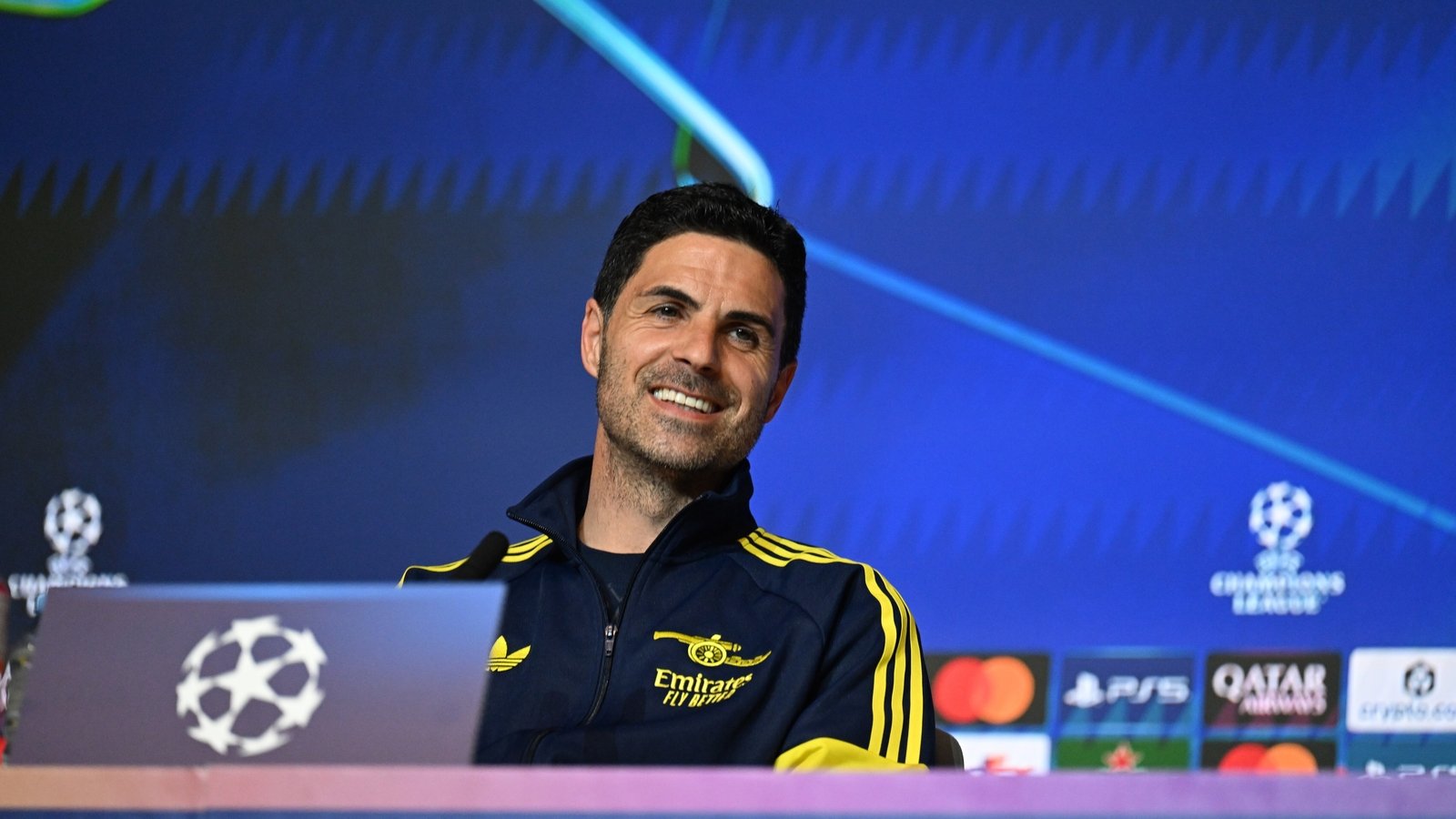
The Champions League semi-final first leg at the Metropolitano Stadium transcends a mere tactical fixture; it represents a collision of two clubs navigating critical phases of institutional evolution. For Arsenal, the encounter serves as a litmus test for a squad attempting to dismantle the ‘nearly-men’ label—a reputation forged by three consecutive Premier League runner-up finishes. Captain Martin Ødegaard’s public acknowledgment of this narrative signals a calculated internal shift toward accountability, suggesting that external skepticism can only be neutralized through the acquisition of major continental silverware.
The Psychological Weight of High-Stakes Failure
Arsenal’s presence in consecutive semi-finals indicates performance stabilization at the European elite level, yet the shadow of past setbacks remains a significant strategic hurdle. The previous season’s exit against Paris Saint-Germain serves as a foundational case study in the marginal errors that define knockout football. Ødegaard’s assertion that the squad must utilize these experiences constructively points to a maturing leadership group that views prior failures as essential data points for mental and tactical refinement.
This pressure is intensified by Arsenal’s domestic trajectory. Currently leading the Premier League, the club faces a dual-front challenge that tests the efficacy of Mikel Arteta’s rotational strategies and squad depth. The decision to lean into criticism rather than deflect it marks a shift in the club’s cultural framework, prioritizing objective results over the aesthetic praise that defined the early Arteta era.
Atlético Madrid’s Offensive Pivot and Tactical Paradox
Atlético Madrid enters the tie having undergone a radical transformation, distancing themselves from the rigid pragmatism of traditional ‘Simeonismo.’ Statistical evidence—60 goals across 14 Champions League matches—reveals an unprecedented offensive output that introduces a layer of volatility for Arsenal’s defensive organization. This departure from a low-block, counter-attacking identity suggests that Diego Simeone is no longer content with narrow, defensive victories, opting instead for a more expansive competitive posture.
Despite this surge, the foundational principles of structural discipline remain intact. This creates a tactical paradox: Arsenal must prepare for a side that is both more prolific and capable of reverting to a defensive shell depending on the game state. The expectation of a tight contest stems from a shared emphasis on control and defensive stability in high-leverage environments, forcing Arteta to account for multiple tactical iterations of his opponent.
Personnel Dynamics: Gyokeres and the Search for Dominance
Arsenal’s confirmed lineup, featuring Gabriel Martinelli and Viktor Gyokeres, signals a clear intent to exploit physical presence and transition speed. The inclusion of Gyokeres provides a focal point for the attack, designed to disrupt Atlético’s central defensive pairing through aggressive hold-up play. This selection underscores Arteta’s objective to be ‘dominant’ from the outset, seeking an away-leg advantage rather than adopting a purely reactive stance.
While the loss of Kai Havertz removes a versatile tactical asset, the availability of Riccardo Calafiori and Bukayo Saka ensures that Arsenal’s primary ball-progression avenues remain operational. The readiness of ‘Ebz’ offers further depth, providing Arteta with the capacity to alter match tempo during the second half. This strategic availability allows Arsenal to maintain the high-pressing style that recently yielded a ‘massive win’ against Newcastle, leveraging domestic momentum as a psychological tool in Europe.
Strategic Trajectory and Institutional Consequences
The outcome carries profound financial and reputational implications for both stakeholders. A final appearance would validate Arsenal’s long-term capital investment and Arteta’s vision, whereas another semi-final exit would solidify the runner-up narrative, potentially diminishing the club’s leverage in future transfer cycles. For Atlético, victory would justify Simeone’s tactical evolution, proving that a more balanced style can yield the ultimate European prize that has twice eluded the club.
The environment at the Metropolitano will likely serve as a hostile backdrop testing Arsenal’s composure. Arteta’s respect for Atlético’s ‘remarkable’ institutional knowledge suggests that managing emotional volatility is as critical as tactical execution. Ultimately, the ‘fine margins’ will likely manifest in individual clinical moments. The pressure rests on Martinelli and Gyokeres to capitalize on the scarce opportunities afforded by a disciplined Atlético defense, in a match that will dictate the future trajectory of two of Europe’s most prominent footballing projects.