Structural Correction: Deconstructing Midfield Hollowing
The tactical framework for the Champions League quarter-final second leg at Anfield represents a decisive institutional correction. Arne Slot’s abandonment of the five-man defensive block utilized at the Parc des Princes acknowledges the failure of reactive pragmatism. By dismantling the trio of Gomez, Konate, and Van Dijk in favor of a 4-1-3-2, Liverpool aims to rectify the ‘structural vacuum’ that allowed PSG’s technical core to bypass the midfield with uncontested progression in the first leg.
This shift prioritizes verticality and functional density over numerical redundancy. The 4-1-3-2 is designed to reclaim the half-spaces, forcing a transition from the passive low-block that saw Liverpool overwhelmed in Paris to a proactive high-press engagement. The objective is to compress the pitch, denying PSG the lateral breathing room they exploited during their 2-0 victory.
The Operational Risk of High-Leverage Selection
The reintegration of Alexander Isak into the starting XI—his first appearance since December—introduces significant volatility. While Isak offers elite mobility and clinical finishing, his lack of competitive rhythm creates an operational risk in a knockout environment requiring 100% intensity. Slot’s decision to replace Joe Gomez with Isak effectively trades defensive insurance for offensive output, underscoring the urgency of the aggregate deficit.
Simultaneously, the benching of Mohamed Salah and Rio Ngumoha signals a strategic management of impact assets. For Salah, this relegation to the bench in a critical European fixture carries existential weight, suggesting a shift in his hierarchy within the squad’s evolving competitive identity. The success of the Isak-Ekitike partnership depends entirely on the creative throughput of a reconstructed midfield trio.
Midfield Constraints and Lone-Pivot Vulnerability
The structural integrity of this 4-1-3-2 rests upon Ryan Gravenberch’s capacity to function as a sole defensive anchor. Tasked with managing vast lateral spaces, Gravenberch must neutralize PSG’s transitional threats without the support of a secondary holding midfielder. This configuration places an immense burden on Dominik Szoboszlai, Florian Wirtz, and Alexis Mac Allister to balance high-volume chance creation with aggressive recovery runs.
If the high press fails to disrupt PSG’s initial build-up, the lone-pivot system risks exposing Konate and Van Dijk to the same ‘probing’ passes that defined the first leg. The tactical gamble is clear: saturate the final third to force errors, but accept the high probability of being caught in transition if the counter-press is breached.
PSG’s Continuity vs. the Anfield Variable
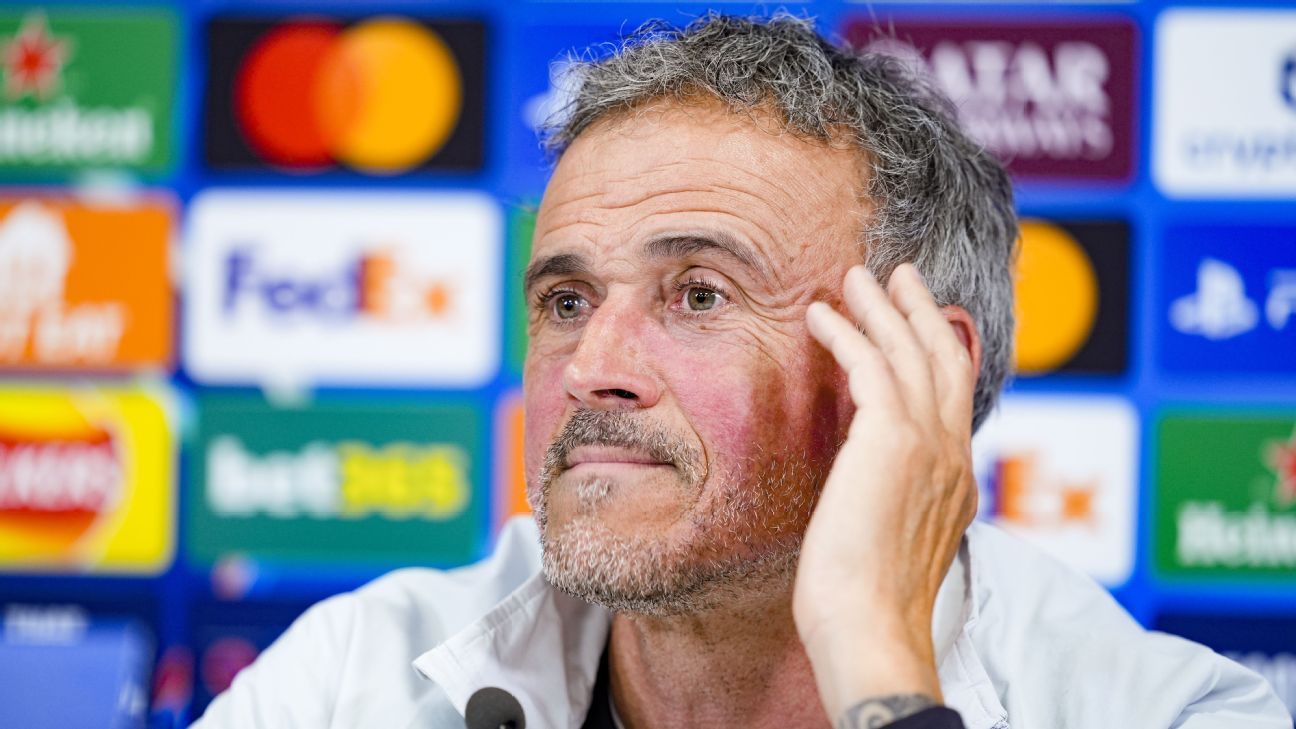
Luis Enrique’s decision to field an unchanged XI reflects institutional confidence. By maintaining the lineup that secured a ‘vastly superior’ performance in Paris, PSG is betting on established chemistry. However, Enrique’s public warning regarding the ‘trap’ of a two-goal lead suggests a calculated attempt to mitigate the psychological pitfalls of complacency within the atmospheric leverage of Anfield.
For the reigning champions, the objective shifts from expansion to disciplined game management. The first-leg goals from Désiré Doué and Khvicha Kvaratskhelia exploited marginal defensive lapses; in the return leg, PSG must withstand a sustained assault without retreating into a submissive low block. Any breakdown in communication under Anfield’s pressure could erode their aggregate advantage before the tactical phase settles.
Institutional Stakes and the ‘Perfect Performance’
Slot’s demand for a ‘perfect performance’ implies a zero-error threshold in both transition phases. Beyond the tactical nuances, the financial and competitive trajectory of both clubs is at stake. For Liverpool, an exit would expedite a difficult transition period and raise questions regarding the long-term roles of legacy players like Salah. For PSG, maintaining their status is essential for brand valuation and continental dominance.
The match will be decided by the interaction between Liverpool’s offensive commitment and PSG’s composure under duress. Whether Slot’s 4-1-3-2 can manufacture a historic comeback or if Enrique’s continuity can navigate the ‘pitfalls’ of Anfield remains the defining narrative of this Champions League season.