
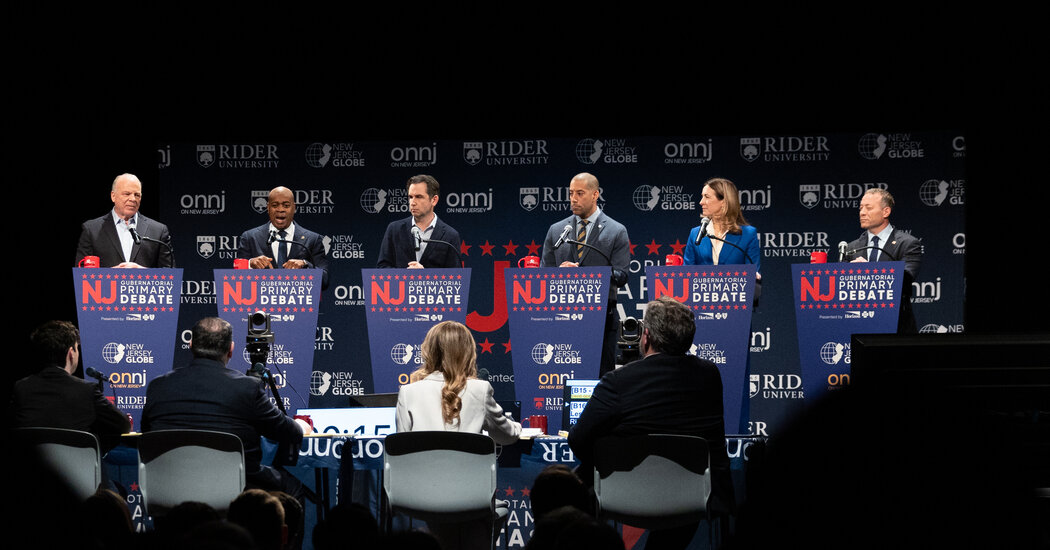
New Jersey Special Primary Election Highlights Structural Pressures on Democratic Party
Voters in New Jersey are participating in a special primary election for the state’s 11th Congressional District, following the vacancy left by Mikie Sherrill. The contest has drawn a notably large field, with eleven Democrats vying for the nomination. This high number of candidates is viewed by analysts as indicative of broader structural trends and internal policy debates within the Democratic Party.
A crowded primary, particularly in a special election, often signals a district perceived as non-competitive in the general election. When a district is considered safely aligned with one party, the primary essentially functions as the decisive election. This structural dynamic encourages multiple candidates to enter the race, as winning the primary is seen as the primary hurdle to securing a seat in Congress. This phenomenon frequently occurs in districts where an incumbent’s departure creates a power vacuum, attracting candidates who see an opportunity for advancement without facing significant general election risk.
The source suggests that the packed field offers insight into “the state of Democrats,” which, in structural terms, points to a lack of clear consensus on party direction and internal leadership. In such scenarios, candidates often attempt to differentiate themselves from one another by taking distinct policy positions. This competition can reflect a broader ideological spectrum within the party, with candidates representing various factions, from more progressive elements to traditional centrist views. The primary process, therefore, becomes a battle for the soul of the party at the district level, rather than a straightforward selection of a successor.
Lobbying Pressure and Policy Alignment in Congressional Races
The internal dynamics of congressional primaries are frequently influenced by external pressure campaigns from interest groups and lobbying organizations. The source highlights a recent campaign by a pro-Israel lobby group targeting a “moderate” US Democrat. Such interventions typically involve significant independent expenditures (IEs) and public endorsements, which can shape candidate behavior and policy platforms. These financial and strategic pressures are designed to ensure candidates adhere to specific policy alignments before they reach Congress.
The specific focus of the pressure campaign, according to critics, is to intimidate candidates who may question unconditional US support for Israeli policies. The concept of “unconditional support” refers to a long-standing framework of US foreign policy that has traditionally enjoyed broad bipartisan consensus. However, in recent years, this consensus has faced growing challenges from within the Democratic Party, particularly from a rising progressive wing that advocates for a re-evaluation of US foreign policy in the Middle East.
The targeting of “moderate” Democrats is significant because this group represents a critical swing bloc in Congress. Moderate Democrats often occupy the center ground between the party’s progressive and conservative factions, and their policy positions are frequently central to legislative outcomes on key issues. By pressuring moderate figures, lobby groups aim to maintain existing policy frameworks and prevent shifts in a party’s center of gravity. Critics argue that this type of campaign spending creates a chilling effect, deterring potential challengers or incumbents from engaging in substantive debate on controversial policy areas for fear of losing vital financial support.
Separate Political Developments in Washington
In a separate development included in the source material’s live updates, the White House issued a defense regarding the presence of Tulsi Gabbard at an elections hub raid. While the specifics of the raid and Gabbard’s involvement are not detailed in the source, the White House’s intervention highlights ongoing political scrutiny related to election processes and political figures. The nature of the defense and the circumstances surrounding the event were presented within the context of fast-moving political developments.
The convergence of events—a crowded primary reflecting internal party shifts, external lobbying campaigns targeting specific policy alignments, and high-level political figures involved in election-related incidents—demonstrates the complex and often fragmented nature of contemporary US politics. The high informational density of these developments requires careful analysis to distinguish between structural trends and specific claims, particularly when reporting on accusations and political dynamics that shape the electoral environment. The process of analyzing a crowded primary, for example, requires understanding how internal party divisions, external financial pressures, and specific policy debates intersect to define a political cycle.