
Public Disclosure of Fertility Decisions in Modern Governance
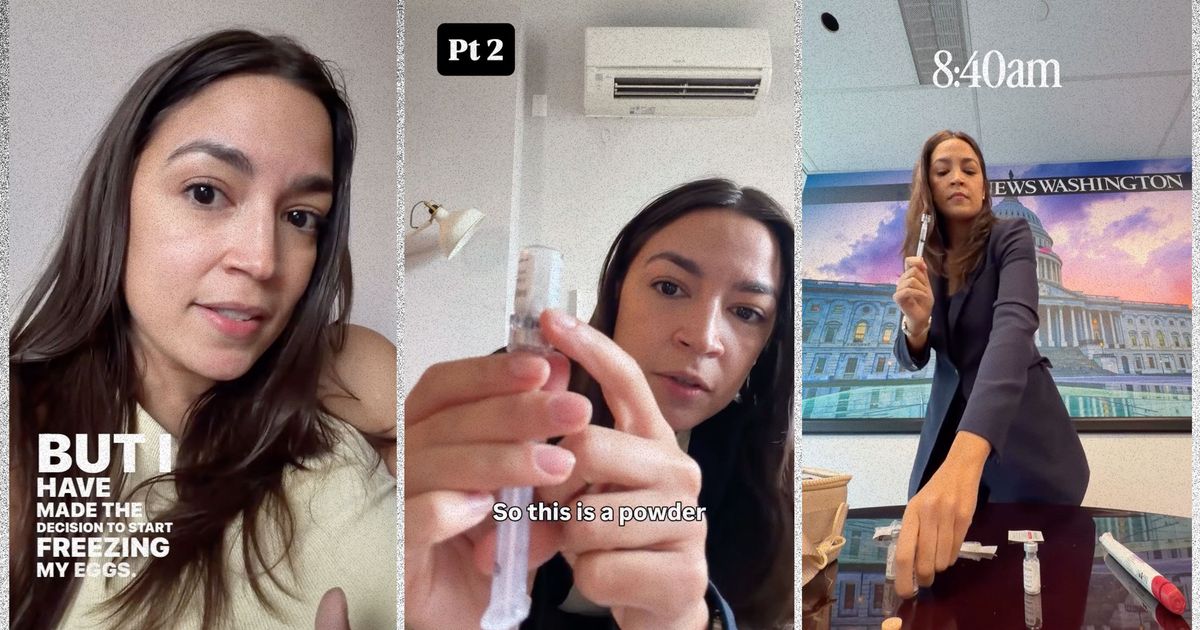
Representative Alexandria Ocasio-Cortez recently announced her decision to undergo oocyte cryopreservation at age 36, documenting the self-administration of fertility medications across digital platforms. By broadcasting an elective biomedical intervention directly to constituents, the four-term lawmaker transposed an intimate clinical process into national political discourse. Her acknowledgment of anticipated scrutiny underscored the degree to which personal reproductive timelines intersect with contemporary ideological polarization.
This public disclosure exemplifies a modern institutional communication model in which policymakers leverage unmediated channels to personalize systemic healthcare issues. Ocasio-Cortez proactively addressed anticipated criticism, acknowledging the politicized nature of public fertility discussions while asserting agency over her biographical trajectory. Her openness situated individual clinical decisions squarely within ongoing structural dialogues concerning female autonomy, professional longevity, and technological intervention.
Ideological Friction and Cultural Critiques
The announcement elicited immediate reaction across the political spectrum, exposing divergent frameworks regarding family formation, biological timelines, and modern careers. Conservative commentator Matt Walsh framed the decision strictly through clinical biological constraints, emphasizing that pregnancy at age 36 falls under advanced maternal age parameters. Such commentary reflects a traditionalist stance that views biomedical deferrals as inadequate responses to physiological timelines.
Other cultural observers framed the matter through comparative historical and social lenses. Jeremy Wayne Tate, founder of the Classic Learning Test, contrasted Ocasio-Cortez with historical figures such as Queen Victoria, citing the 19th-century monarch’s nine children by age 37 as a benchmark of traditional achievement. However, historical documentation reveals that Queen Victoria expressed persistent personal aversion to pregnancy and childbirth, frequently characterizing the physical process as degrading. Meanwhile, podcaster Allie Beth Stuckey argued that promoting late-career fertility preservation normalizes unrealistic expectations regarding the reconciliation of biological windows and professional advancement.
Legislative Fragmentation and Systemic Disparities
The discourse surrounding oocyte cryopreservation takes place amid significant institutional shifts in American reproductive governance. As a federal lawmaker, Ocasio-Cortez operates within a fractured legal environment characterized by near-total abortion bans across 13 states. This regional disparity has altered the baseline accessibility of comprehensive reproductive services for millions of women nationwide.
In an environment where clinical access varies sharply by jurisdiction, elective reproductive technologies carry amplified political weight. While individual decisions remain medically distinct from broader legislative battles, the capacity to exercise reproductive self-determination is increasingly conditioned by regulatory geography. Consequently, elective clinical procedures undertaken by public officials serve as focal points for broader disputes over bodily autonomy and governance.
Capital Outlays and Healthcare Stratification
Beyond cultural discourse, oocyte cryopreservation remains heavily constrained by financial and structural barriers. The cumulative capital outlay required for ovarian stimulation protocols, frequent ultrasound monitoring, surgical retrieval, and multi-year storage fees excludes broad segments of the working-class population. While high-earning professionals and public officials possess the financial resources to access advanced reproductive technologies, the general public faces significant systemic limitations.
This intersection of commercialized fertility care and restrictive legislative environments reinforces socioeconomic stratification in healthcare delivery. Without broad insurance coverage or equitable access mechanisms, the ability to extend reproductive windows through biomedical technology remains concentrated among affluent demographics. Ocasio-Cortez’s public disclosure thus highlights the structural divide between modern biomedical capabilities and the economic realities of contemporary healthcare access.

Photo by staloony on Pixabay.