
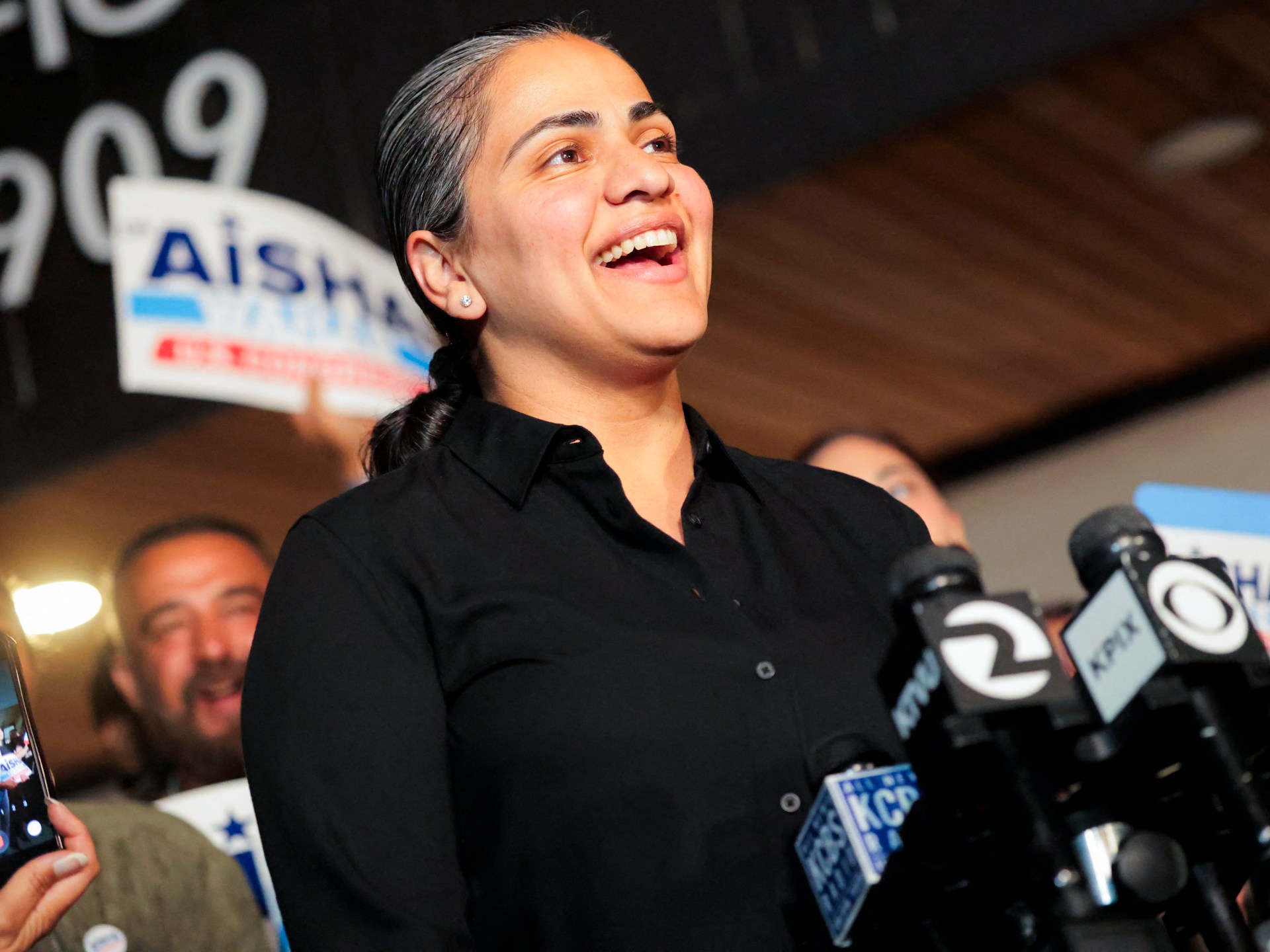
Aisha Wahab Wins California’s 14th District Special Election Amidst Intense Spending
California State Senator Aisha Wahab has won the special election to fill the vacancy in the U.S. House of Representatives for California’s 14th congressional district, previously held by Eric Swalwell. Media outlets projected Wahab’s victory following a competitive race against fellow Democrat Melissa Hernandez. Wahab will now serve the remainder of the term ending in January, representing the southeastern San Francisco Bay Area district.
The election garnered national attention due to significant independent expenditure campaigns targeting the race. Wahab, a progressive Democrat, faced millions of dollars in attack advertisements funded by pro-Israel organizations, notably the American Israel Public Affairs Committee (AIPAC). Her win provides a crucial case study on how progressive candidates can overcome concentrated financial opposition in targeted congressional elections.
Analysis of Independent Expenditure Impact
The substantial influx of late-stage funding into the 14th district contest underscores the increasing influence of independent expenditure committees in shaping congressional elections. These outside groups deployed considerable financial resources toward broadcast and digital advertising designed to sway voter sentiment. Despite this aggressive campaign, the outcome demonstrates the potential limitations of negative advertising when faced with an established local candidate.
This race’s financial dynamics mirror patterns seen in other recent federal elections. For instance, the financial strategies employed echo those in Abdul El-Sayed’s successful campaign in Michigan, where external committees also invested heavily to influence the outcome. In both scenarios, progressive campaigns demonstrated resilience against saturation-level advertising by leveraging strong ground operations and constituent support.
District Demographics and Candidate Strengths
The specific demographic and political landscape of California’s 14th congressional district played a pivotal role in Wahab’s success. The district, encompassing key population centers in the southeastern Bay Area, features an engaged electorate familiar with state-level politics. Wahab’s existing tenure as a state senator provided inherent advantages, including strong name recognition and a policy platform that weathered shifts in campaign narratives.
Post-victory, Wahab emphasized her deep community ties, vowing to advocate for the district that nurtured her and asserting that voters rejected the notion that representation can be purchased. Her background, including experience in the foster care system, informed her campaign’s framing of the election as a rejection of external spending priorities. Her entry into the House of Representatives reinforces progressive representation within the Bay Area congressional delegation.
Intra-Party Dynamics and Future Implications
Hernandez’s defeat highlights persistent ideological and strategic rifts within the Democratic Party’s electoral strategy. Moderate candidates often supported by institutional and single-issue donor networks frequently challenge progressive contenders. In this instance, the alignment of moderate positioning with substantial external funding failed to overcome Wahab’s established constituent base and local support.
The results of this special election prompt political action committees and donor networks to reassess the efficacy of aggressive media campaigns in ostensibly safe Democratic districts. As progressive candidates continue to exhibit electoral durability against significant financial pressures, campaign strategists will need to refine their approaches to timing, messaging, and capital deployment in future contests. Wahab’s immediate assumption of office allows her to address the remaining portion of Swalwell’s term.