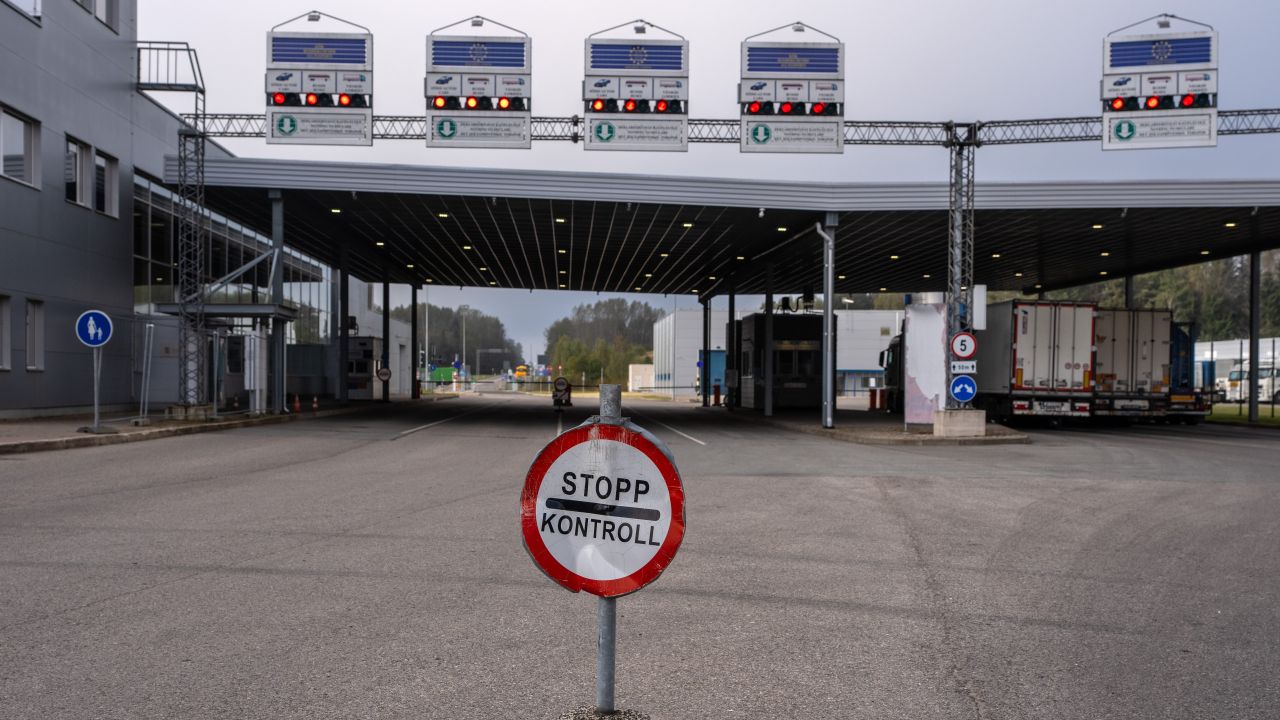
Estonia Restricts Border Crossings Citing ‘Irrational’ Behavior
Estonia has announced new restrictions on border crossings with Russia, including the temporary closure of two key crossing points during nighttime hours. The decision, implemented by Estonian authorities, comes in response to what officials describe as a series of incidents related to alleged ‘irrational Russian behavior’ near the border.
The move represents a procedural shift in border management, indicating a heightened state of alert regarding potential security risks. While specific details of the alleged incidents have not been publicly detailed in the source material, the official justification frames the actions as a necessary measure to ensure operational security and maintain control over border checkpoints.
Border Management and Operational Integrity
Border management between states often involves complex protocols designed for efficiency and safety. When a neighboring state alters its behavior or engages in actions perceived as disruptive, border authorities must respond to maintain integrity. The closure of specific points, especially during less-trafficked hours, allows for a concentration of resources and increased scrutiny at remaining entry points, while potentially mitigating risks associated with unpredictable actions.
In a geopolitical context, border crossing points are not merely logistical hubs; they function as critical nodes in international relations. The decision to restrict access at these points signals a re-evaluation of the existing security assessment. Such actions are typically taken when the existing security framework is deemed inadequate to handle new, perceived threats or patterns of behavior that fall outside standard diplomatic protocols.
The Strategic Implications of Hybrid Tactics
The term ‘irrational behavior’ in the context of state-to-state relations often refers to actions that deliberately disrupt normal operations without necessarily escalating to overt military conflict. This can include hybrid tactics, such as attempts to overwhelm border infrastructure, engage in information operations, or conduct maneuvers that test the institutional resolve of the opposing state.
Such actions fall into a grey zone of geopolitical pressure, where a state seeks to exert influence or create instability through non-traditional means. For Estonia, a member of the European Union and NATO, managing this perceived pressure is crucial for national security and for demonstrating resilience to its allies. The border restrictions can be viewed as a measured, administrative response designed to counter these tactics without resorting to military escalation.
Impact on Border Communities and Cultural Friction
The source data suggests the presence of a town near the border that is described as being ‘stuck between two worlds.’ Such communities often share deep historical, linguistic, and cultural ties with the neighboring country, making them particularly sensitive to geopolitical tensions.
For residents of these border towns, routine border crossings often define their daily lives, affecting personal relationships, local economies, and cultural exchanges. The restriction of movement, even temporarily, can have significant ramifications for the social fabric of these communities. The administrative decision to close certain crossing points transforms a logistical measure into a strategic issue that directly impacts local populations, highlighting the complex intersection of state-level strategy and community dynamics.
Geopolitical Context and Policy Frameworks
The border restrictions imposed by Estonia highlight the ongoing geopolitical friction in the region. European Union and NATO member states have adopted policy frameworks designed to manage borders in high-tension environments. These frameworks include options for proportional responses to perceived threats, ranging from increased surveillance to temporary closures of infrastructure.
The operational decision to restrict border access reflects a broader institutional strategy to maintain state sovereignty and situational awareness. It underscores the importance of resilient infrastructure and adaptable policies to counter disruptive actions. By attributing the necessity of the restrictions to ‘irrational behavior,’ Estonian officials frame the response as a necessary defense measure against unpredictable external pressure, rather than internal, factors.