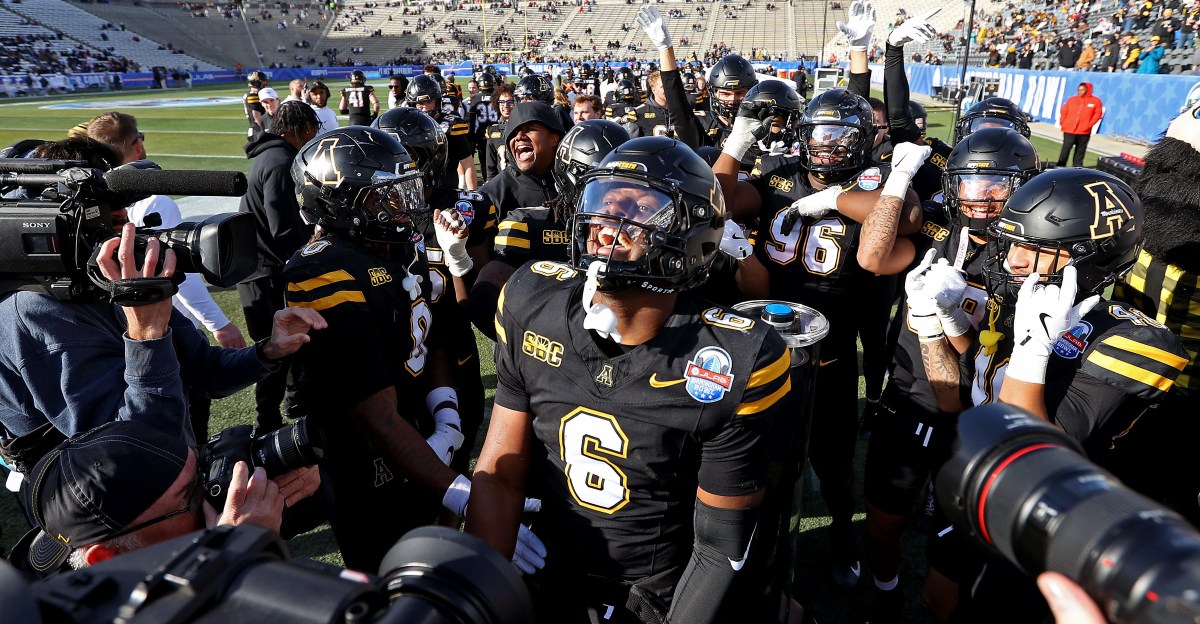
The non-conference matchup between North Carolina State University (NC State) and Appalachian State University at Carter-Finley Stadium transcends a typical regional football contest. It serves as a stark illustration of the widening operational disparities that define the modern college sports landscape. While NC State utilizes this game as a final preparation step before its rigorous conference schedule, Appalachian State arrives facing systemic roster instability driven by unprecedented transfer portal activity.
The economic and structural chasm between Power Four (P4) institutions and Group of Six (G6) athletic departments has been dramatically amplified in the transfer portal era. G6 institutions frequently find themselves in a position where proven talent is systematically recruited away by programs from higher-resourced conferences. This continuous attrition creates significant operational volatility, forcing coaching staffs into compressed rebuilding cycles year after year.
The Structural Asymmetry in Modern College Football Roster Building
Appalachian State’s current roster features approximately seventy-five new players, a blend of high school recruits and incoming transfers. This extreme level of turnover underscores the instability confronting mid-tier collegiate football programs. Roster management has fundamentally shifted from a long-term developmental strategy to an annual exercise in emergency talent acquisition and integration.
The dynamic between P4 and G6 programs highlights a structural asymmetry in how the transfer market operates. Top-tier programs can readily secure proven starters from smaller conferences, while non-power programs are often tasked with absorbing surplus talent from higher levels. Consequently, G6 rosters are increasingly populated by transfers who experienced limited playing time or failed to secure substantial roles at P4 institutions.
This systemic challenge is acutely evident in Appalachian State’s acquisition of forty-five transfers who collectively possess only sixteen recorded collegiate starts. This significant experience deficit necessitates that the coaching staff construct functional systems with players lacking meaningful competitive repetitions at the college level. The resulting developmental bottleneck strains organizational depth and challenges operational continuity.
The Operational Burden of Extreme Roster Churn
The talent drain experienced across the Sun Belt Conference exemplifies the broader institutional challenge. Nine conference institutions rank 105th or worse nationally in returning production, with Appalachian State falling to 127th. These metrics indicate that roster instability is a widespread industry reality, not an isolated institutional failing.
Managing an athletic program under these conditions demands constant tactical adaptation. Coaching staffs must install fundamental schemes while accelerating player cohesion within strict training timelines. The absence of multi-year continuity inherently reduces execution margins when facing programs with superior resource reserves.
Without significant budget outliers to counterbalance these market pressures, mid-major programs operate under identical financial limitations. Institutions often lack the capital to insulate their depth charts from aggressive portal acquisitions by wealthier competitors. This reality forces roster construction into an exercise of managing baseline deficiencies.
On-Field Performance Versus Roster Fragility
Despite significant roster turnover, Appalachian State has opened its season with a 3-0 record, marking its first such start since 2019. That previous undefeated start preceded a 13-1 finish, though the sport’s economic and structural environment was considerably more stable then. The current undefeated run highlights the short-term impact of schematic optimization under second-year head coach Dowell Loggains.
Loggains inherited a program that concluded his inaugural season with a 5-7 record, necessitating immediate tactical adjustments. His second year has shown clear statistical improvements, with the offensive system producing substantial output across its initial three games. The unit currently averages 36.0 points and 492.7 total yards per contest.
The passing game has posted notable national metrics, averaging 320.0 passing yards per game (15th nationally) with a 75.0 percent completion rate (6th nationally). The offense also generates 172.7 rushing yards per game and averages 6.7 yards per play. Defensively, the program allows only 16.0 points per game, demonstrating an efficient operational profile through its non-conference schedule.
Dowell Loggains and Tactical Adaptation
The statistical output achieved by Appalachian State suggests that technical scheme design can temporarily mitigate experience deficits against less demanding non-conference opponents. Coach Dowell Loggains has implemented an offensive structure that facilitates rapid execution and efficient ball distribution, minimizing strain on an inexperienced offensive line.
However, confronting a defensive front from a Power Four conference presents an operational challenge that regional non-conference opponents cannot replicate. The physical demands of sustained line play will quickly expose deficiencies in collective live-game repetitions. The primary question is whether Appalachian State’s statistical efficiency can withstand a higher level of operational intensity and physical attrition.
For Loggains, navigating this transitional phase carries substantial professional implications. Elevating a program experiencing heavy roster attrition can significantly boost a coach’s stock within the national industry. Conversely, structural deficiencies against power-tier opponents can rapidly alter seasonal trajectories and perceptions.
NC State and the ACC Transition Window
For NC State, this matchup provides a crucial opportunity to stabilize tactical execution before commencing its Atlantic Coast Conference (ACC) schedule. Head coach Dave Doeren’s program benefits from an established baseline of organizational stability, allowing for strategic continuity. Carter-Finley Stadium has historically been a site of dominance for the Wolfpack in this regional series.
Betting markets reflect this institutional gap, establishing NC State as a 14-point favorite with an over-under total of 55.5 points. Secondary projections, such as those from PackPredictions.com, indicate an expected margin of victory of 11.8 points. These metrics project a competitive gap primarily driven by operational advantages in depth and line-of-scrimmage execution.
The program enters the contest with clear operational priorities centered on offensive execution. Establishing schematic rhythm before league competition dictates coaching choices and snap allocations. This game represents the final live-competition setting available to refine tactical vulnerabilities before conference play begins.
Quarterback Calibration Under C.J. Bailey
Offensive focus centers on quarterback C.J. Bailey as he commands the Wolfpack offense. The coaching staff is keen to assess Bailey’s response following an operational setback in the previous contest. Prior to a pivotal fumble last weekend, Bailey demonstrated effective processing and ball delivery.
Evaluating Bailey’s poise and decision-making within the pocket under defensive pressure is a vital priority for the NC State offensive staff. His ability to make sound in-game decisions will determine the operational ceiling of the unit moving forward. Clean passing execution is essential to support the broader defensive structure.
A balanced quarterback display stabilizes game management and limits defensive exposure. The Wolfpack staff requires consistent pass protection and efficient ball distribution to validate scheme efficacy. This transitional game provides the competitive setting needed to evaluate Bailey’s progress and the offense’s overall potential.
Cultural Anchorage and Emotional Perspectives in Raleigh
Beyond tactical preparation, the contest carries personal and emotional dimensions for the NC State leadership group. Head Coach Dave Doeren shared a personal relationship with former Appalachian State figure Sean Clark, who passed away nearly a year ago at age fifty. Doeren noted the perspective that follows such losses, emphasizing Clark’s dedication to supporting student-athletes.
The NC State staff also observed the one-year mark since the death of Drue Eliot, daughter of defensive coordinator D.J. Eliot, following a battle with cancer. Doeren stated that such adversity reshapes personal priorities, framing the program as a cohesive community focused on shared commitment. These emotional dynamics provide organizational unity amid athletic pressures.
Maintaining locker room resilience during competitive adversity remains a fundamental responsibility for program leadership. Emotional stability within the staff translates into steady on-field execution under high-leverage conditions. These shared experiences foster internal cohesion that structural changes alone cannot easily replicate or undermine.
Institutional Asymmetries and Historical Series Context
The historical record between these programs illustrates a durable competitive imbalance. NC State holds an undefeated 6-0 all-time record against Appalachian State, with every meeting contested in Raleigh. This series pattern historically reflects the structural advantages retained by established power-tier athletic departments.
The programs have not met on the football field since 2006, when the Wolfpack secured a 23-10 victory at Carter-Finley Stadium. That twenty-year hiatus separates two distinct eras of collegiate sports governance and commercial development. The resumption of the series takes place under unprecedented economic divergence between conferences.
Hosting all six meetings in Raleigh illustrates the financial realities governing scheduling agreements between power and non-power programs. Home programs secure valuable ticket, concession, and regional broadcast revenues while avoiding travel disruption. Conversely, visiting mid-tier institutions accept challenging road environments to secure needed financial guarantees.
Scheduling Models and Market Realities
The television distribution of the matchup via ESPNU at 7:30 pm Eastern Time highlights the commercial placement of mid-tier non-conference games. While primary broadcast windows feature marquee conference matchups, secondary cable slots provide critical exposure for visiting programs. G6 brands rely on these linear television windows to maintain athletic relevance and fan engagement.
For NC State, the evening broadcast delivers prime-time visibility within its home market prior to conference play. It serves as an institutional showcase that reinforces regional recruiting and commercial engagement. The broadcast distribution aligns with standard scheduling practices for major athletic departments seeking to maximize exposure.
These scheduling arrangements perpetuate an economic ecosystem where smaller programs trade competitive advantages for essential athletic funding. The financial returns from non-conference road games underwrite broader department operations throughout the academic year. Consequently, non-power institutions often accept challenging scheduling realities to maintain organizational budgets.
Long-Term Strategic Horizons for Non-Power Programs
The structural challenges confronting Appalachian State reflect systemic issues facing mid-tier collegiate athletics. The constant outflow of proven talent to higher-resourced programs impedes long-term developmental continuity. Without the capital reserves required to retain standout athletes, G6 rosters remain inherently fragile.
The absence of a dominant mid-major program capable of breaking financial barriers compounds this institutional vulnerability across the landscape. Programs often operate without significant budget outliers to disrupt established market hierarchies. Consequently, achieving sustained athletic success requires near-flawless tactical identification and exceptionally high coaching efficiency.
As NC State and Appalachian State meet at Carter-Finley Stadium, the contest underscores these broader industry tensions. The Wolfpack aim to leverage resource stability to prepare for conference play, while Appalachian State relies on short-term scheme execution to overcome significant structural turnover. The meeting highlights how modern roster dynamics continue to profoundly shape competitive realities on the field.