Strategic Shifts in Franchise Adaptation
The global box office performance of Zach Cregger’s adaptation of Resident Evil marks a notable departure from historical trends governing video game intellectual property transitions. Following the commercial underperformance of the 2021 reboot Welcome to Raccoon City, which grossed $42 million globally against a $25 million budget, studio executives faced critical pressure regarding the property’s viability. The decision by TriStar Pictures, Constantin Film, and Davis Films to entrust the material to Cregger introduced a distinct directorial sensibility that successfully altered the economic trajectory of the long-running property.
Historical data indicates that adaptation models relying solely on established brand equity have experienced diminishing returns without stylistic reinvention. Prior iterations, including Paul W.S. Anderson’s series starring Milla Jovovich, achieved substantial aggregate revenue—culminating in 2016’s Resident Evil: The Final Chapter grossing $312 million globally—yet often encountered mixed critical receptions. Cregger’s approach integrates horror, humor, and visceral action elements, effectively broadening the demographic appeal beyond traditional gaming enthusiasts. This strategic recalibration directly influenced the opening weekend performance, creating a widened market funnel that captured both legacy fans and general audiences.
Box Office Performance and Comparative Metrics
The worldwide opening of $108.3 million establishes a new benchmark for the franchise, eclipsing the previous opening record held by 2012’s Resident Evil: Retribution at $70.6 million. Furthermore, this figure surpasses the entire global theatrical run of the 2021 reboot and outpaces the lifetime theatrical earnings of the original 2002 film, which closed at $102.9 million. These financial indicators demonstrate an accelerated revenue capture rate within the initial release window, positioning the current title favorably against comparable genre releases in the contemporary theatrical market.
Within the broader horror sector, the film’s performance aligns closely with competitive theatrical benchmarks established during the same release cycle. Comparative tracking places the title behind only Backrooms, which achieved a $118 million global opening, while outperforming contemporary genre peers such as Scream 7, which opened to $97 million worldwide. This relative standing illustrates institutional confidence in elevated horror-action hybrids, signaling shifts in capital deployment by major studios toward director-driven genre properties.
The structural reliance on international territories remains a defining characteristic of the franchise’s financial architecture, with significant market concentrations in Asian territories such as China and Japan. While the current global opening establishes immediate commercial momentum, long-term performance will depend on sustained audience retention across diverse international markets. The distribution strategy deployed by the production houses reflects an optimized rollout designed to maximize early theatrical yields before digital window transitions.
Character Dynamics and Narrative De-Elevation
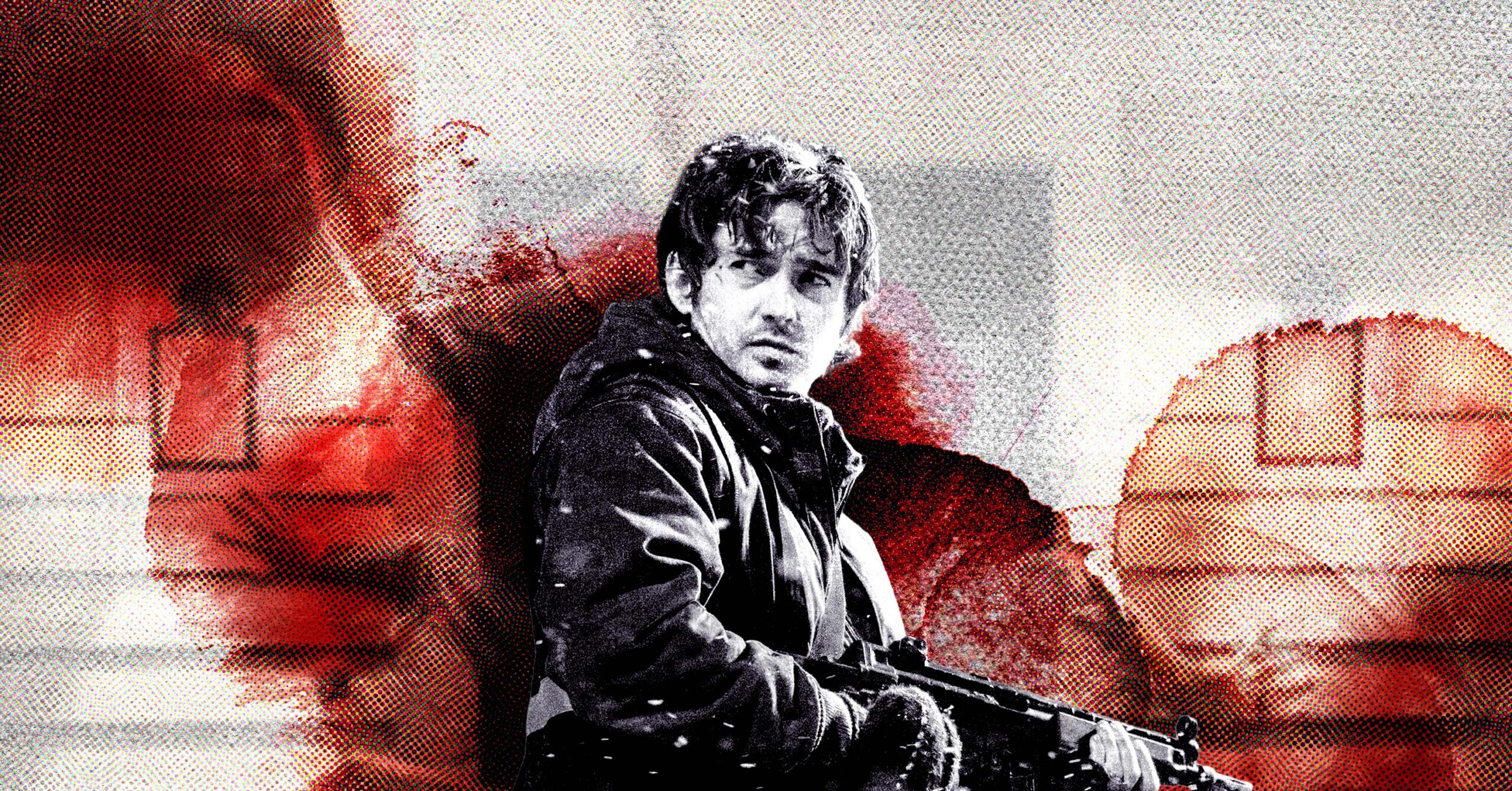
The narrative framework engineered by Cregger introduces a deliberate subversion of traditional action hero archetypes through the depiction of protagonist Bryan, portrayed by Austin Abrams. Unlike preceding protagonists possessing specialized military training or extraordinary tactical competencies, Bryan functions as an ordinary medical courier navigating extraordinary circumstances. This deliberate de-elevation aligns with broader thematic shifts in contemporary horror adaptations, prioritizing vulnerability and late-millennial mediocrity over hyper-competent survivalism.
This character construction serves a dual structural function within the film’s commercial and artistic design. By embedding an inherently inadequate protagonist within an apocalyptic landscape, the production generates distinct tonal differentiation from previous action-heavy iterations of the intellectual property. Industry analysts note that such stylistic choices directly impact audience engagement by introducing comedic friction and relatability, mitigating fatigue associated with conventional action tropes.
Industry Implications and Production Strategies
The commercial triumph of Cregger’s directorial follow-up to Weapons reinforces the market value of auteur-driven genre filmmaking within major studio slates. Surpassing the $70 million worldwide opening of his previous work, this release establishes Cregger as a commercially viable filmmaker capable of scaling production budgets while retaining distinct artistic sensibilities. For production entities such as TriStar Pictures, Constantin Film, and Davis Films, this outcome validates investment strategies that prioritize specialized directorial visions over formulaic franchise maintenance.
Market observers note that the success of this reboot alters risk assessment models for subsequent video game adaptations across the entertainment sector. Studios evaluating dormant or underperforming intellectual properties now possess empirical evidence supporting creative reinvention over strict adherence to source material canon. Consequently, capital allocation patterns within studio slates may increasingly favor distinctive auteur interpretations to revitalize legacy properties facing brand exhaustion.