
The Enduring Legacy of an NFL Front-Office Architect
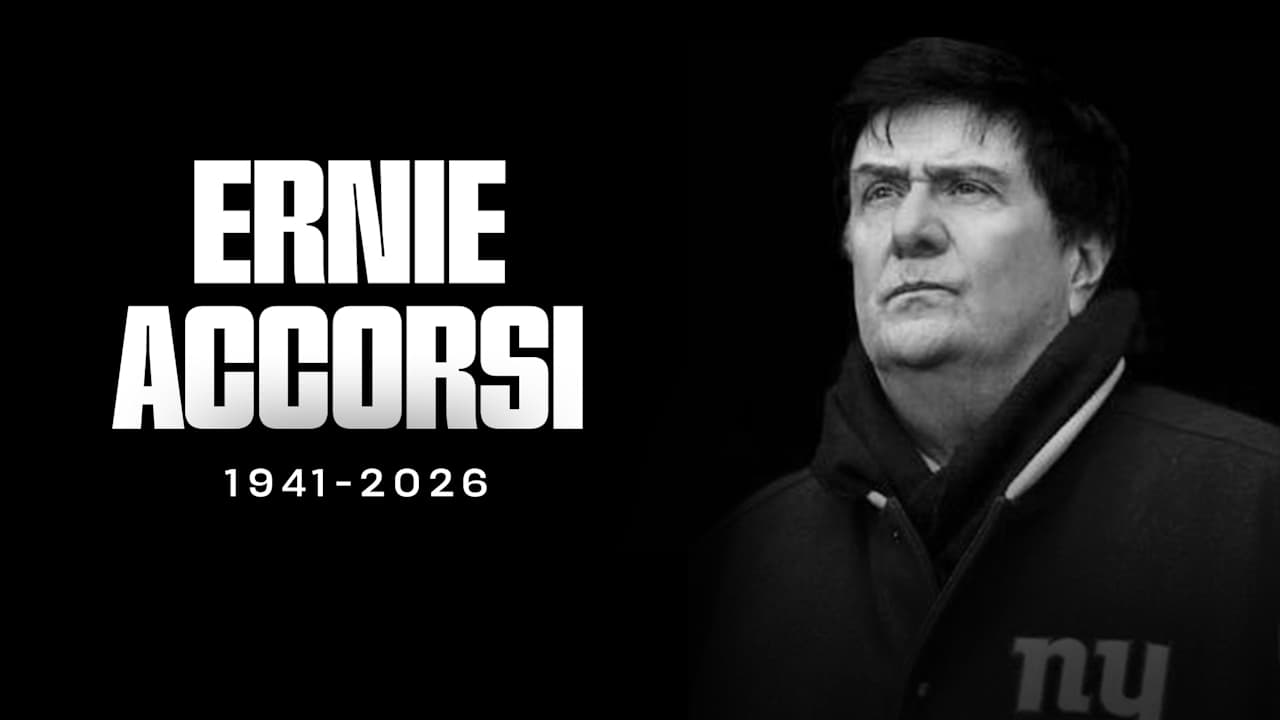
Ernie Accorsi, whose executive vision established the foundational personnel structure for multiple New York Giants championships, passed away peacefully on Saturday surrounded by his family. He was 84 years old, closing a multi-decade chapter of administrative leadership that profoundly shaped the modern era of the franchise.
Accorsi leaves behind an indelible institutional footprint built across 37 seasons in professional football operations. His work reflected an executive discipline focused on roster stability, astute leadership recruitment, and long-term asset positioning.
Front-Office Trajectory and Foundational Philosophies
Born on October 29, 1941, in Hershey, Pennsylvania, Accorsi developed an early and lasting connection to professional football operations. His engagement with the sport spanned generations, beginning memorably in his youth when he witnessed legendary quarterback Johnny Unitas complete his first pass in a Baltimore Colts uniform during a 1956 exhibition game staged in Hershey.
Decades later, Accorsi served the Colts organization directly, eventually managing front-office operations and witnessing Unitas throw his final pass for the franchise. This multi-era perspective framed an executive career that consistently prioritized operational patience and core positional value.
Before assuming total operational authority for the New York Giants, Accorsi served as an assistant under Hall of Fame general manager George Young for four seasons. That preparatory window established administrative continuity within the organization, easing the transitional friction that often disrupts professional sports management when leadership shifts.
Upon taking the helm as general manager in 1998, Accorsi imported those structural philosophies to an organization seeking perennial contention. His nine-year tenure as Giants general manager, running through his retirement following the 2006 season, translated administrative preparation into sustained on-field competitiveness.
Strategic Personnel Decisions and Transformative Impact
Accorsi’s strategic legacy in East Rutherford was anchored by two defining personnel appointments that permanently reshaped the organization: head coach Tom Coughlin and quarterback Eli Manning. Both acquisitions required significant institutional conviction and navigating intense media scrutiny in the country’s largest media market.
The recruitment of Coughlin established an operational culture rooted in rigorous accountability and schematic consistency. By pairing Coughlin’s coaching structure with high-leverage personnel acquisitions, Accorsi engineered an institutional identity capable of sustained postseason performance.
The aggressive pursuit and acquisition of Eli Manning during the 2004 draft represented a transformative pivot for the franchise’s trajectory. Manning provided the long-term positional cornerstone required to navigate competitive windows in modern professional football, serving as the focal point of the organization for over a decade.
The compounding impact of these decisions crystallized almost immediately following Accorsi’s retirement after the 2006 campaign. The Giants captured the Super Bowl championship during the 2007 season, prompting the organization to present Accorsi with a championship ring in recognition of the roster architecture he engineered, followed by another Super Bowl title in 2011 under the same foundational core.
A Competitive Track Record Across Professional Football
Accorsi’s career record demonstrated that his executive viability extended far beyond a single organizational setting or regional dynamic. Prior to his definitive work with the Giants, he executed key leadership responsibilities as the general manager of both the Baltimore Colts and the Cleveland Browns.
Across his final 16 seasons operating as a general manager in the National Football League, Accorsi assembled nine playoff teams. That operational consistency was reinforced by six division championships across different franchises and shifting competitive environments.
During his nine seasons leading the Giants front office, the franchise secured two NFC East division titles, earned four postseason berths, and advanced to Super Bowl XXXV following the 2000 regular season. These milestones reflected an ability to construct competitive rosters across changing offensive eras and collective bargaining frameworks.
Accorsi’s institutional legacy earned him induction into the New York Giants Ring of Honor, making him only the second general manager in franchise history to receive that formal distinction. The honor substantiated his organizational influence, placing him alongside the foundational figures of one of the sport’s oldest enterprises.
Enduring Significance and Administrative Blueprint
The operational methodology championed by Accorsi remains a benchmark for front-office stewardship in contemporary sports administration. His career affirmed that championship contention is built through patient roster construction, disciplined head coach alignment, and decisive capital allocation at the quarterback position.
Accorsi demonstrated that an outgoing executive’s success is best measured by the organizational resilience evident after their departure. The subsequent Super Bowl triumphs in 2007 and 2011 offered empirical evidence of an executive blueprint executed with long-term strategic vision.
By prioritizing organizational continuity over short-term public relations victories, Accorsi shielded the Giants from the volatile boom-and-bust cycles that frequently dismantle professional franchises. His passing marks the conclusion of an era defined by institutional patience, administrative conviction, and structural excellence in sports leadership.

Photo by Alexas_Fotos on Pixabay.