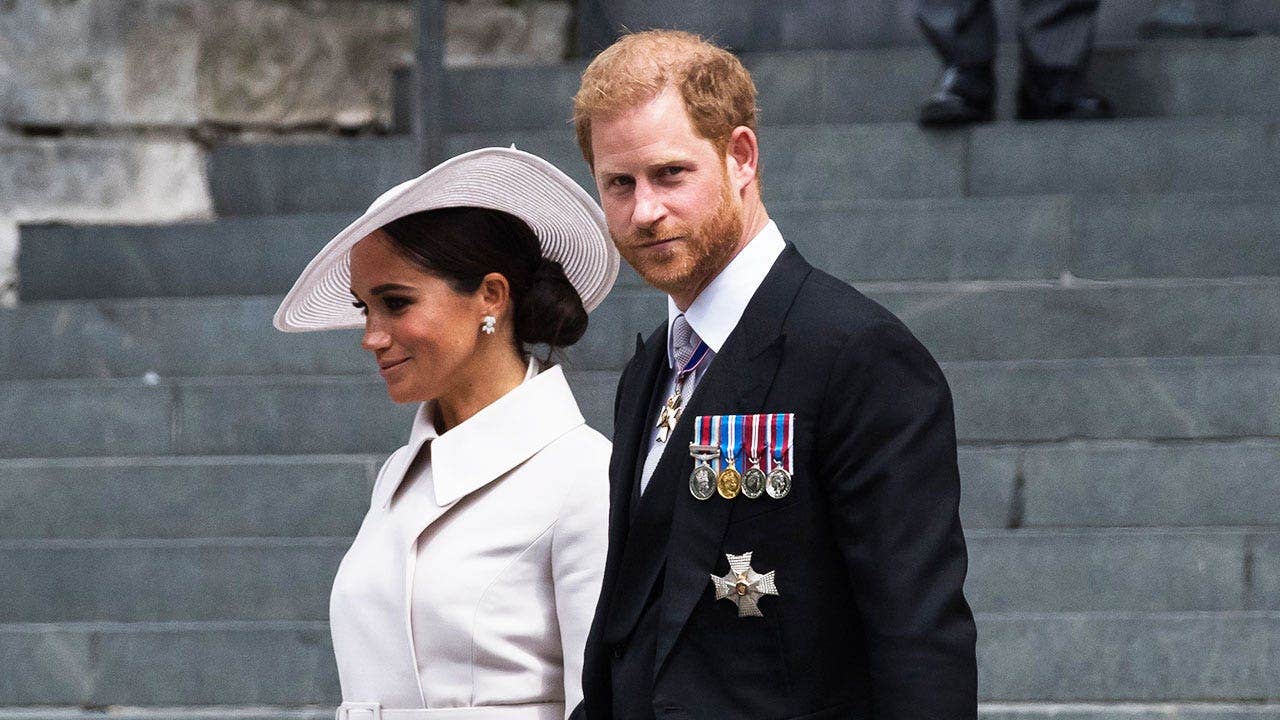
Sovereign Directive Codifies Non-Working Status
King Charles III has formalized the constitutional and operational standing of Prince Harry and Meghan Markle through an official directive issued by a senior palace official to key stakeholders across United Kingdom government and military departments. The communication definitively categorizes the Duke and Duchess of Sussex as non-working royals, establishing clear institutional boundaries regarding state functions, ceremonial representation, and official access. Broadcaster Helena Chard characterized the administrative action as drawing an explicit “line in the sand,” designed to eliminate institutional ambiguity surrounding the couple’s activities during their UK visits.
The Protocol Disconnect and Sussex Reaction
The method of dissemination represents a significant shift in internal royal communications. Rather than engaging in bilateral negotiations or providing advance private notice, Buckingham Palace transmitted the guidance directly to state bodies. A spokesperson for the Sussexes confirmed the couple was surprised not to have received advance briefing regarding the directive, a reaction corroborated by reporting from People magazine and the BBC. Analysts note that this dynamic underscores the monarch’s supreme prerogative in defining institutional status, with Chard observing that Prince Harry lacks the authority to modify or dictate sovereign declarations, despite ongoing international media focus framing the friction as an “unscripted reality show.”
Security Governance and RAVEC Assessment
The directive directly intersects with ongoing administrative deliberations regarding protective security. The Royal and VIP Executive Committee (RAVEC)—which comprises delegates from the Home Office, the Metropolitan Police, and the Royal Household—oversees the allocation of taxpayer-funded security assets. By explicitly defining the Sussexes as private citizens rather than working representatives of the Crown, the directive establishes the legal and procedural baseline under which RAVEC conducts threat and proportionality assessments for their UK presence. While the Home Office maintains an absolute policy against commenting on individual protective frameworks, the institutional clarity reinforces the principle that publicly financed state security is structurally coupled with active royal duty.
Operational Boundaries and Enterprise Separation
The codification carries acute consequences for the Sussexes’ commercial and philanthropic initiatives. By legally and procedurally separating Crown patronage from private activity, the Palace has instituted safeguards preventing private enterprises from implying monarchical endorsement. This institutional decoupling obliges the Sussexes to operate entirely as independent actors within the private sector, securing the operational integrity of the streamlined working monarchy while removing ambiguities across public, military, and diplomatic sectors.