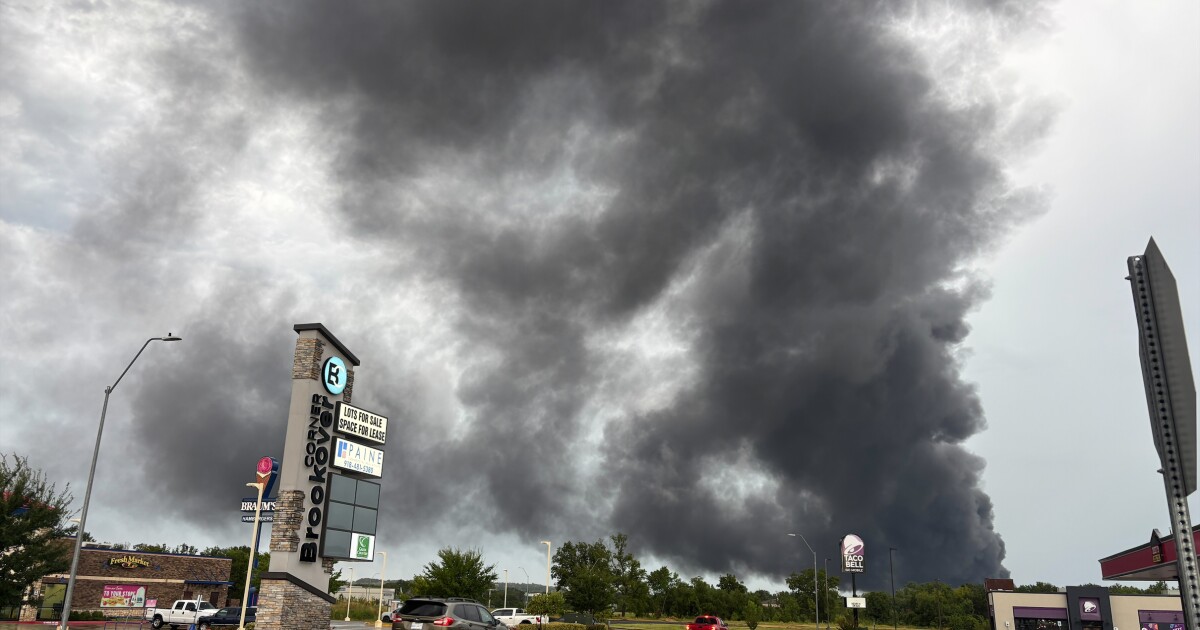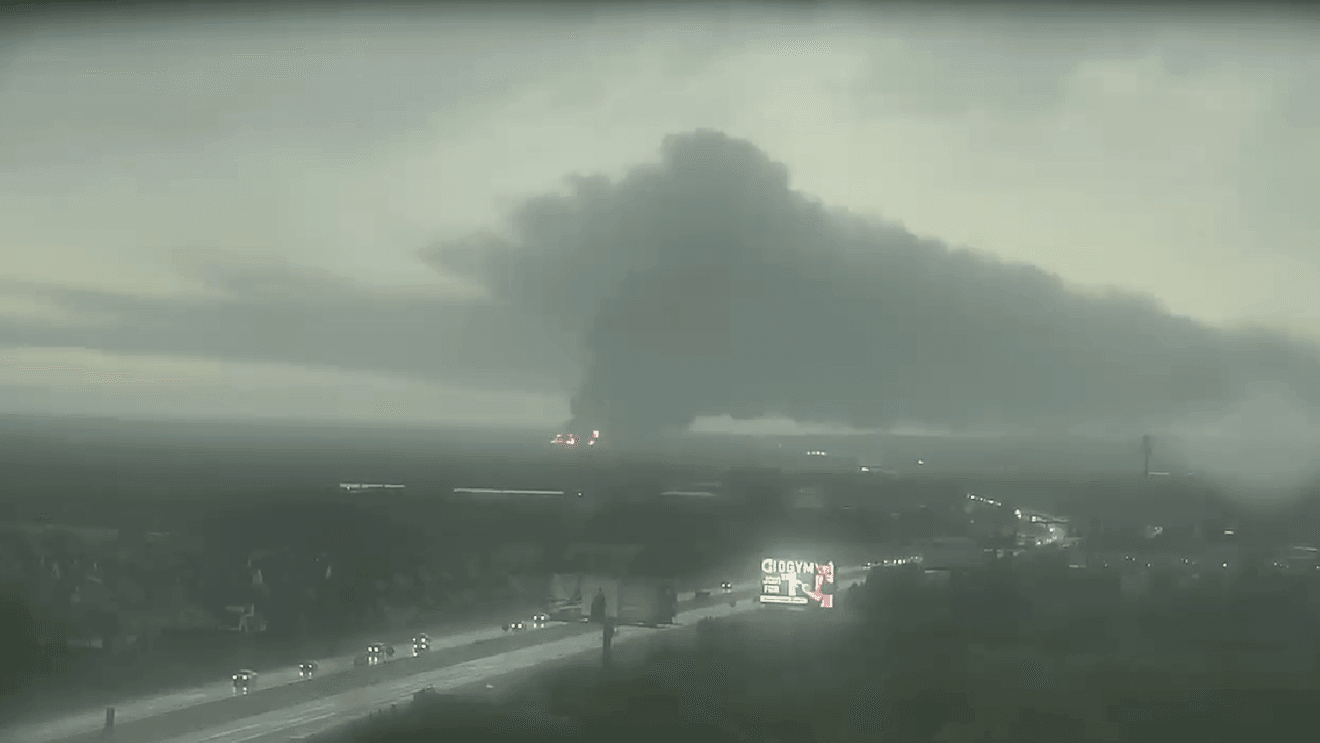
Emergency management agencies in Glenpool, Oklahoma, have initiated a multi-jurisdictional containment operation following a confirmed liquefied natural gas (LNG) tank fire near the intersection of U.S. Highway 75 and West 126th Street. The tactical response focuses on isolating the thermal hazard and establishing rigid exclusion zones to protect high-density residential and institutional sectors.
Operational updates from the Glenpool Police Department confirm that initial deployment successfully prevented secondary structural ignition. As of the current assessment, there are zero reported injuries. Technical crews remain focused on fuel containment dynamics and structural integrity monitoring within the primary hazard radius.
Traffic Logistics and Perimeter Integrity
To facilitate the movement of heavy technical apparatus and maintain public safety, law enforcement has restricted access to critical thoroughfares. Permanent cordons are established at West 126th Street between South Elwood Avenue and Casper Street. To mitigate regional transit friction, authorities have diverted flow to West 121st Street South, maintaining a functional logistical corridor for first responders while insulating civilian traffic from the incident site.
Evacuation Zoning and Institutional Safety Protocols
Public safety officials enforced mandatory evacuations for the sector east of Highway 75, spanning from West 126th Street to West 131st Street South. A centralized reception hub has been operationalized at the Glenpool Church of Christ to provide systematic support for displaced residents. Simultaneously, Glenpool Public Schools transitioned to a precautionary shelter-in-place status. This institutional posture is designed to insulate student populations from atmospheric volatility and peripheral traffic congestion during the active mitigation phase.
Cryogenic Hazard Mitigation and Infrastructure Recovery
Managing fires involving pressurized cryogenic fuels requires specialized defensive cooling maneuvers. The operational priority is to manage the controlled burn-off of the LNG while monitoring the tank’s thermal profile to prevent uncontrolled pressure escalation. This inter-agency framework emphasizes the use of localized exclusion zones as a primary defense against collateral infrastructure damage. Recovery phases will commence only after technical clearance and mechanical stabilization of the affected vessel.