The elimination of Portugal following a 1-0 defeat to Spain at AT&T Stadium represents a seminal transition in international football. Beyond the immediate tactical failure, Mikel Merino’s stoppage-time goal effectively terminated a two-decade era of Portuguese football centered on a monocentric individual model. This result necessitates an urgent institutional reassessment of the Portuguese Football Federation’s long-term commercial and competitive strategies.
Tactical Deconstruction and the Operational Vacuum
For twenty years, Portugal’s identity was inextricably linked to Cristiano Ronaldo’s profile. His departure from the international stage creates an operational vacuum that forces a pivot toward a collective, system-based approach. The financial stakes are significant; the ‘CR7’ brand has historically been the primary driver of global sponsorship revenue, and the federation must now demonstrate that its value proposition survives the loss of its most marketable asset.
The Intersection of Elite Sports and Decentralized Media
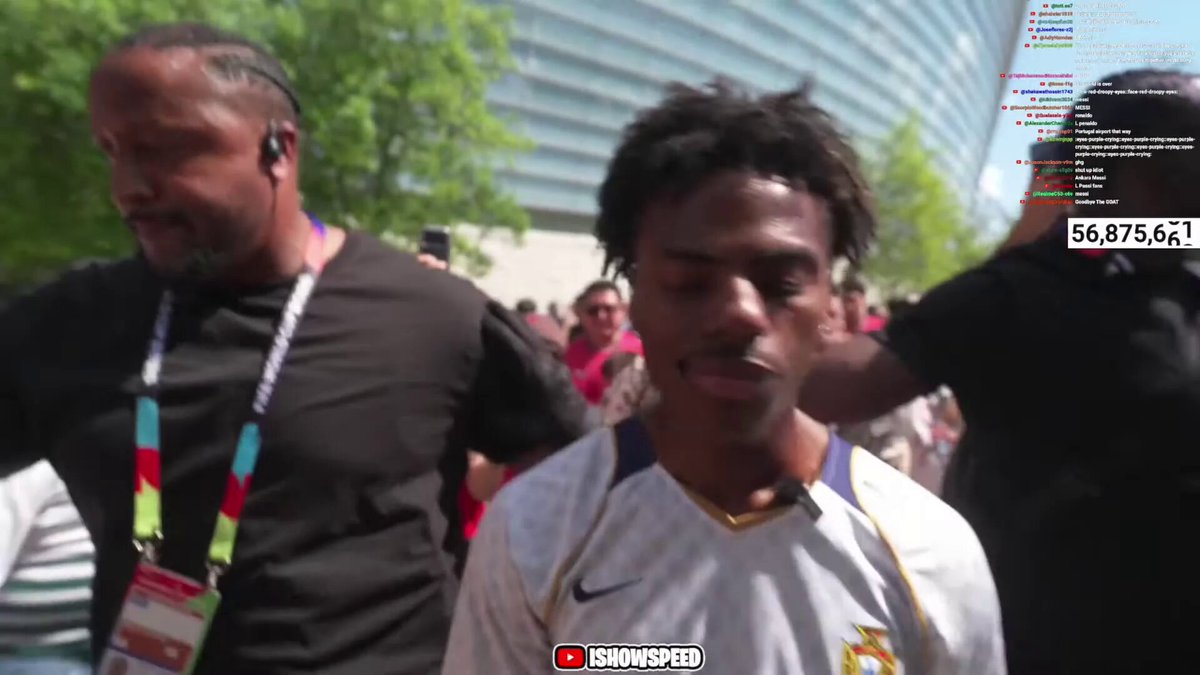
The presence of high-profile creators like Darren “IShowSpeed” Watkins Jr. at AT&T Stadium illustrates the evolving synergy between professional sports and the creator economy. Speed’s emotional reaction serves as a case study in the monetization of athlete-centric fandom. When a content ecosystem is built entirely upon a single athlete’s performance, a competitive exit functions as a major business disruption, highlighting the volatility of influencer-driven sports narratives.
Generational Succession and Market Valuation
The transition is further underscored by the rising prominence of Lamine Yamal, whose current form is increasingly viewed by institutional investors and sponsors as the new benchmark for market value. The tension between established legacy and immediate performance metrics is shifting the global football hierarchy. While the younger generation of Ronaldo’s family defends his legacy, the market is already pivoting toward emerging icons who can command decentralized global attention.
Logistics and the North American Market Dynamics
Hosting this high-stakes match in Arlington, Texas, provides a template for the 2026 World Cup’s logistical challenges. The integration of international football into massive NFL-style venues requires sophisticated crowd management, especially as personal brand loyalties frequently manifest in physical or social friction. The use of “Messi” chants as a standardized psychological tactic against Ronaldo supporters further demonstrates how digital-era rivalries impact real-world stadium operations.
Institutional Stability in the Post-Legacy Era
Portugal must now navigate a landscape of legacy preservation. The strategic challenge lies in maintaining global relevance without the gravitational pull of a singular superstar. Conversely, Spain’s progression reinforces the efficacy of disciplined, high-level execution over individual brilliance—a trend likely to dominate the knockout stages of future major tournaments as teams prioritize tactical cohesion over individual star power.