
Folarin Balogun Red Card Reversal: A Crisis of FIFA Governance and Trust
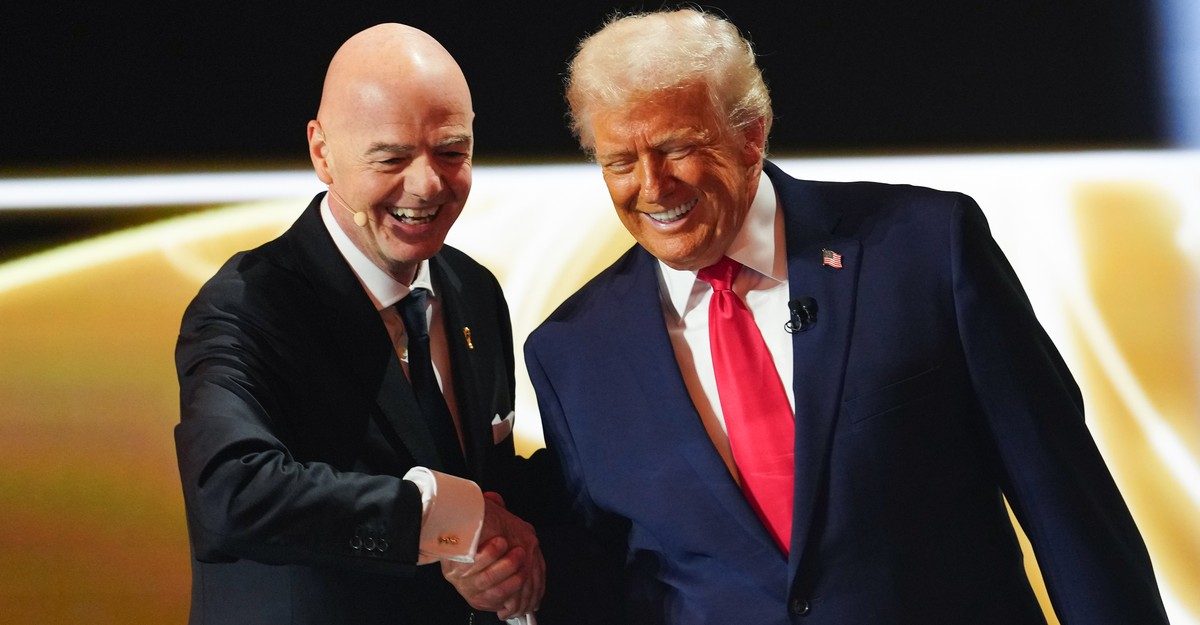
The controversial overturning of a red card issued to Team USA’s Folarin Balogun during a critical World Cup match has ignited a profound crisis of confidence in FIFA’s operational integrity and independence. This decision, reportedly following direct inquiries from then-U.S. President Donald Trump to FIFA President Gianni Infantino, has triggered widespread global skepticism regarding the impartiality and fairness of high-stakes international sporting competitions.
Beyond a mere officiating dispute, this incident starkly exposes the opaque intersection of global sports governance, powerful national political interests, and competitive outcomes. The deeply unsettling perception that a head of state could directly influence a disciplinary ruling within an ostensibly independent international sports body fundamentally challenges the impartiality of FIFA’s adjudication processes and its inherent susceptibility to external political pressures.
Erosion of Credibility: The Procedural Breakdown Behind the Reversal
The swift reversal of Balogun’s suspension, characterized by observers as “magically lifted” just before a crucial match, was reportedly supported by a “feeble procedural explanation.” This profound lack of transparent justification has not merely fueled a pervasive sense of impropriety, but has solidified a global consensus that the decision bore the “garbage-y scent of an inside job.” Such public perception directly and severely undermines the credibility of FIFA’s regulatory framework and its explicit commitment to equitable competition.
This alleged circumvention of standard disciplinary protocols via high-level political channels exposes a critical systemic vulnerability within FIFA’s operational architecture. When rulings impacting competitive fairness are overtly perceived as influenced by non-sporting actors, it irrevocably erodes the foundational trust that underpins global athletic contests, impacting the morale of participants and the vast global audience that invests emotionally and financially in these events.
Political Leverage and Compromised Autonomy: The Host Nation Dynamic
The Balogun controversy has critically intensified perceptions of an undue “home-field advantage” for Team USA, particularly given its status as a World Cup host nation. The explicit assertion that the host would “do anything to win on this soil”—including applying pressure from the President and his administration to overturn officiating decisions—casts a pervasive shadow over the tournament’s integrity and the fundamental fairness afforded to all participating teams.
This alleged deployment of political leverage by a host nation’s highest office introduces a profoundly destabilizing dynamic into international sports. The immense financial and reputational stakes associated with hosting a global event are shown to create potent incentives for undue influence, suggesting that the benefits of hosting extend far beyond infrastructure and economic impact, potentially encompassing the ability to shape competitive outcomes through non-sporting means.
Consequently, the reported direct communication between a head of state and FIFA’s president concerning a player’s suspension places FIFA’s institutional autonomy under severe, indeed existential, scrutiny. As the global governing body, FIFA is ostensibly committed to operating independently of national political agendas, ensuring consistent and unbiased application of its rules. The events reported fundamentally challenge this core principle, pointing to a severe compromise of its independent authority.
This incident compels an urgent re-evaluation of FIFA’s governance mechanisms and its resilience against powerful external actors. The alleged ability of political figures to influence decisions at the organization’s highest echelons raises serious concerns about the robustness of its internal checks and balances, thereby exposing structural weaknesses ripe for exploitation in future high-profile events.
Undermining Fair Play: Competitive Disadvantage and Broader Fallout
The explicit rejection of a request from Belgium regarding Balogun, juxtaposed with the alleged intervention that secured Balogun’s eligibility, unequivocally highlights the tangible competitive disadvantage perceived by other nations. This glaring disparity in treatment demonstrably strains international sporting relations and cultivates deep resentment among federations that meticulously adhere to established protocols and expect consistent application of rules.
For competing nations, the perception of an uneven playing field—where some teams allegedly benefit from political intervention while others’ legitimate appeals are summarily dismissed—profoundly undermines the spirit of fair competition. This situation poses a severe diplomatic challenge for FIFA, compelling it to navigate the extensive fallout from decisions widely seen to favor one powerful nation, thereby significantly jeopardizing its standing as an impartial arbiter of the global game.
This controversy critically exposes all stakeholders to significant reputational and operational risks. For Team USA, the alleged intervention, regardless of direct team involvement, inevitably taints its performance with questions of legitimacy, potentially diminishing the perceived value of its achievements. For individual players, it risks creating an environment where their effort is overshadowed by external factors, severely impacting morale and public perception.
Commercial partners and sponsors, whose brands are intrinsically linked to the integrity and fairness of the World Cup, also face substantial exposure. A perceived compromise of sporting ethics can significantly dilute the value of their association, potentially leading to a re-evaluation of their continued investment in events marred by such controversies. The incident’s impact thus extends far beyond the pitch, permeating the entire economic and ethical ecosystem of global football.
A Troubling Precedent: Geopolitics, Systemic Vulnerabilities, and FIFA’s Future
The alleged political intervention sets a profoundly troubling precedent for future major sporting events, particularly those hosted by powerful nations. It explicitly suggests a viable pathway for host countries to exert significant, non-sporting influence over competitive dynamics, extending far beyond traditional advantages like crowd support or familiar conditions. This development could fundamentally reshape the calculus for nations bidding to host global tournaments, prioritizing political leverage as a critical factor alongside infrastructure and financial commitment.
This incident vividly illuminates systemic vulnerabilities embedded within the architecture of international sports governance. The concentrated power within a few key individuals, coupled with the immense political and economic stakes of global events, creates an environment highly susceptible to such alleged interventions. It underscores the perpetual challenge for organizations like FIFA to maintain genuine independence while navigating intricate relationships with powerful national governments.
Beyond the severe reputational damage, this alleged incident carries significant operational and financial implications for FIFA. The necessity of offering a “feeble procedural explanation” for the reversal strongly indicates a pervasive lack of robust, transparent internal processes capable of truly withstanding external pressure. This operational weakness not only leads to inconsistencies in rule enforcement but also fosters internal discord and external distrust, further debilitating the organization.
Financially, the long-term erosion of trust inevitably impacts FIFA’s ability to attract top-tier sponsors and secure lucrative media rights deals. The perceived integrity of the competition is a core, intangible asset; any sustained challenge to that integrity will demonstrably devalue the entire product. Furthermore, managing the protracted fallout from such controversies consumes vast organizational resources, diverting critical attention from strategic initiatives and crucial development programs.
The Balogun red card reversal starkly exemplifies the accelerating convergence of sports and geopolitics, where the traditional lines between athletic competition and national interests are increasingly blurred. The alleged involvement of a head of state in a sporting disciplinary matter unequivocally underscores how major international events now serve not merely as contests of athletic prowess but also as potent platforms for national projection, influence, and intricate diplomatic maneuvering.
This dynamic presents an increasingly complex challenge for sports organizations, tasked with upholding universal sporting principles while operating within a volatile world of competing national agendas. The incident highlights the inherent tension when the pursuit of national advantage, particularly by powerful states, potentially overrides the established norms of fair play and independent governance in global sports, demanding urgent structural reform.
The perceived capitulation to political power, as aptly described by a California Democrat, directly challenges FIFA’s fundamental regulatory authority. If its decisions can be swayed by external political figures, its role as the ultimate, impartial arbiter of football rules and conduct is irremediably compromised. This incident raises fundamental and urgent questions about the future of sports governance and the models required to ensure genuine independence, unwavering impartiality, and enduring global legitimacy.

Photo by xusenru on Pixabay.