
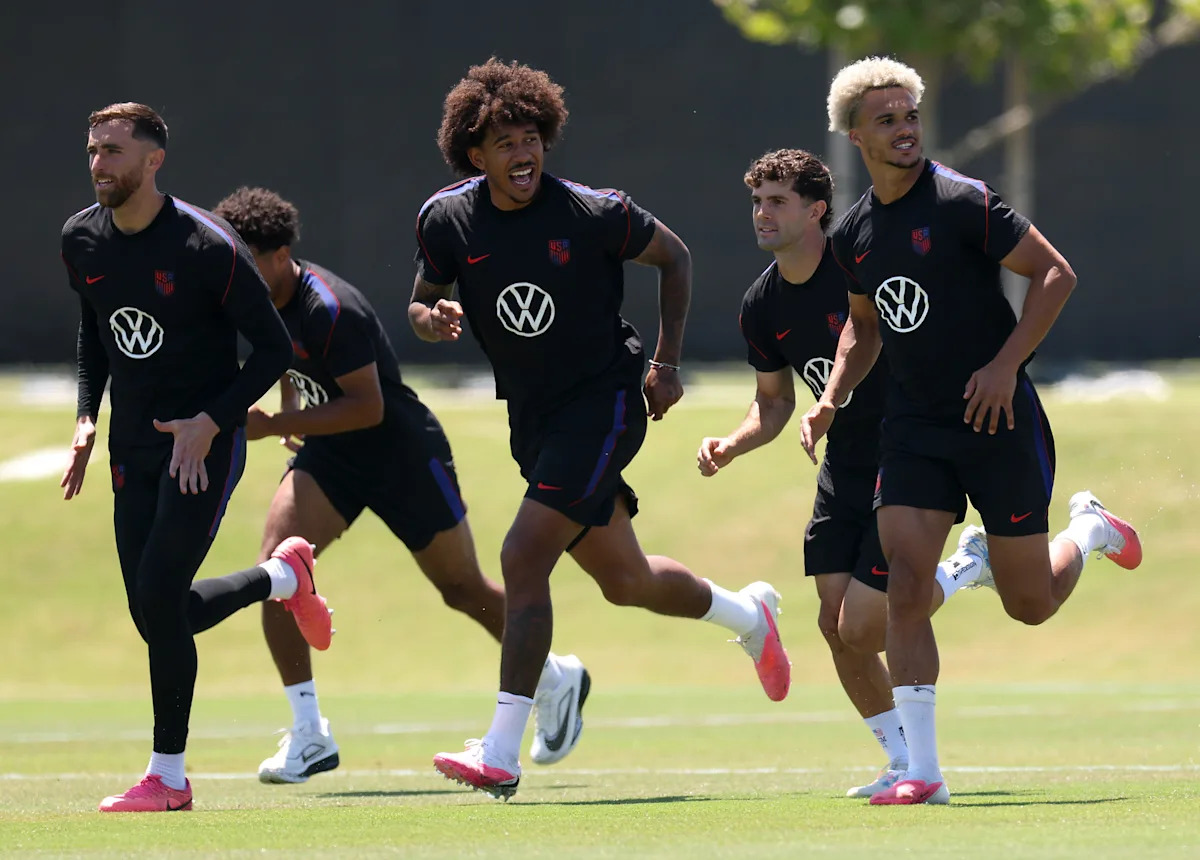
The United States Men’s National Team (USMNT) has secured progression to the Round of 32 as Group D winners, fundamentally altering their technical and physical preparation. By clinching the top spot prior to their final group stage match against Türkiye at SoFi Stadium in Inglewood, the coaching staff has earned a rare competitive luxury: the ability to bypass immediate result-oriented pressure in favor of systematic squad rotation and load management.
Squad Rotation and Risk Mitigation vs. Türkiye
The upcoming fixture against Türkiye serves as an insulated tactical laboratory. Because the outcome will not impact group standings, the coaching staff can proactively manage squad depth, test alternate tactical shapes, and mitigate the risk of soft-tissue injuries. Crucially, this match offers an opportunity to shelter key players carrying yellow cards, avoiding costly suspensions ahead of the knockout phase.
Beyond roster management, the match allows the squad to acclimate to the environmental and logistical scale of a premier NFL-caliber venue like SoFi Stadium. This high-capacity fixture acts as a operational rehearsal, transitioning the players from the high-stress environment of group survival to the precise, clinical execution required in single-elimination football.
Decoding the 495 Permutations of FIFA’s Annex E
The expansion of the World Cup to a 48-team format has introduced significant administrative complexity. Under current guidelines, the USMNT will face a third-place qualifying team from one of five potential groups in the Round of 32 on July 1 in Santa Clara. This matchup is governed by the structural frameworks of Annex E of the FIFA Rules and Regulations, which dictates 495 distinct mathematical permutations based on third-place group outcomes.
To manage this complexity, the USMNT’s technical and scouting departments must operate a multi-track monitoring system. Rather than preparing for a single opponent, analysts are tracking performance trends, defensive structures, and key personnel across multiple groups in real time. This technical overhead demands rapid data processing to deliver actionable scouting reports as soon as the final group stage whistle blows.
The California Corridor: Tactical and Physical Synergy
A primary competitive advantage for the USMNT is their localized footprint. Establishing a training residency at the Great Park Sports Complex in Irvine provides unparalleled logistical continuity. By remaining within the California corridor for training, their final group match in Inglewood, and the Round of 32 clash in Santa Clara, the USMNT minimizes the physiological strain of transcontinental travel.
This geographic concentration optimizes recovery windows, preserves circadian rhythms, and maintains training consistency. Commercially, anchoring the host nation in California during the transition to the knockout rounds ensures massive market engagement, driving ticketing, broadcast viewership, and local economic activity during a critical commercial window.
Psychological Isolation: The Player Perspective
There is a deliberate structural separation between the technical staff’s administrative tasks and the playing squad’s daily preparation. While analysts calculate the 495 Annex E permutations, the players are intentionally shielded from this complexity to maintain tactical clarity.
This division of labor is highlighted by striker Folarin Balogun’s focus on immediate execution. By deferring opponent tracking to the backroom staff, players can concentrate strictly on training ground objectives and the immediate challenge of the Türkiye fixture. This micro-focus is essential for sustaining performance momentum and preventing tactical dilution during a period of administrative uncertainty.
The Realities of the Expanded 48-Team Bracket
The inclusion of the Round of 32 represents a structural shift in international tournament design, requiring teams to win an additional knockout match to progress. The reliance on third-place ranking tables to fill the bracket shifts the competitive paradigm, placing a premium on roster depth and analytical readiness over historical group-stage predictability.
As the USMNT prepares for the July 1 fixture in Santa Clara, their capability to leverage early qualification will test their institutional maturity. Navigating the logistical advantages of their California training base and translating data-driven insights into on-field execution will define their ceiling in this expanded tournament.