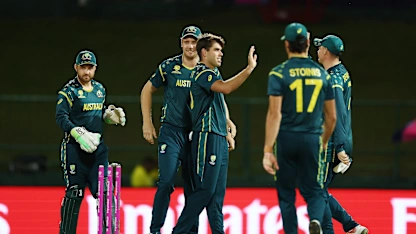
Australia’s nine-wicket demolition of Oman in Pallekele serves as a clinical but ultimately hollow post-script to a campaign defined by structural fragility. While the margin of victory—achieved with 62 balls remaining—equaled a tournament record for chasing a triple-digit total, it cannot obscure the institutional failure of a powerhouse exiting before the Super 8 stage for only the second time in history.
Personnel Attrition and High-Performance Deficits
The Australian campaign was compromised by a cascade of injuries within the pace department, specifically the absence of Pat Cummins and Josh Hazlewood. This vacancy stripped the bowling attack of its tactical anchor, forcing a reliance on secondary rotations that lacked the discipline to maintain pressure during high-leverage phases against Zimbabwe and Sri Lanka. This crisis exposed a significant lack of depth in the high-performance pipeline, where the delta between frontline starters and reserves proved insurmountable under subcontinent conditions.
Strategic flexibility was further hampered by these personnel constraints. Coaching staff were forced into reactive tactical shifts, prioritizing basic availability over environmental adaptability. The resulting “chaotic campaign” suggests that Cricket Australia’s medical and management protocols failed to account for the physical toll of a condensed global tournament.
Leadership Vacuums and Tactical Misalignment
The absence of captain Mitchell Marsh for the opening two fixtures created a leadership vacuum that disrupted the squad’s psychological trajectory. Starting a global event without a designated on-field leader resulted in a critical loss of momentum—a factor Oman’s Jatinder Singh identified as the primary driver of T20 success. Australia’s early victory over Ireland proved to be a false dawn, as subsequent collapses against lower-ranked opponents highlighted a failure in institutional preparation.
Furthermore, controversial team selections indicated a disconnect between the selection panel’s vision and pitch realities. In a format where adaptability is the primary currency, rigid adherence to certain personnel backfired during the Super 8 qualification race. The Pallekele match, while successful, featured a lineup that only found its rhythm once the stakes were removed, suggesting that internal pressure significantly influenced earlier, less effective selection decisions.
The Gulf Between Ambition and Execution
Oman entered the fixture seeking to exploit Australia’s perceived instability, with Jatinder Singh emphasizing the opportunistic nature of T20 cricket. However, the technical gulf remained vast. Adam Zampa’s figures of four for 21 exploited the Pallekele surface with a precision that was missing in earlier defeats. Xavier Bartlett’s wicket with the first ball of the match immediately neutralized Oman’s aggressive intent, demonstrating that while associate nations are bridging the resource gap, elite execution remains the differentiator.
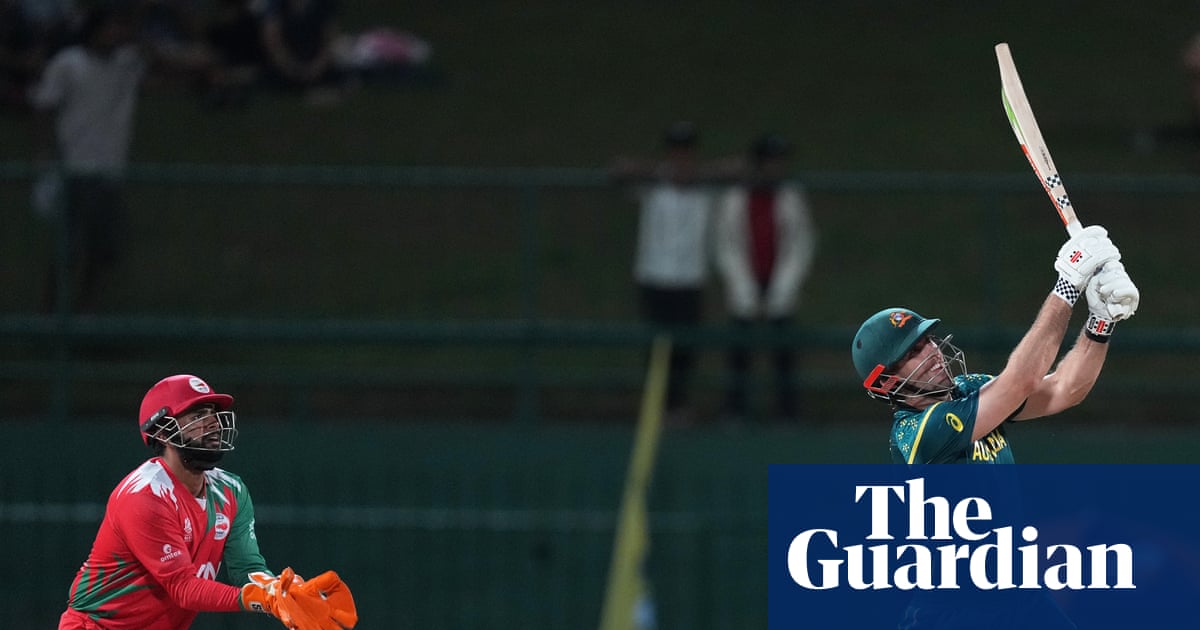
Mitchell Marsh’s 26-ball half-century provided a bitter irony; it proved the squad possessed the firepower to dominate but lacked the operational consistency to navigate the group stage. Finishing third in the group represents a catastrophic underperformance relative to historical pedigree and capital investment.
Commercial Fallout and Institutional Review
The early exit carries substantial commercial implications. The loss of a major market in the Super 8s impacts viewership metrics and sponsorship valuations for the ICC. Within Cricket Australia, this failure will likely trigger a rigorous re-evaluation of the T20 program’s resource allocation. The Pallekele result will not be remembered as a triumph, but as a stark illustration of the standards missed when the tournament was still within reach.